Repairs · Keneden Park
Garage Door Perimeter Weatherstrip in Keneden Park
The new door went in last year and looks perfect, but the old wooden stop and its tired seal were left in place.
In plain words
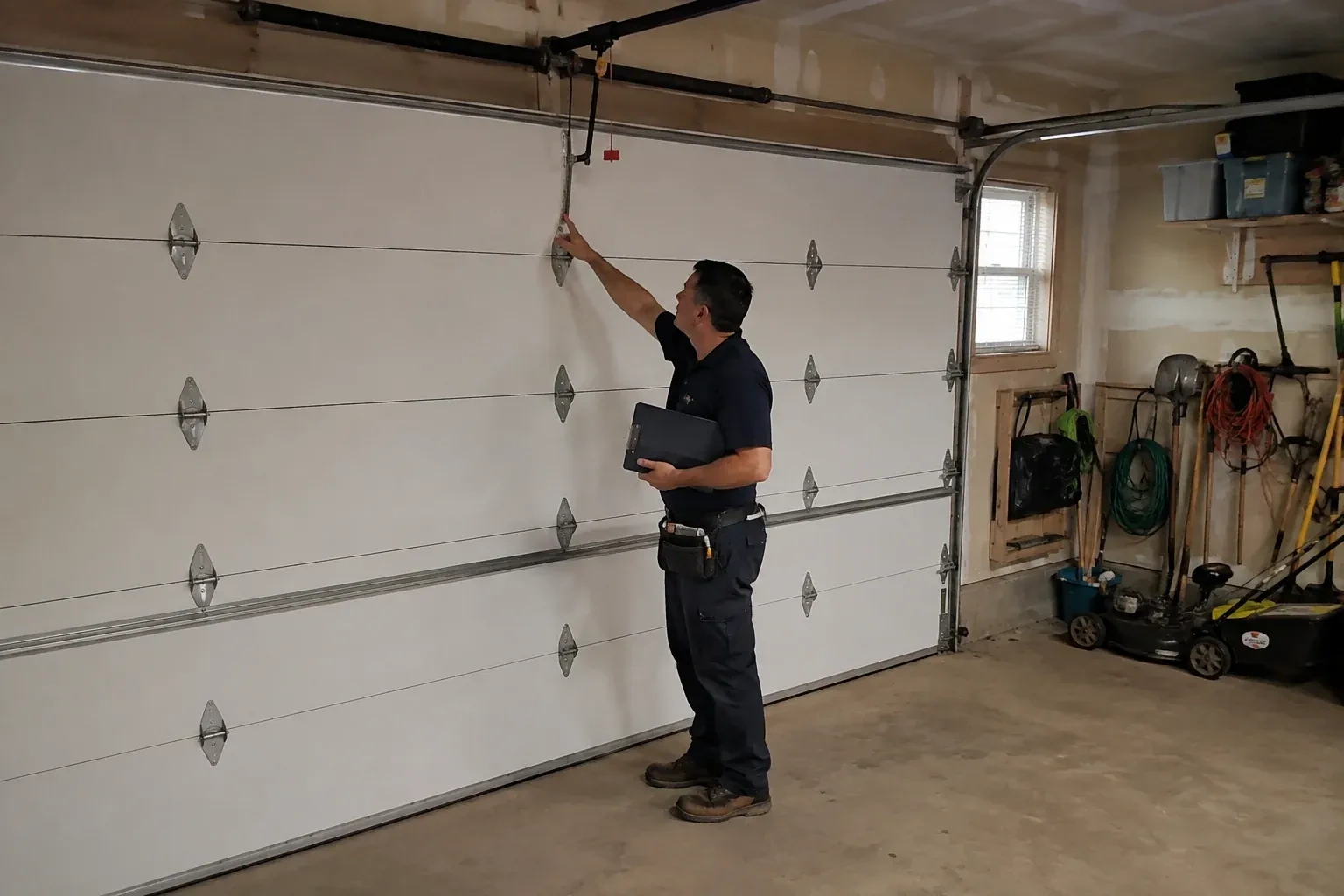
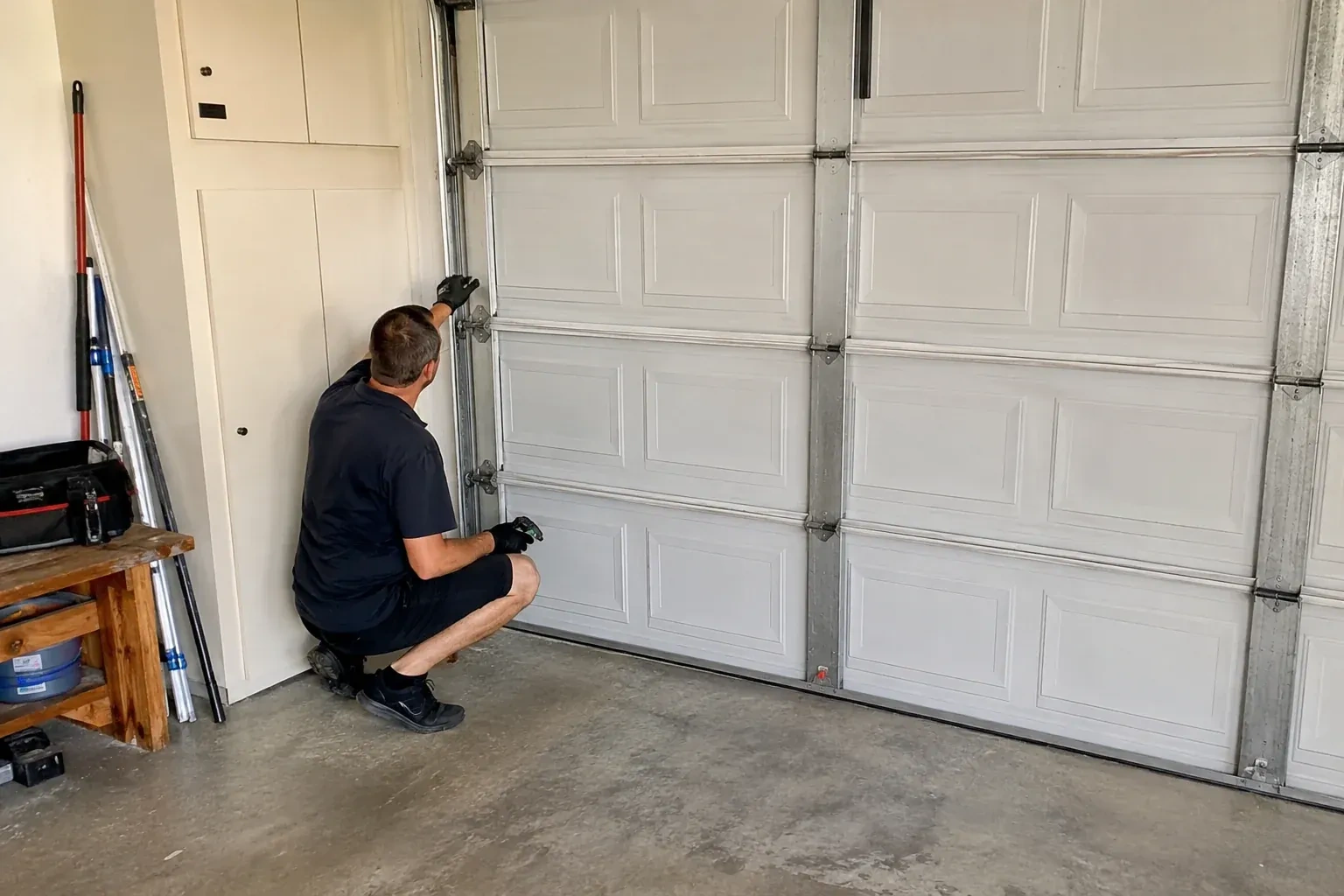
The job follows a steady order. First the door is closed and the gaps are found from inside, by daylight and by feel. Then the door itself is checked for how it sits in the opening, since a seal only works against a door that is square to the frame. The jambs and header are inspected for rot and for how the old strip is fixed. The old material comes off, the surface is cleaned and repaired where needed, the header piece is fitted first and the sides after it, and the door is cycled several times to confirm nothing catches. You are shown the result with the lights off.
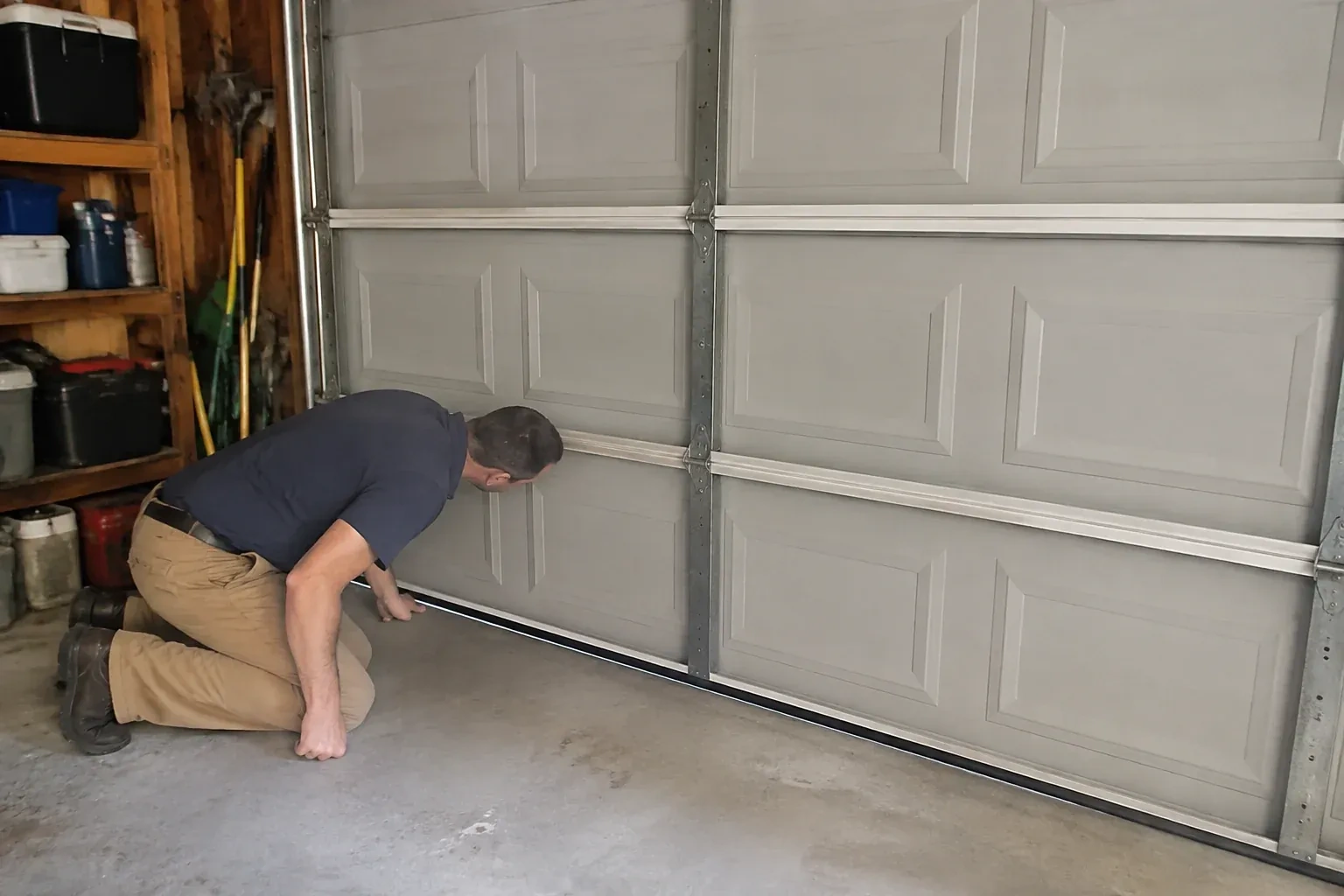
How the visit goesWith the door closed and the garage lights off, a thin bright line runs down the whole left side of the opening. You can see the neighbour's fence through it. The strip that should close that gap has shrunk back from the door.
Garage Door Perimeter Weatherstrip
How the visit goes
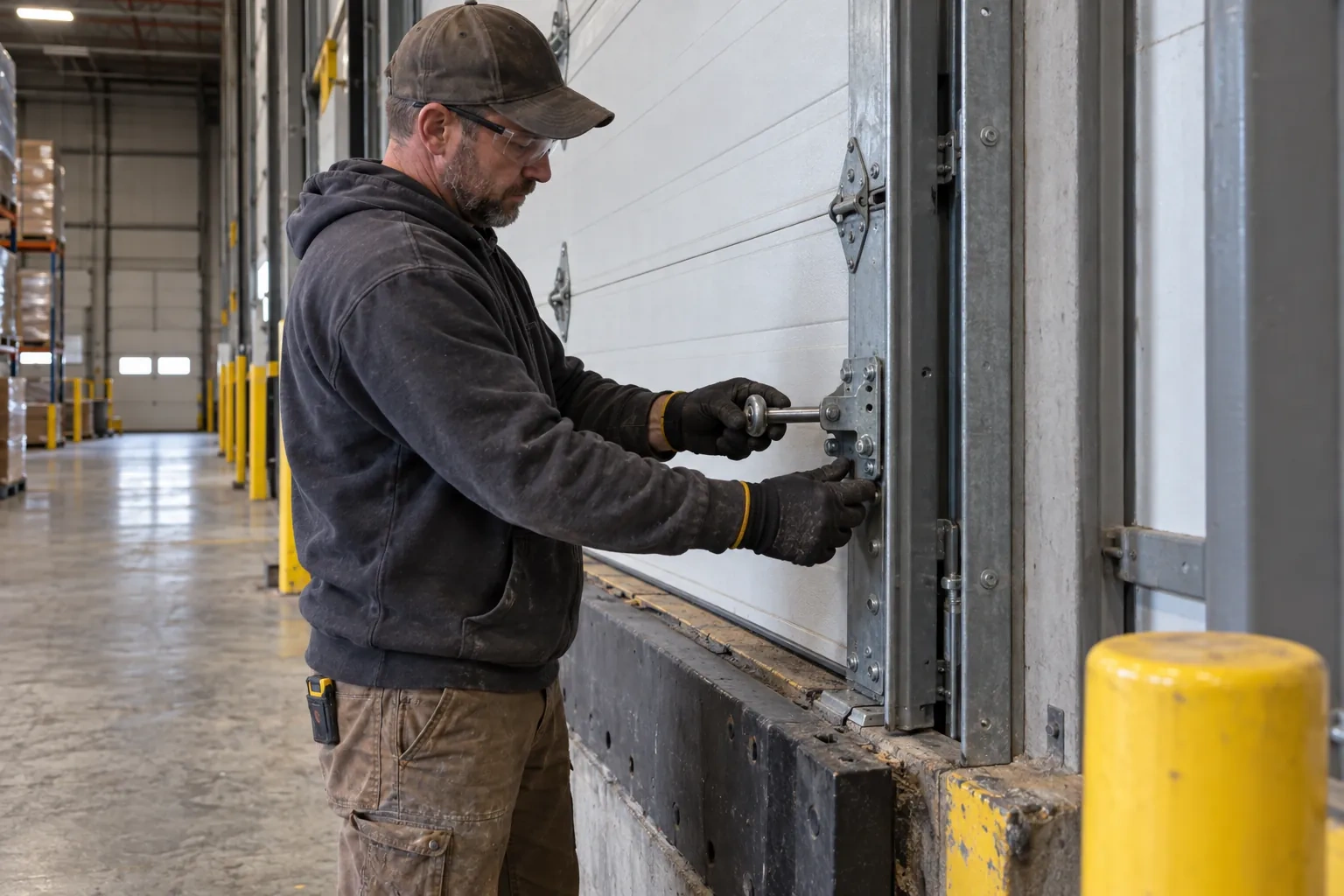
Measuring for the new pieces
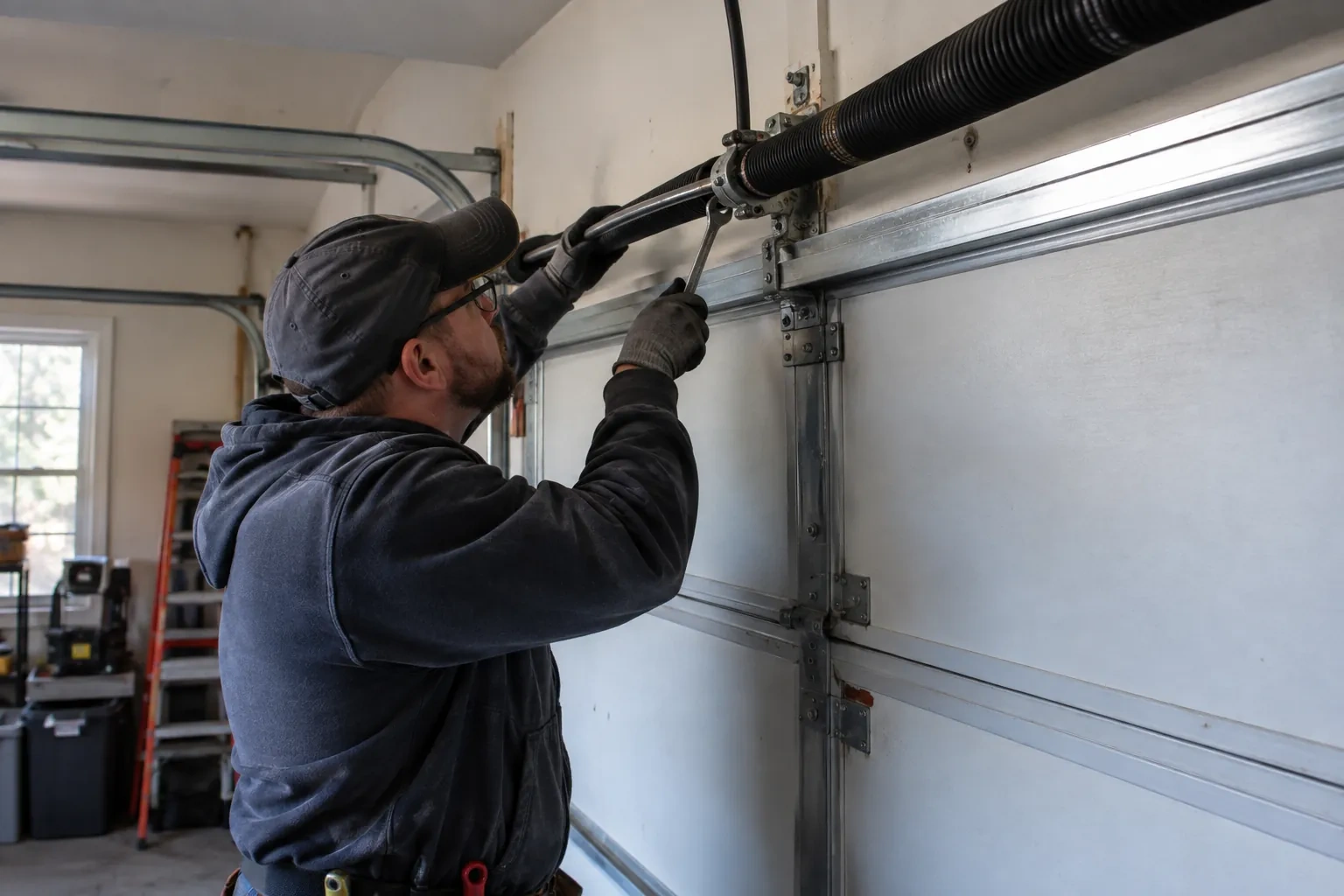
With the door closed, the header is measured across the full width of the opening and each side from header to floor, because openings are rarely the same on both sides. The profile is chosen to match the gap: a wider fin for a door that sits a little back from the stop, a narrower one where the gap is slight, and a one-piece stop where the wood is going. Colour is matched to the trim from a range of standard finishes. The technician also notes whether the existing stop projects far enough to cover the door edge, since a stop set too shallow leaves the fin working alone.
Replacing the wood stop with a one-piece vinyl stop
When the old wood stop is cracked, rotten or buried in paint, it is replaced rather than covered. The one-piece stop, a rigid vinyl moulding with the flexible fin formed along one edge, is cut on a mitre saw to header and side lengths and fitted the same way, header first. It needs no paint, does not rot, and its fin and stop are one part, so the seal cannot peel away from the moulding. Corners are either mitred or the sides butted tight under the header with the fins overlapped. The result looks like fresh trim and works as a seal.
A look round each season
The simplest care is a glance four times a year. Close the door, switch off the lights and look along both sides and the header for daylight. Then step outside and check that no length has lifted, that the corners are still tucked together and that the fin is still soft when you press it with a thumb. Cracks, a hard grey surface or a piece that has shrunk back from the door are the early signs. Manufacturers suggest wiping the seal down with a damp cloth a few times a year, and that also lets you feel any change in it.
Garage Door Perimeter Weatherstrip
In the van
Vinyl stop moulding with integral seal
Silicone spray lubricant
Exterior caulking and gun
Jamb repair lumber or PVC trim
Galvanized or stainless trim nails
Garage Door Perimeter Weatherstrip
What affects the quote
Jamb material
Wood jambs take nails; steel or aluminum-clad jambs need screws and sometimes a backing piece, and masonry openings need a different fixing altogether, each with its own time and hardware.
Removing the old stop and paint build-up
Lifting a wood stop that has been painted for decades, scraping old adhesive and knocking down paint ridges takes longer than pulling a loose fin, and the time shows in the quote.
Alignment work on the door
Where the door sits out of square and a track bracket or the door itself needs small correction before the seal can meet it evenly, that adjustment is named separately.
What to have ready
- Does the door rub or catch on the seal when it moves?
- Is the existing seal a flexible strip on a wood stop, or a one-piece vinyl moulding?
- Where do you see daylight, drafts or snow: sides, top, or corners?
Garage Door Perimeter Weatherstrip: questions
QuestionsCan I paint the new seal to match my trim?
Paint the rigid parts only. A wood stop can be painted before the fin is fitted or with the fin masked, and a vinyl stop needs no paint at all. The flexible fin is left bare, because paint fills it and stiffens it, and a stiff fin cracks well before its time once cold weather sets in. Seals come in a range of colours so the fin can match the trim without a brush.
Should I choose a fin on the wood stop or a one-piece vinyl stop?
If the wood stop is sound, straight and not buried in paint, a new fin nailed to its face is the simpler choice and keeps the look of the trim. If the stop is cracked, soft or has been painted many times, a one-piece vinyl stop replaces it entirely, needs no paint and cannot rot. The technician checks the stop and recommends one or the other on site.
Do you adjust the door as part of the seal work?
Small corrections, yes. If a track bracket needs re-setting or the door needs to come plumb so the fin can meet it evenly, that is done so the new seal is fitted to a door that sits properly. Larger work, such as replacing rollers or a bowed section, is explained and offered as its own job so you can decide on it separately.