Repairs · Kawartha Lakes
Garage Door Bottom Seal Replacement
The garage doubles as a workshop, and with the heater running the floor near the door stays cold and the draft finds your ankles at the bench.
In plain words
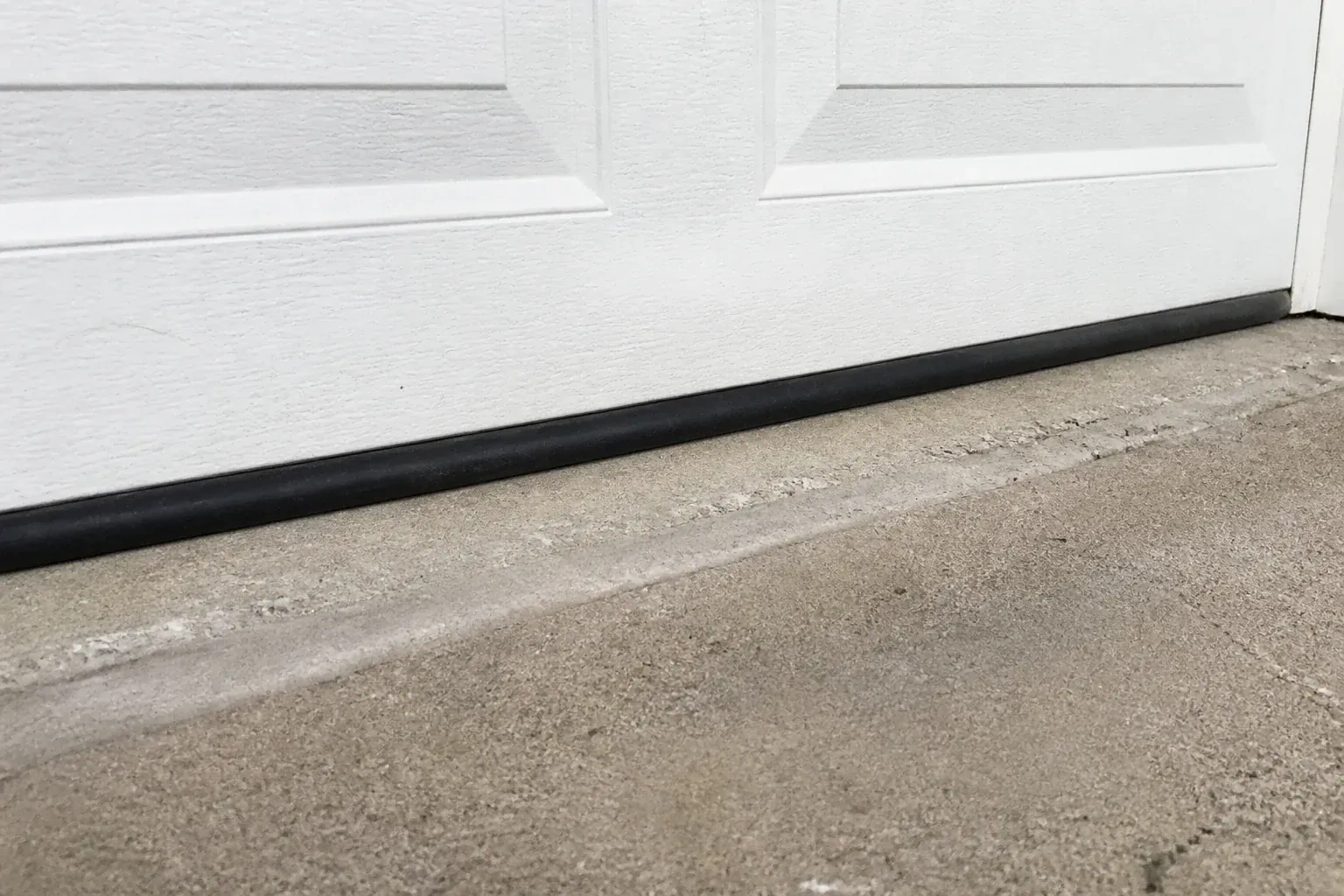
What you have afterwards is a door that closes onto a single soft line of contact from jamb to jamb. Daylight under the door is much reduced, the draft across the floor eases, wind-blown leaves and snow are kept out more effectively, and the tighter gap makes the route in harder for mice. The opener has been reset so the door lands gently on the new strip instead of pressing it flat. You also leave knowing the seal's profile and size, which makes the next replacement a matter of one phone call, and a couple of simple habits for winter that keep the new seal from freezing to the floor.
How the visit goesOne end of the bottom seal has slipped out of its channel and hangs down like a loose shoelace. Each time the door closes it folds under, each time it opens it flaps, and the gap beside it keeps growing.
Garage Door Bottom Seal Replacement
How the visit goes
Is the door hanging level?
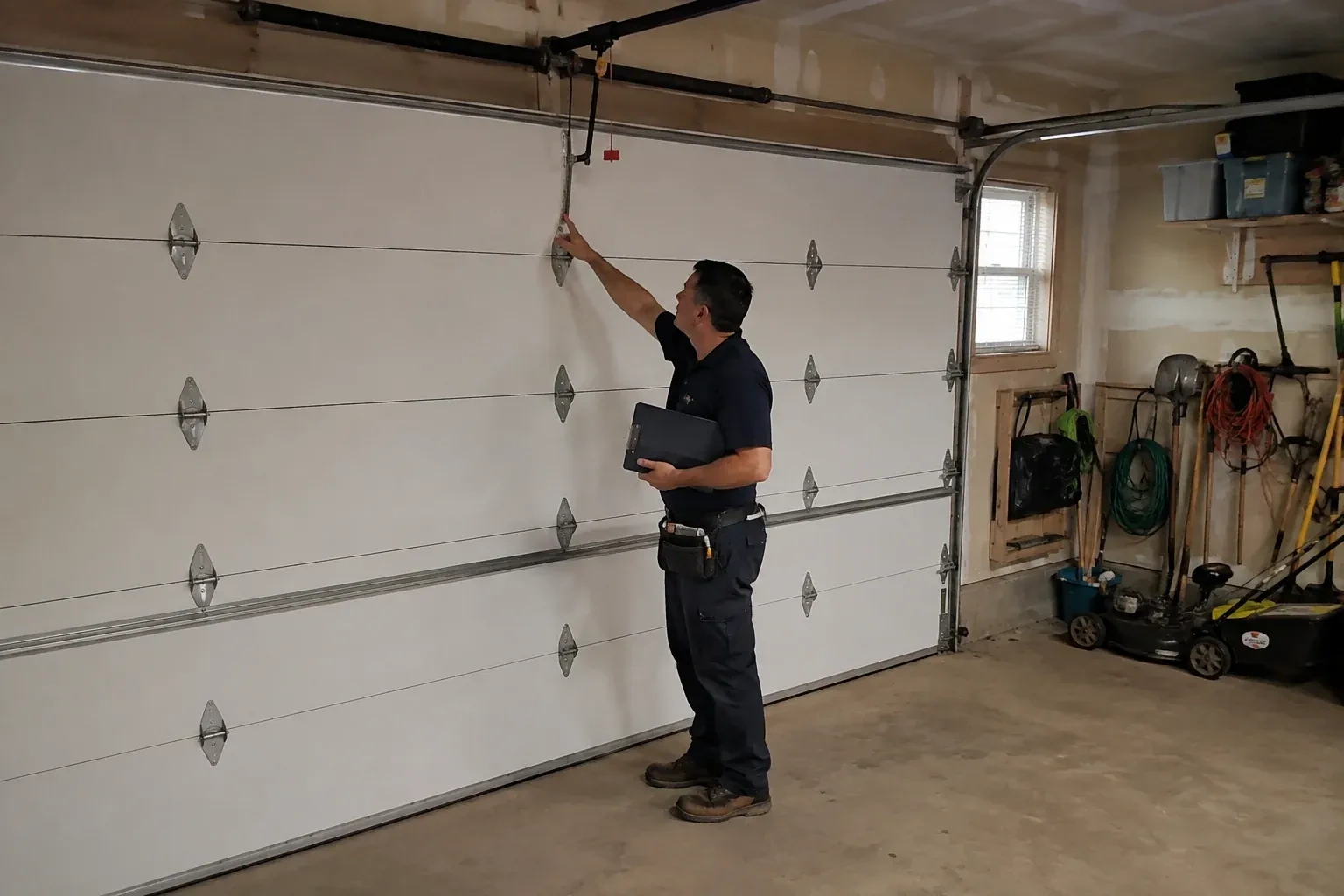
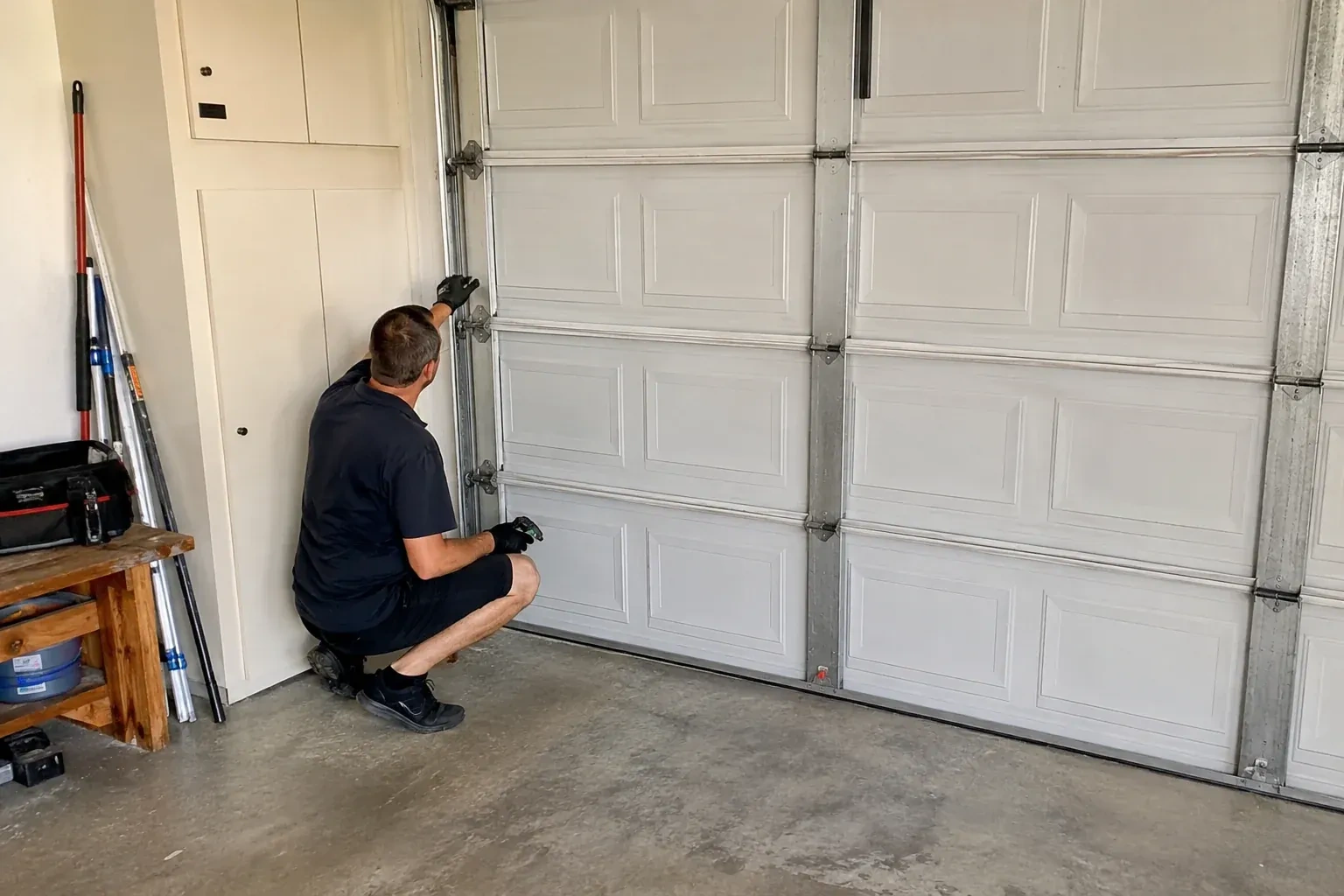
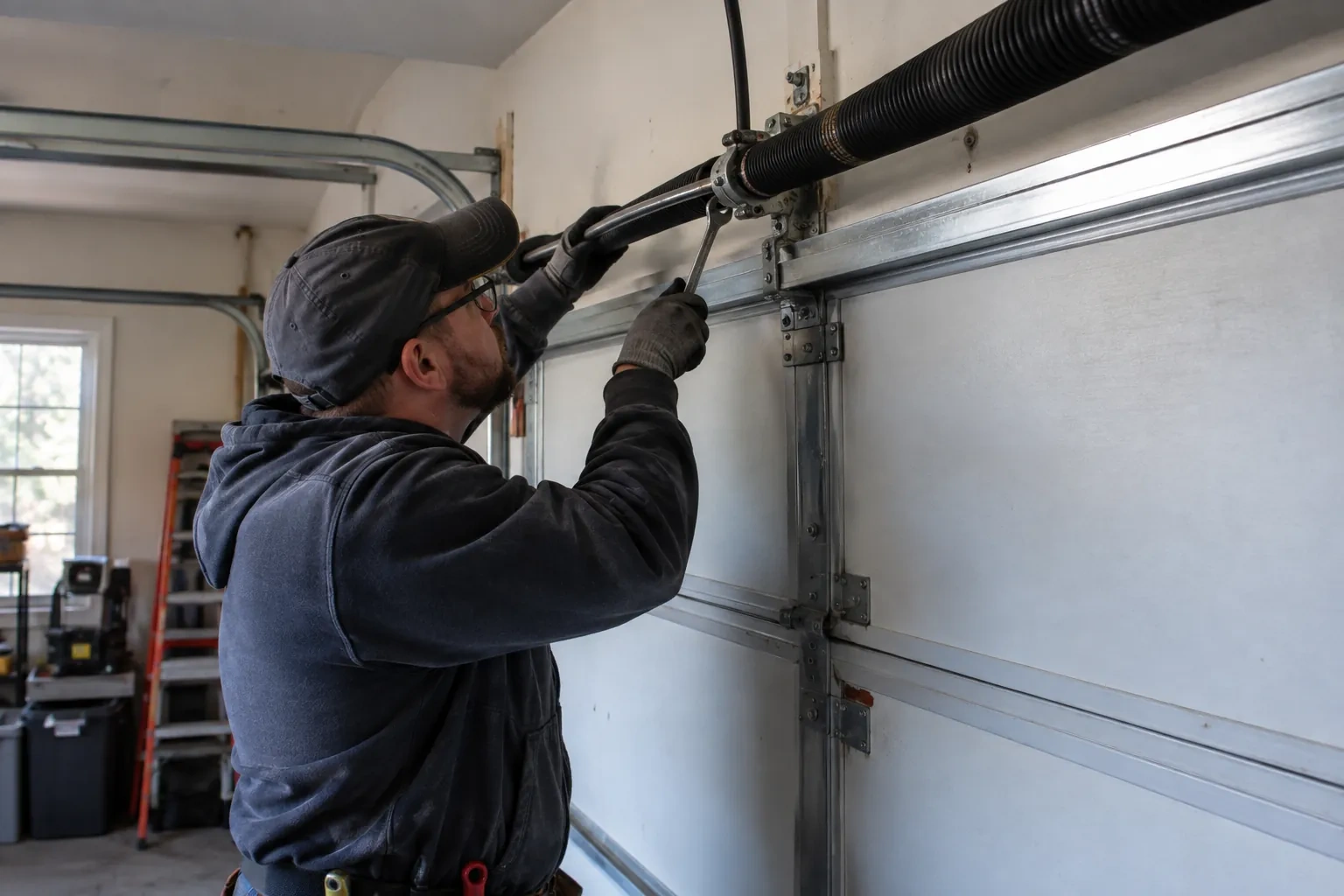
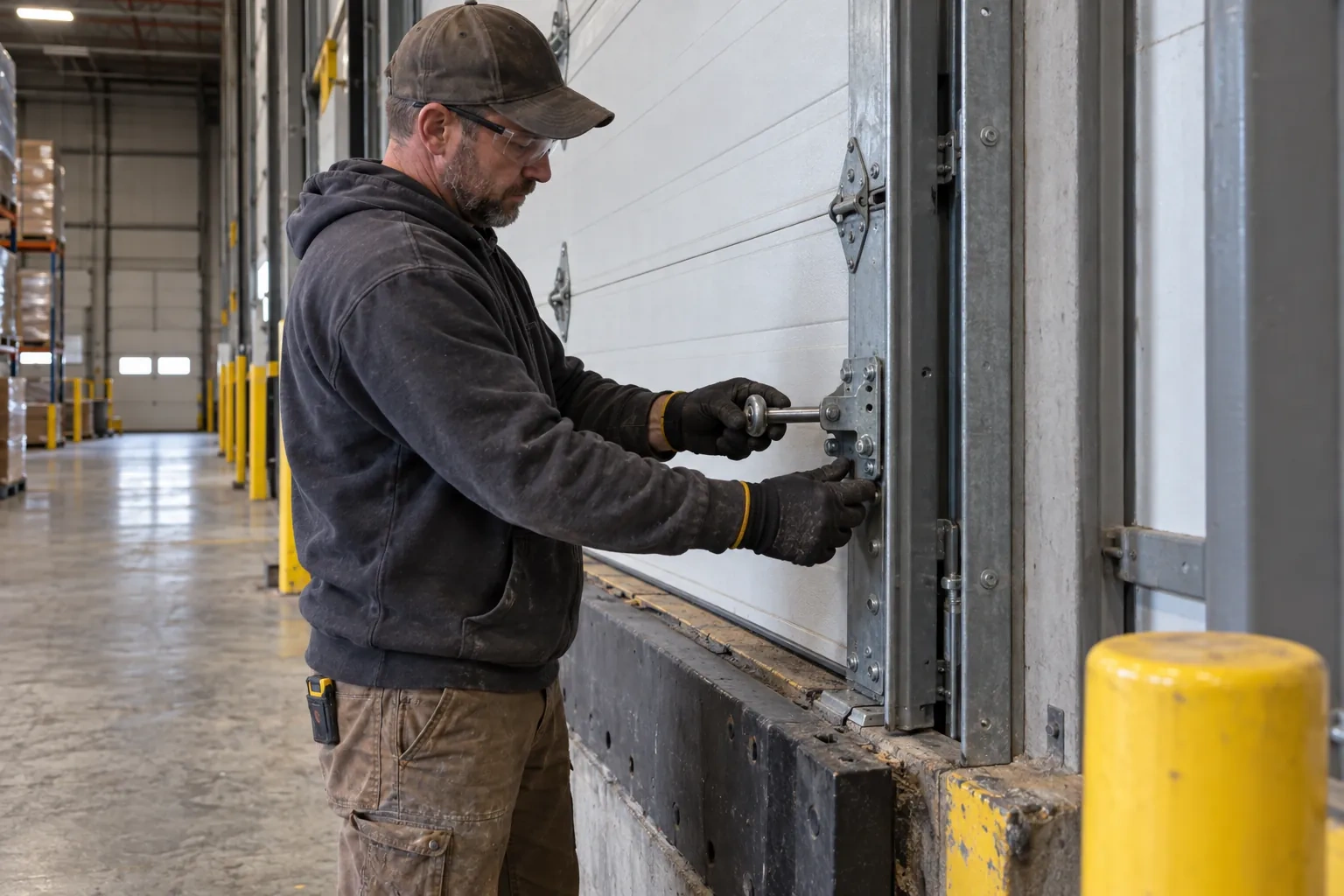
A gap that is wider at one corner is often the door rather than the seal. The technician checks that the door sits square in the opening by comparing the bottom edge to the floor at both ends and looking at how each lift cable wraps its drum. A stretched cable, a drum that has crept on its shaft or uneven spring tension drops one corner a centimetre or two, and setting the door level is what closes that wedge. If the door is out of level, the adjustment is explained as its own item and done first, and the seal is then sized to the gap that remains. Getting the order right saves fitting a seal twice.
Closing the door onto the new seal
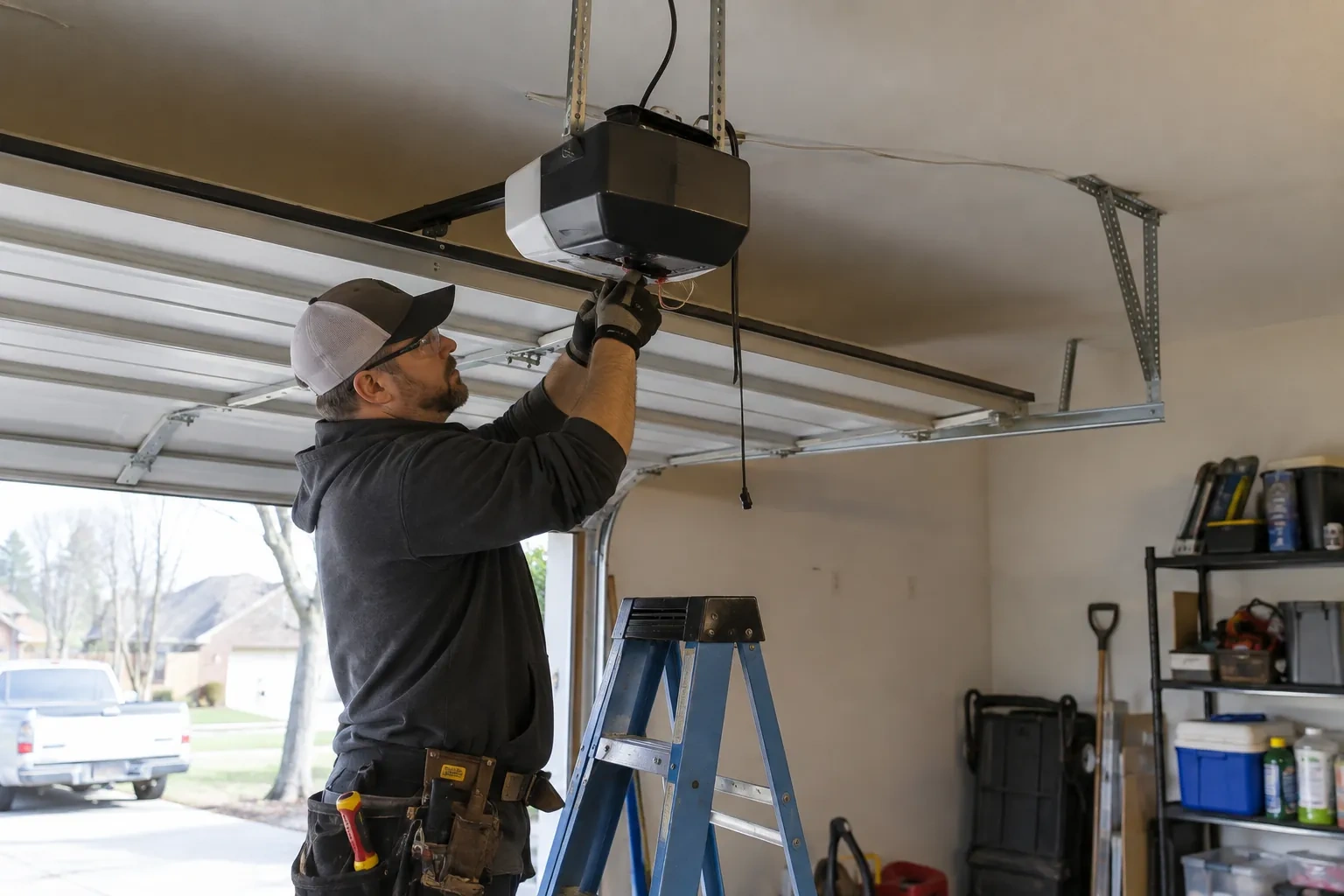
The clamps come off, the opener is reconnected, and the door is run closed under power while the technician watches the bottom edge meet the floor. The down limit is adjusted so the seal compresses gently along its full length without the section bowing, and the force setting is checked so the door settles onto the new, taller strip without reversing. From inside with the lights off, the floor line is checked again for daylight. The reversing test with a 38 mm (1.5 in) solid object, or a 2x4 laid flat under the door, and the photo-eye test finish the visit, and you are shown the door closing before the ladder is packed.
A clear threshold through winter
The seal closes onto whatever is on the floor, so the threshold deserves a moment when you clear the driveway. Push packed snow and the ridge of ice that forms where the door meets the slab away from the opening before running the door, and sweep salt piles and grit clear of the line so they are not ground into the strip. Park a little further in, if the garage allows, so drips from the car fall on the floor rather than at the seal. These are the same habits that protect the bottom brackets and cables in the corners.
Garage Door Bottom Seal Replacement
In the van
Bead-style bottom seal
Self-drilling retainer screws
Straightedge and tape measure
Bulb or U-style bottom seal
Nail-on vinyl strip for wood doors
Garage Door Bottom Seal Replacement
What affects the quote
Door width
A single door takes a shorter length of seal than a double, and the widest doors need more time to feed the strip evenly across. The quote starts from the width measured on the day.
Opener adjustment
Resetting the down limit and force and repeating the reversing test after a taller seal is fitted is a short step that the quote names whenever the door has an opener.
Rodent-resistant seal
A profile with embedded stainless mesh for a garage that has had repeated chewing costs more per length than plain vinyl and is offered where the history calls for it.
What to have ready
- Is the door a single or a double, and roughly how wide?
- Is the door steel, wood, or insulated with a plastic bottom cap?
- What is getting in: light, drafts, water, snow, leaves or pests?
Garage Door Bottom Seal Replacement: questions
QuestionsWhat does a new bottom seal do about water coming in?
It closes the gap between the door and the slab so rain and meltwater meet a continuous barrier. Where the driveway slopes toward the garage, or the slab edge has dipped, the seal alone is working against gravity, and a threshold seal glued to the floor adds a lip that turns water back toward the drive. The technician looks at where the water comes from and recommends the combination that suits your threshold.
Why does the seal freeze to the floor, and what should I do when it does?
Snow melts off the car, runs to the low point at the door and refreezes overnight around the seal. When that happens, leave the remote alone, since the opener will tear the strip or pull the door out of level. Free the seal by hand with gentle warmth along the line or by working a plastic scraper under it, then run the door. A film of silicone on the seal each autumn largely prevents it.
What happens during the visit?
The technician maps the gap with the door closed, checks the door is level and the bottom section straight, and identifies the retainer and profile. The opener is disconnected and the door clamped at working height. The old seal comes out, the channels are cleaned, a new seal is cut and fed in, and any retainer work is done. The door is then closed under power, the opener reset, and the reversing and photo-eye tests run.