New Doors · Kawartha Lakes
Wind-Rated Garage Door Replacement
Your renovation drawings call for a garage door with a stated design pressure, yet the existing door has no readable label or installation record.
In plain words
An exposed garage can experience both wind pushing the door inward and suction drawing it outward. A wind-rated replacement is built to address those opposite actions through reinforced panels, horizontal struts, stronger track arrangements, suitable rollers, and secure anchorage. The surrounding header and jambs are examined because the door transfers load into them. Once fitted, the new assembly is carefully balanced and cycled by hand before the opener is adjusted, giving the owner a robust opening that remains practical for everyday arrivals and departures.
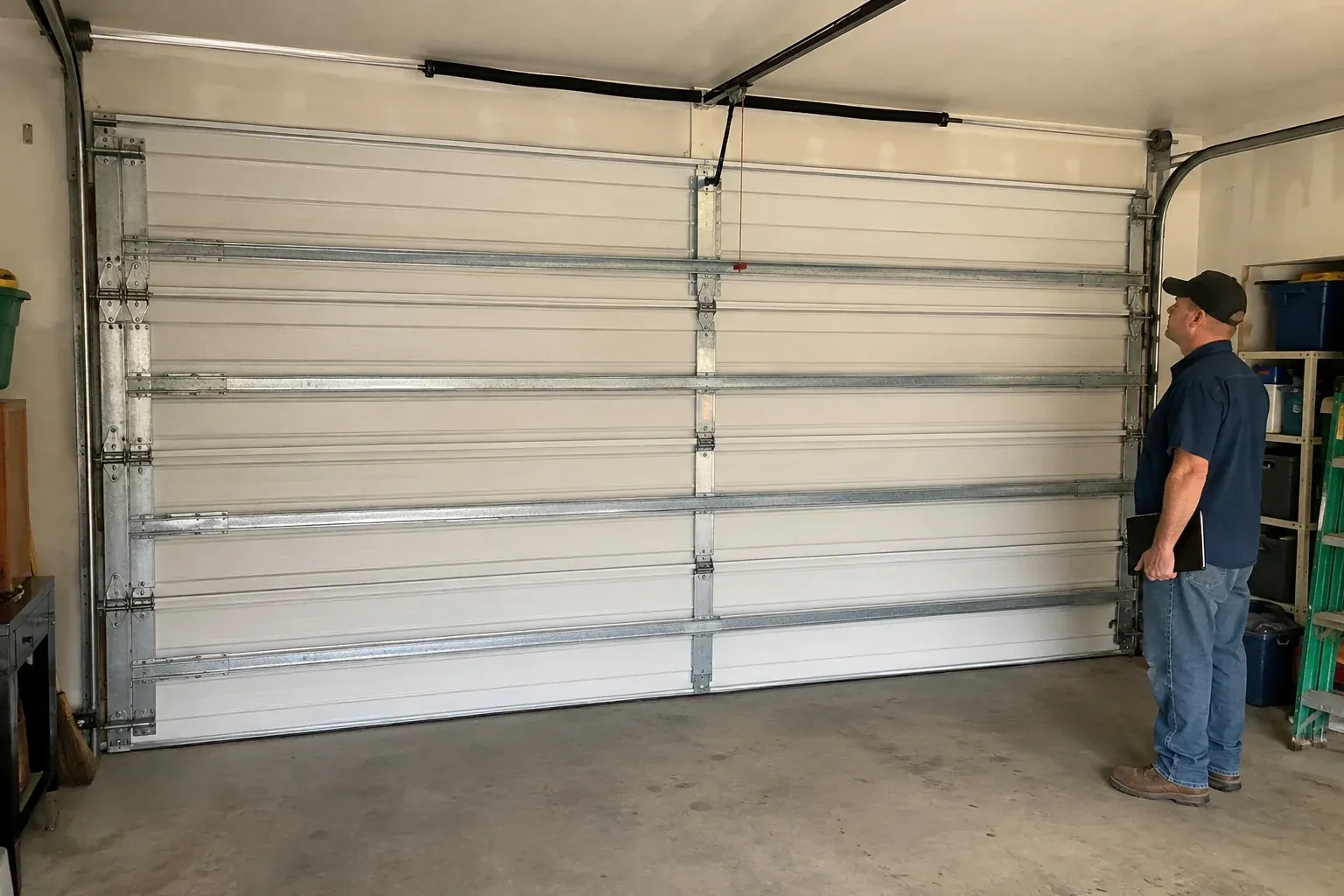
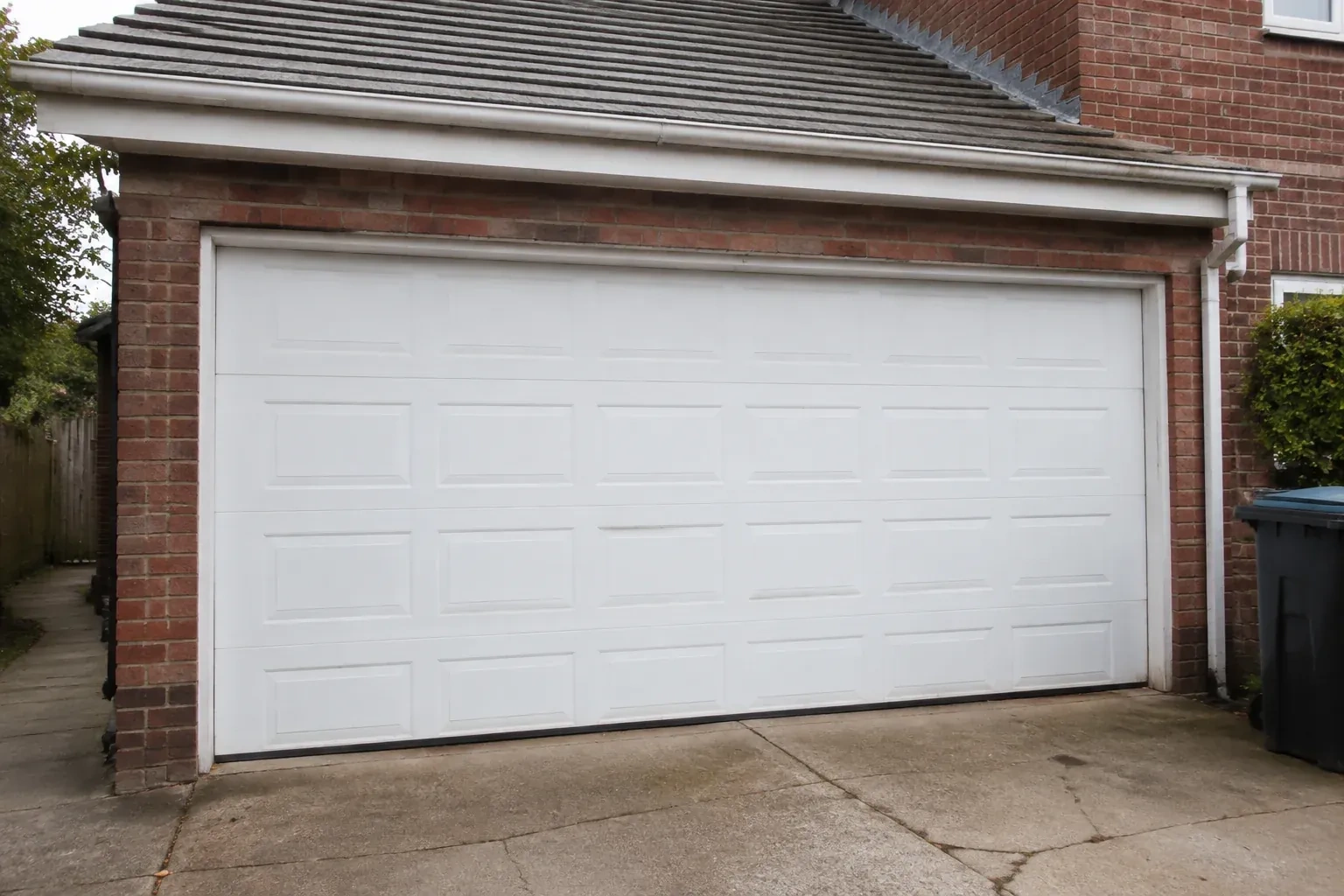
How the visit goesThe current double door shudders when pressure changes outside, and daylight appears briefly along one edge. Its tracks are light, the jamb material is aging, and no one knows which reinforcement was originally specified.
Wind-Rated Garage Door Replacement
How the visit goes
Measure the full opening
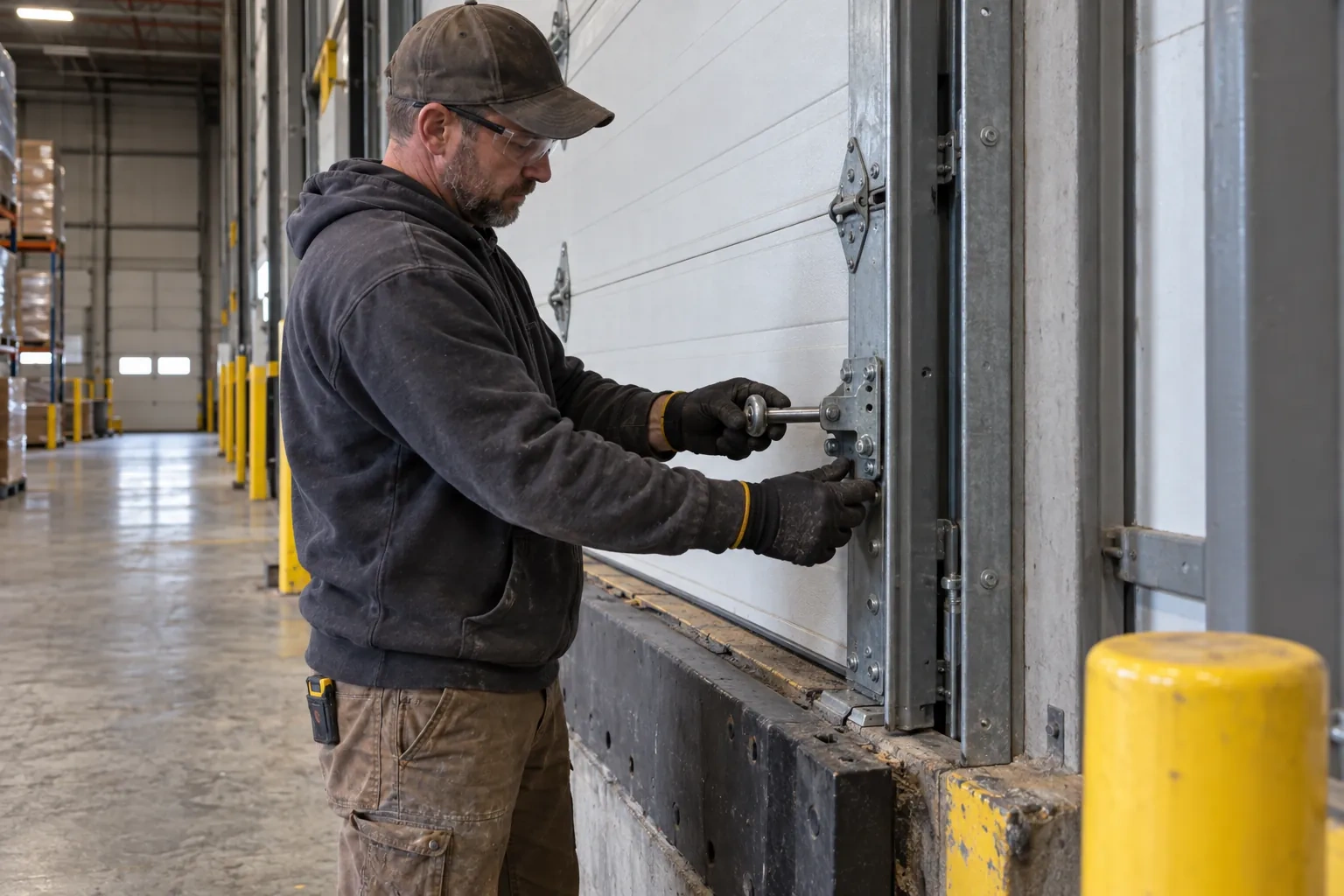
The first survey records finished width and height at several points, plus sideroom, headroom, backroom, floor slope, and ceiling obstructions. A wide door must fit its documented size range, and small variations in an older opening can affect track position or seal contact. The technician also notes whether the jambs are plumb, the header is level, and the floor rises near either corner. These measurements define the usable opening before any door style, window arrangement, or reinforcement package is chosen.
Dismantle the old system methodically
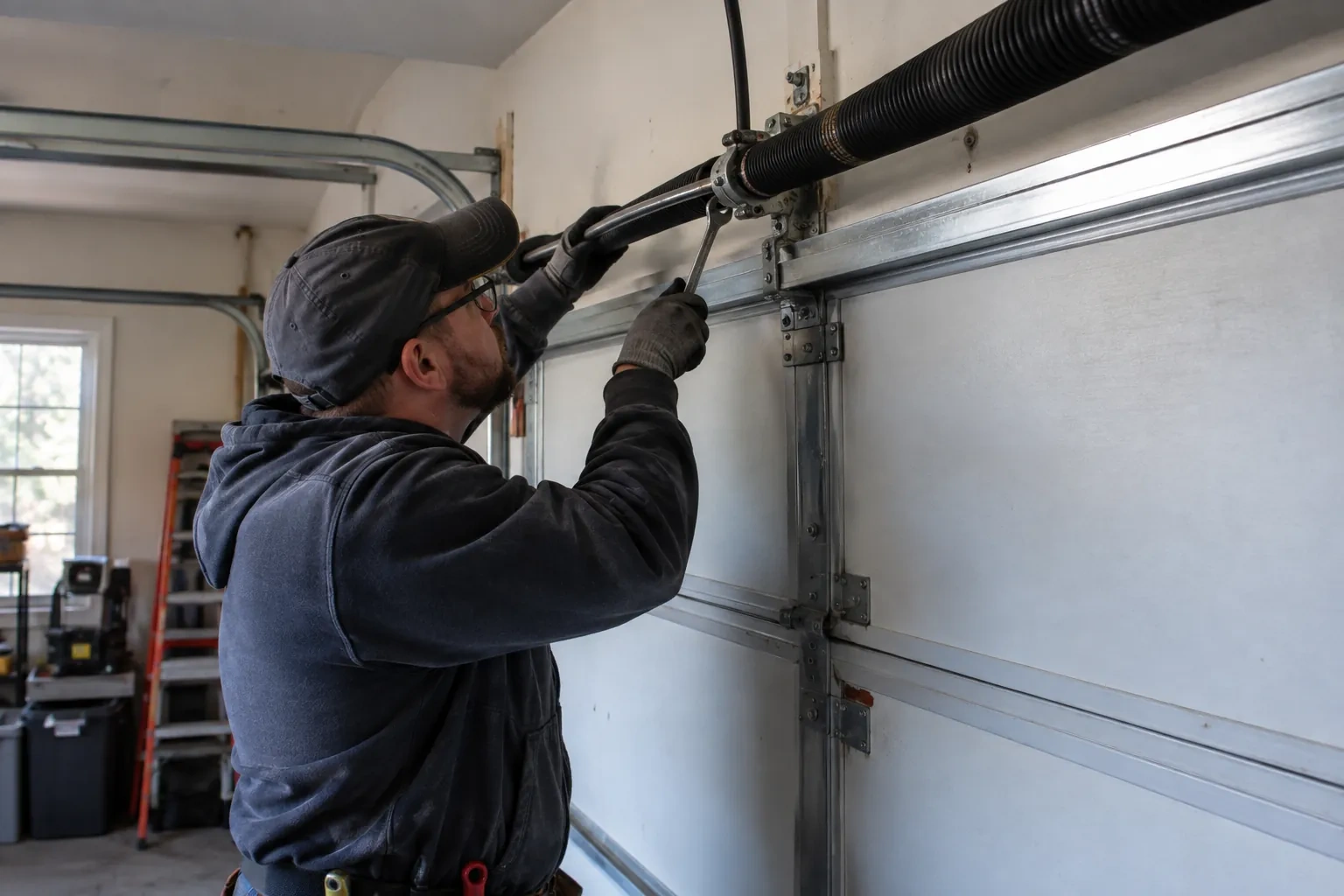
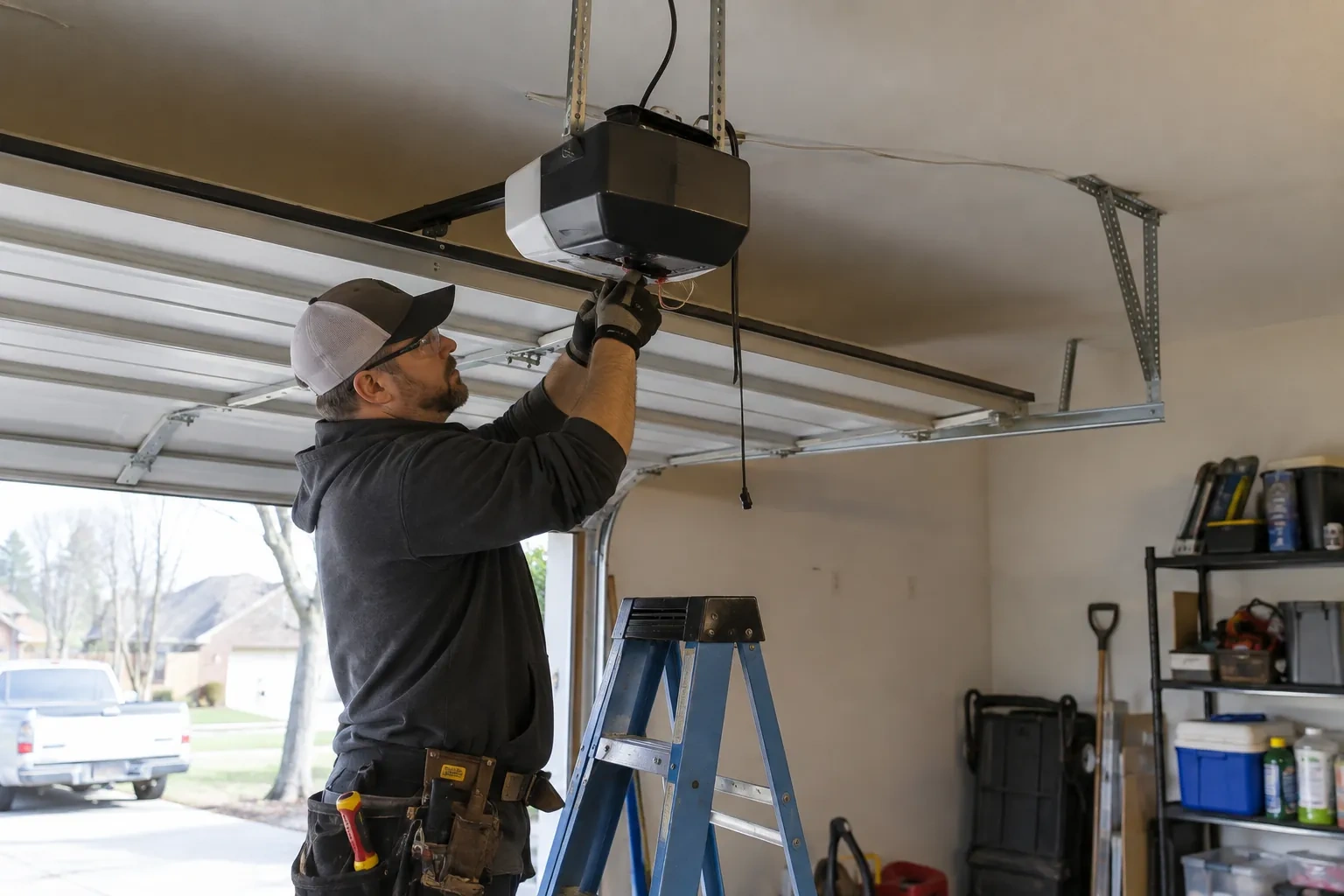
Removal begins with the door closed and controlled. The operator is disconnected, lift cables are secured, and spring tension is released with tools made for the counterbalance system. Sections come apart in sequence so their weight stays supported, followed by tracks, brackets, shaft, and remaining hardware. Technicians watch for bent parts that may move as tension changes. Once the opening is clear, old fastener holes and concealed jamb areas can be examined before any new attachment layout is marked.
Simple seasonal observation
A few visual checks help preserve the installed configuration. From inside the closed garage, look for loose strut or hinge fasteners, rollers moving out of line, daylight at the seals, corrosion, or changes in the jamb material. Clear leaves and grit from the floor near the tracks, and keep stored items away from moving parts. After freeze-thaw weather, note whether the bottom seal remains seated evenly. Any developing bow, rub, or unusual noise provides a clear reason to arrange a closer inspection.
Wind-Rated Garage Door Replacement
In the van
Jamb and flag brackets
Specified structural anchors
Operator reinforcement bracket
Reinforced door sections
Torsion springs and shaft
Wind-Rated Garage Door Replacement
What affects the quote
Supporting wall material
Wood framing, masonry, concrete, and steel call for different anchors, tools, embedment details, edge clearances, and installation methods at the jambs.
Documentation requirements
Permit coordination, design information, installation records, labels, component schedules, photographs, and closeout details can add project administration to the physical work.
Jamb and framing condition
Sound mounting faces support accurate anchorage. Split lumber, weak blocking, deteriorated material, or unfinished structural changes may require coordinated preparation before door installation.
What to have ready
- Are any sections, struts, tracks, or jamb fasteners visibly damaged?
- What are the approximate width and height of the opening?
- Would you like windows, insulation, or a different panel style?
Wind-Rated Garage Door Replacement: questions
QuestionsHow is the new door tested after installation?
Technicians cycle it by hand to assess balance, cable tracking, roller travel, clearances, and seal contact. After the operator is connected, they set the open and close limits, confirm the manual release, interrupt the photoelectric beam, and conduct the prescribed contact-reversal check. Hardware and reinforcement receive a final visual review with the door closed and raised.
Can a similar-looking hinge or roller be substituted later?
Appearance is not enough to establish equivalence. Metal thickness, strength, hole pattern, roller stem length, bearing design, and fastener placement can differ in ways that affect both movement and structural performance. Future service should use the door record and applicable component guidance to match parts, preserving the intended arrangement instead of relying on a visual comparison.
Is a building permit needed for replacement?
A like-for-like door change and a project involving structural alteration are different situations. Enlarging an opening, combining bays, replacing framing, or completing work already covered by a permit can introduce municipal review. Ask the local building department about the specific scope, and keep its direction with the door selection and installation documents.
Related services
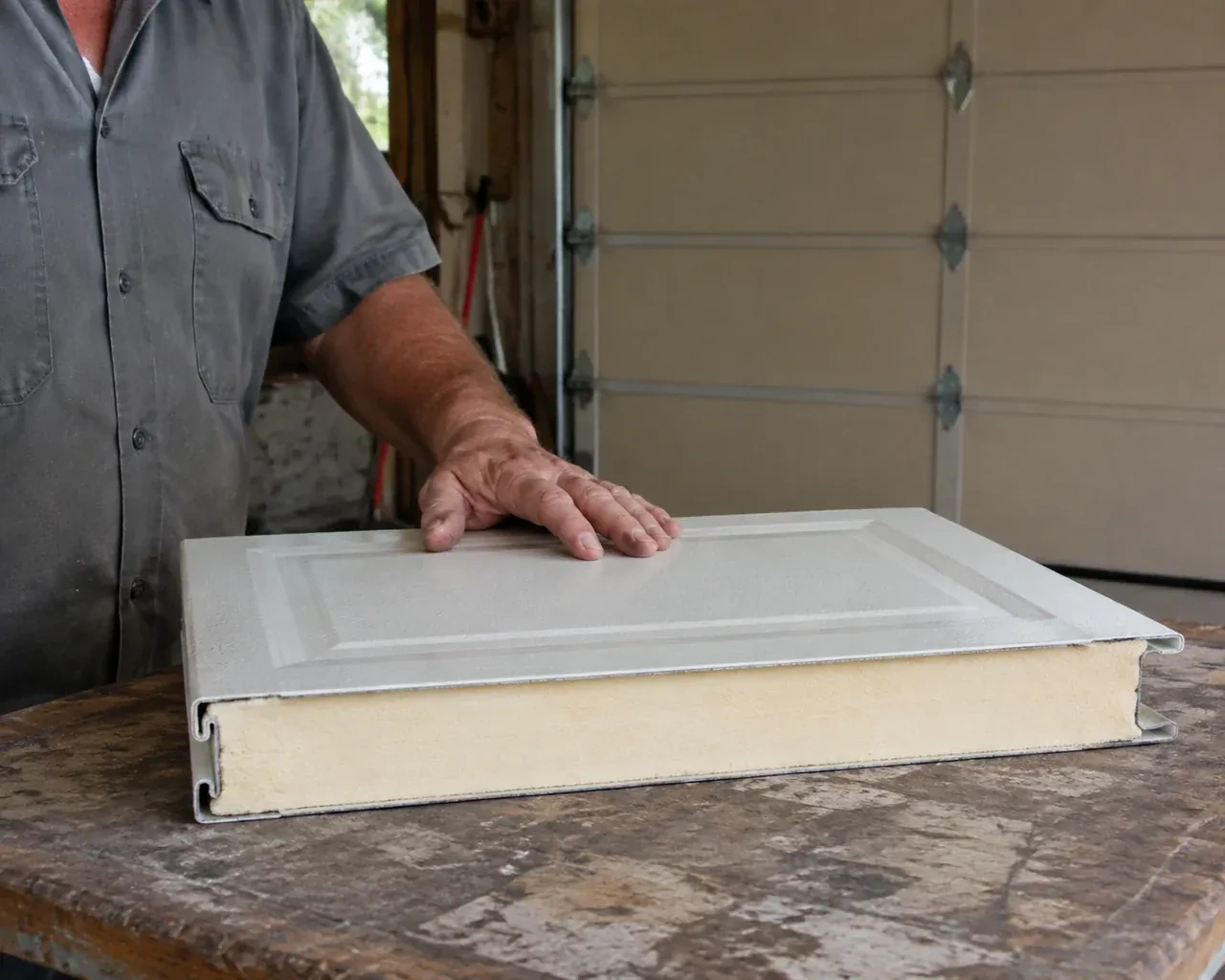
- Insulated Steel Garage Door InstallationYou want windows for natural light without turning the garage into a cold glass wall.
- Carriage-House Garage Door InstallationYou appreciate the grain and depth of traditional wood doors, though regular refinishing is not part of your plan.
- Full-View Glass Garage Door InstallationYou like the brightness of clear glazing but not a direct view of everything stored inside.