Garage Doors
Between visits
The questions that come up
Will you tell me if the door should not be used?
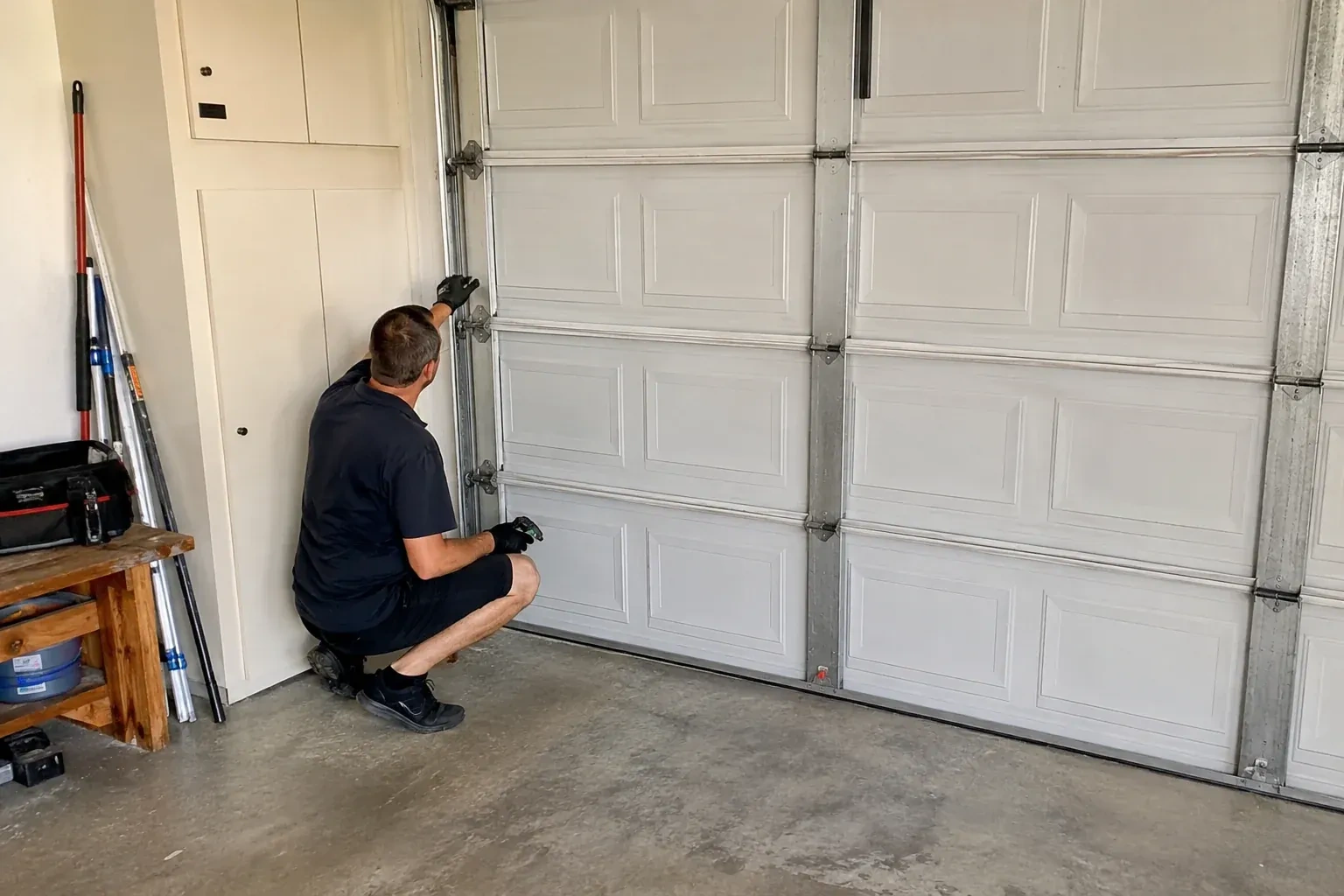
Yes, plainly and at the door. A slack or frayed cable, a gap in a spring coil, a door hanging crooked, a bracket pulling out of the framing or an opener that fails the reversal test are the kinds of findings that put an item in the stop-use group. When that happens you see the reason yourself, the door is left resting in a safe spot with the opener unhooked, and the fix is written up and quoted so it can be booked.
Can a tune-up make my noisy door quieter?
Usually, yes, and often dramatically. Most garage door noise comes from dry hinge pins, dry roller bearings and hardware that vibration has loosened, and those three are exactly what a tune-up addresses. Some noise comes from parts that have worn, such as a roller gone out of round or a chain that has stretched, and the technician tells you which sounds were settled by maintenance and which point to a part worth replacing, with a separate quote for that.
What should I do while I wait for the technician?
Keep children and pets out of the garage, do not press the wall button or a remote, and do not try to push or pull the door. If the door is fully closed and the opener is still trying to move it, unplug the opener. Move anything valuable out from under the door if you can do so without touching it. A photograph of the door from a safe distance is helpful to show how it was sitting.
Does a new section bring back the door's original strength?
A section ordered to the same specification carries the same steel gauge, core and reinforcement as the original, and it is fitted with sound hinges, new fasteners and, where the design calls for it, a strut. Combined with the alignment and balance work done at the same time, the door returns to operating the way its manufacturer designed it to. Where an original section had bowed for want of a strut, adding one leaves that part stiffer than before.
What does a new bottom seal do about water coming in?
It closes the gap between the door and the slab so rain and meltwater meet a continuous barrier. Where the driveway slopes toward the garage, or the slab edge has dipped, the seal alone is working against gravity, and a threshold seal glued to the floor adds a lip that turns water back toward the drive. The technician looks at where the water comes from and recommends the combination that suits your threshold.
Can I paint the new seal to match my trim?
Paint the rigid parts only. A wood stop can be painted before the fin is fitted or with the fin masked, and a vinyl stop needs no paint at all. The flexible fin is left bare, because paint fills it and stiffens it, and a stiff fin cracks well before its time once cold weather sets in. Seals come in a range of colours so the fin can match the trim without a brush.
I have no key for the outside handle. Can it be made to work?
Yes. The cylinder is removed and either rekeyed to a fresh combination, so any key held by a previous owner is retired, or replaced with a new cylinder carrying the correct tailpiece. New keys are cut and tested in the handle before the technician leaves. If a locked door has to be opened first, the technician confirms your connection to the property as a matter of course.
Should the track be lubricated too?
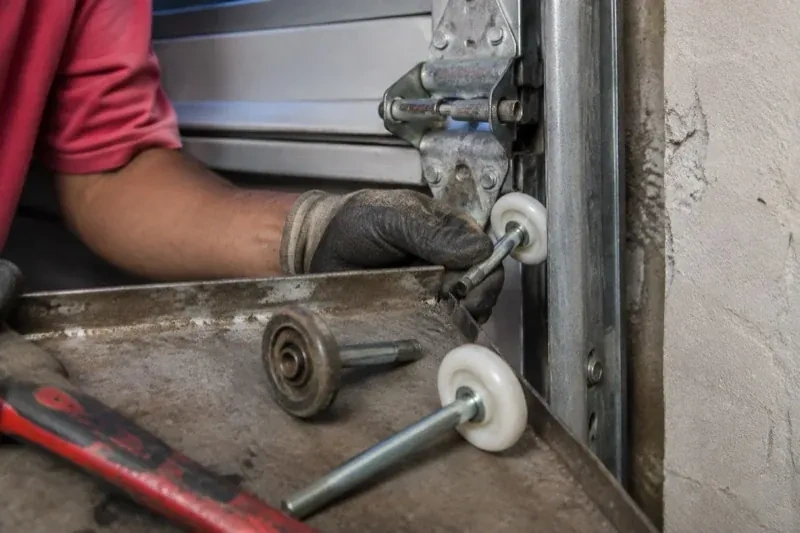
No. The track is meant to be clean and dry so the wheels roll rather than slide. Grease or spray in the raceway collects dust, sand and, in winter, salt and slush, forming a paste that grinds the wheels and can let a roller skid instead of turn. The technician cleans the track and leaves it dry; at home, a wipe with a cloth and an occasional sweep of the bottom few inches is all the track wants.
How long do garage door hinges last?
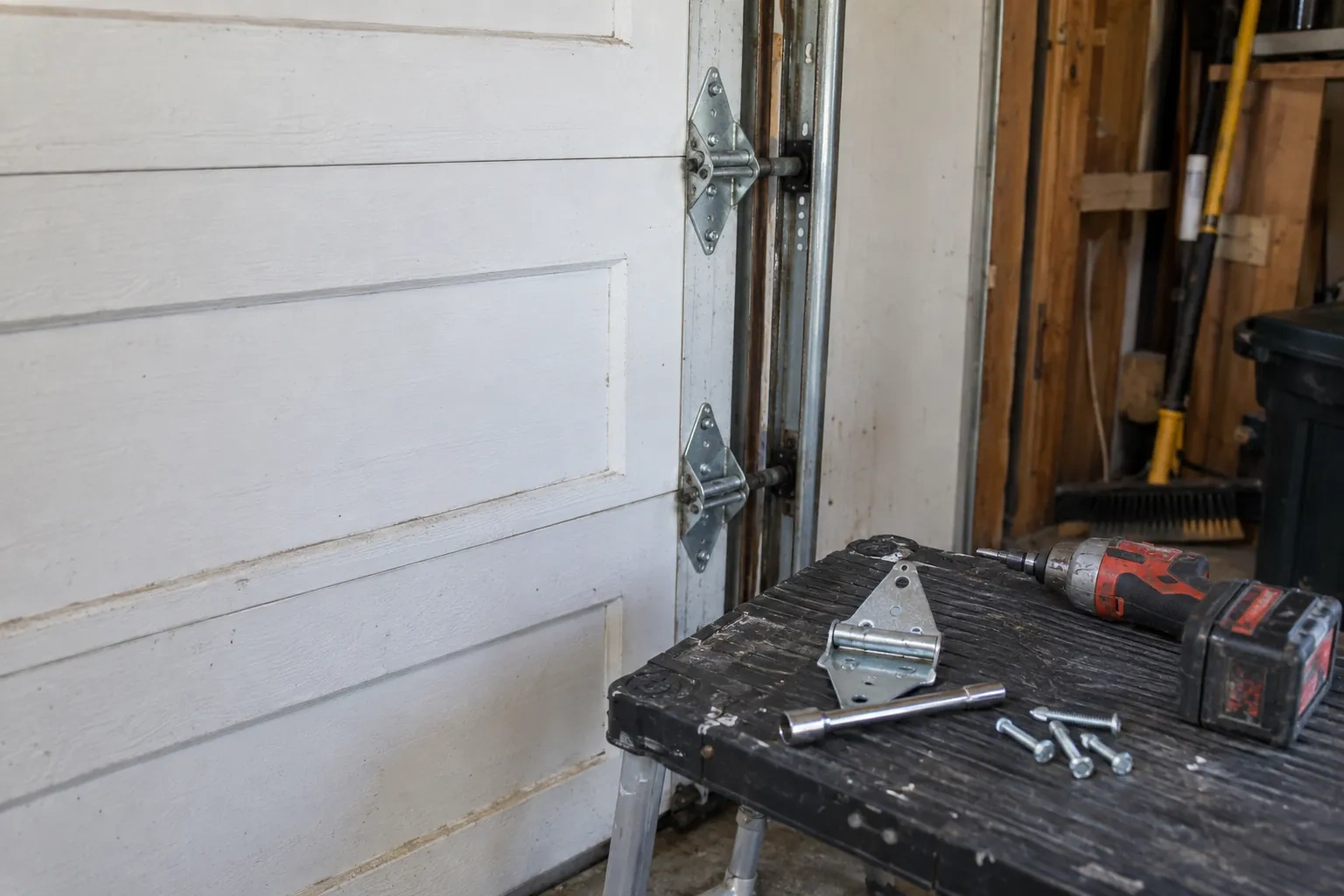
Many hinges last the life of the door. Those that fail early are usually on doors that were out of balance, had seized rollers, saw heavy daily use, or sat in slush and salt through many winters. A light hinge on a heavy door also wears sooner. Rather than a fixed number of years, watch for cracks near the holes, a rocking pin, rust at the knuckle and screws backing out.
Why is there a gap between the track and the edge of the door?
That gap is intentional. The rollers sit on stems that reach out from the hinges, and the track stands a set distance from the door so the wheels ride in the channel without the door's edge touching the track. The gap should be equal on both sides and slightly larger at the top of the vertical run, which is the taper that lets the door seal at the stop and release on opening. Unequal gaps are a sign the track has moved.
Can I lift the door by hand while a cable is off?
Leave it. With one cable slack the door is being carried on one side only, so it is unbalanced and may bind or drop unevenly when moved. The technician arrives with clamps and a method for taking the door's weight before anything is moved, and that is the moment to lift it. Until then a stationary door is exactly what you want.
How long does a torsion spring replacement take?
Most residential replacements are completed in one visit. Securing the door, measuring, removing the old spring, fitting and winding the new one, balancing and testing the opener typically takes an hour or two, longer if bearings, cables or a bent top section are also being dealt with. The technician confirms the scope after the first checks, so you know what the visit involves before the work starts.
Why does the door slam down the last bit?
A door that drops the final stretch is telling you the springs are no longer holding it. As an extension spring loses its temper it gives less pull near the bottom of travel, where the door needs the most support, so the door falls that last foot. Fresh springs matched to the door's weight bring the door down under control and take that shock off the bottom section and the opener.
How long does a balance adjustment take?
A straightforward tension adjustment on a sound door is generally about an hour, including the inspection, the hand tests and the opener checks at the end. Resetting cables to level the door, replacing rollers to remove friction, or moving to a spring replacement adds time. The technician will tell you what the inspection found and how the visit is shaping up before the work continues.
What does an opener diagnosis actually involve?
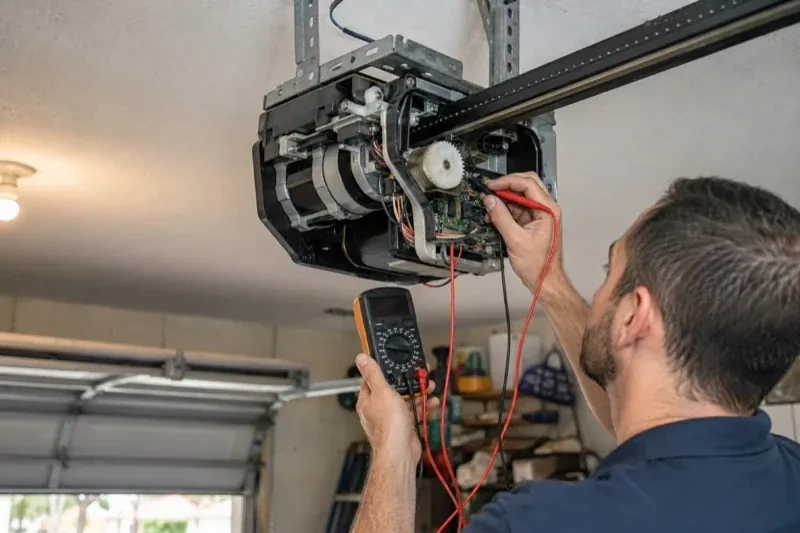
A fixed sequence of checks, done in order so nothing is assumed. Power at the receptacle. Each control tried on its own. The photo eyes and their indicator lights. The head unit's flash code, if it has one. The drive train from motor to trolley. Then the door itself, disconnected and lifted by hand to test its balance. Only after that is a part named and, where it is a small one, replaced during the same visit.
Should I use the slide lock on the door with a chain drive?
No. The manual slide lock on the door is disabled or removed once an operator is connected, and the technician checks that during the repair. A motor pulling against a locked door strains the chain, strips the drive gear and can bend the top section of the door. If you want the door secured against remotes, the lock button on the wall control switches them off, and a track lock designed to work with an operator does the rest.
Does the trolley need replacing when the belt does?
Not usually. The trolley is checked while the belt is off: its halves should part with the release cord and lock again, the housing should be free of cracks and it should ride the rail without play. A trolley that passes those checks stays and simply receives the new belt and a fresh clip. One that sticks or rattles is replaced in the same visit.
How long does an opener replacement take?
Plan on about half a day for a straightforward swap on a balanced door: removal, hanging the new rail and head, wiring the sensors and console, setting travel and force, running the safety tests and programming remotes. If the door balance check turns up spring or roller work, or a receptacle needs adding by an electrical contractor, allow extra time or a second visit for that part.
My opener has no sensors at all. Can they be added?
If the opener predates the entrapment-protection standard, which operators have had to meet since the mid-1990s, its board has no sensor circuit and a pair cannot simply be wired in. The positive news is that a modern operator brings the whole package: matched sensors, force reversal and a monitored circuit. The technician confirms the model first, because some units do have the terminals and simply had their sensors removed.
Does programming a new remote erase the old ones?
No. A short press of the learn button adds a control to the memory alongside the others. Erasing them takes that model's own sequence, a longer hold on many openers and a different button combination on others. Pressing into the erase sequence by accident is what occasionally leaves a household finding every remote dead after trying to add one. The fix is to reprogram each device.
What kind of Wi-Fi does it need?
A normal home network with a modern security type and a usable signal at the garage ceiling. Most hubs connect on the 2.4 GHz band, which travels farther through walls than 5 GHz, so a router that broadcasts both is fine as long as the 2.4 GHz network is switched on and can be selected. The technician measures the signal where the hub will sit before mounting anything.
What is an outside key release, and should I add one?
It is a keyed cylinder, mounted through the top section on a sectional door or at mid-height on others, with a cable running back to the trolley lever. Turn the key, pull the cylinder, and the door is free to lift from the driveway. It earns its place on any garage where the overhead door is the only way in, especially a detached garage. It can be fitted during the same visit, with two keys, once the door and opener are checked for a compatible kit.
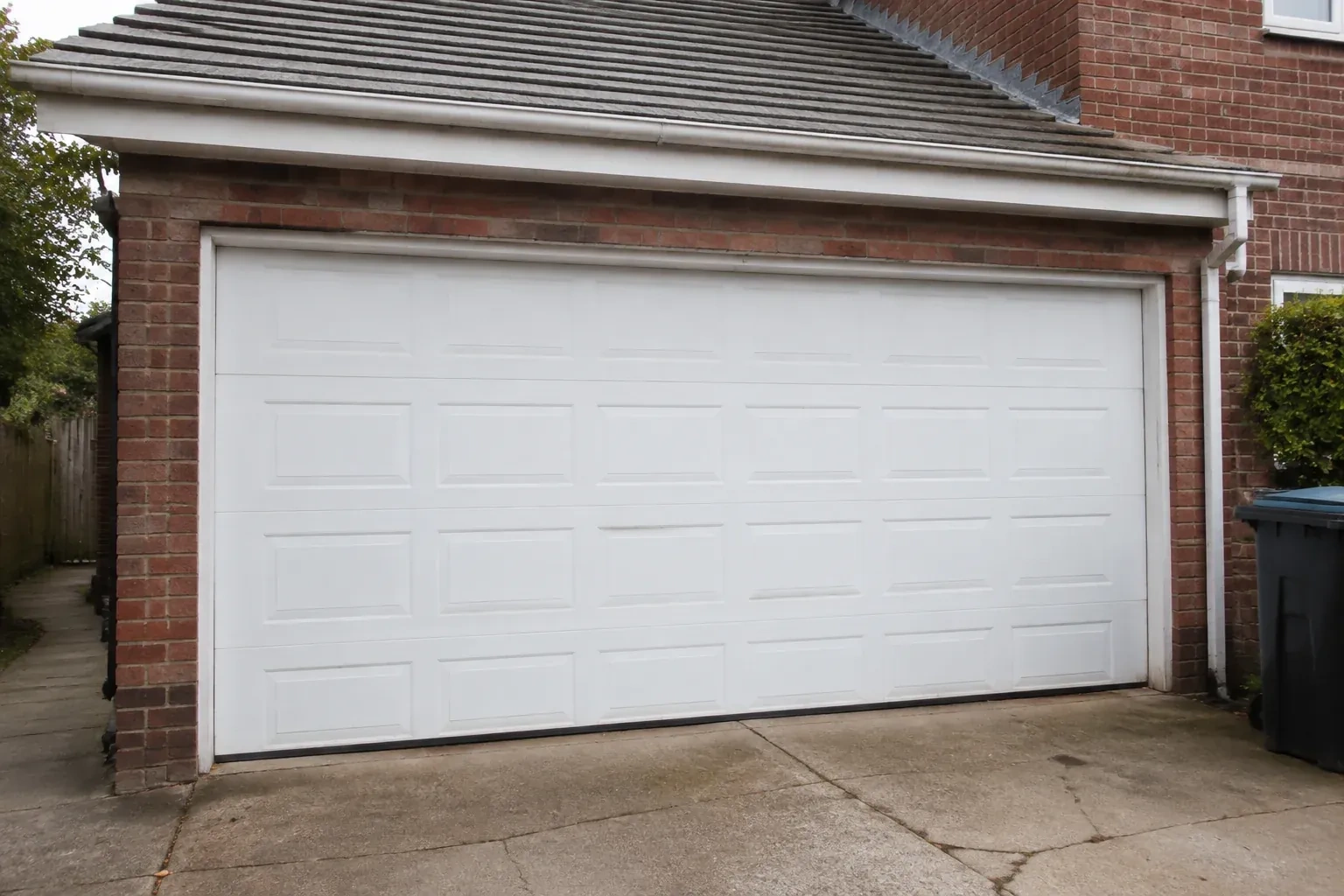
What panel materials are commonly available?
Sectional doors are commonly made with steel, aluminum, wood or composite construction, with model-specific finishes and insulation options. Each differs in weight, maintenance needs and appearance. The useful comparison considers exposure, desired style, garage use and available product data, then carries the chosen weight into the spring and hardware selection.
When should installation wait for other work?
The project may be sequenced after framing repairs, masonry work, floor correction, electrical preparation or removal of an obstruction in the travel zone. Identifying that dependency during measurement protects the selected door dimensions and attachment plan. The proposal can separate door work from tasks handled by another trade, with a clear condition that must be ready before fitting begins.
How is the new door tested after installation?
Technicians cycle it by hand to assess balance, cable tracking, roller travel, clearances, and seal contact. After the operator is connected, they set the open and close limits, confirm the manual release, interrupt the photoelectric beam, and conduct the prescribed contact-reversal check. Hardware and reinforcement receive a final visual review with the door closed and raised.
Which materials are used for carriage-house garage doors?
Common choices include embossed steel sections, insulated steel with composite overlays, and wood or wood-faced sectional construction. They differ in weight, surface depth, grain, moisture response and care. Samples are helpful because photographs can flatten texture and alter colour. The chosen construction also guides spring sizing, reinforcement, fasteners and the kind of finish maintenance expected later.
Are insulated full-view garage doors available?
Many full-view product families offer insulated glazing or insulated frame members, though the combinations vary. The useful question is how the garage is heated, occupied and connected to the house. The installer can compare compatible constructions and explain section seals and perimeter contact, while comfort still depends on the surrounding walls, ceiling, slab and frequency of opening.
How does an uneven garage floor affect the new door?
The bottom weather seal can compress over modest variation, but it follows the slab rather than making the slab level. The installer measures the high and low points and sets the door from the established finished floor. Larger variation may leave uneven seal contact or alter the clear opening height. Confirming coatings, thresholds and drainage slopes before installation gives everyone the same reference surface for fit and travel.
Why is the door lifting higher on one side?
Uneven travel commonly points to a lift-cable or drum issue, though a displaced roller, bent track or damaged bottom fixture can create a similar angle. The door is supported first, then both lifting sides are compared for cable condition, drum seating and hardware position. Correcting the cause and restoring equal tension brings the bottom edge back to level movement.
Why does the door stop and reverse while closing?
A photoelectric beam may be blocked, a sensing edge may be active, the curtain may meet resistance, or the operator may be responding to a monitored-device or limit condition. The inspection keeps these possibilities separate. Sensor placement, alignment and response are checked alongside free mechanical travel and the operator's documented control logic.
What measurements are taken before a quote?
Measurements include finished opening width and height, headroom, sideroom, backroom, ceiling elevation, obstruction locations and the desired clear zone. The technician also records door dimensions and weight information, track and shaft positions, spring and drum details, framing or attachment conditions, and opener placement. Photos and equipment plans help connect those measurements to the intended use.