Repairs · Kawartha Lakes
Garage Door Panel Replacement
You misjudged the last metre of the driveway and felt the bumper meet the door.
In plain words
Not all sections are equal. The bottom section carries the brackets that anchor the lift cables, the seal that meets the floor, and most of the abuse from ice, salt and bumpers. The top section takes the pull of the opener arm and often carries a strut. The intermediate sections mostly carry hinges and rollers. Which position is damaged shapes the whole job: a bottom section means releasing spring tension before the brackets come off, a top section means dealing with the opener bracket and top fixtures, and a middle section is the most straightforward exchange. The technician plans the visit around that position.
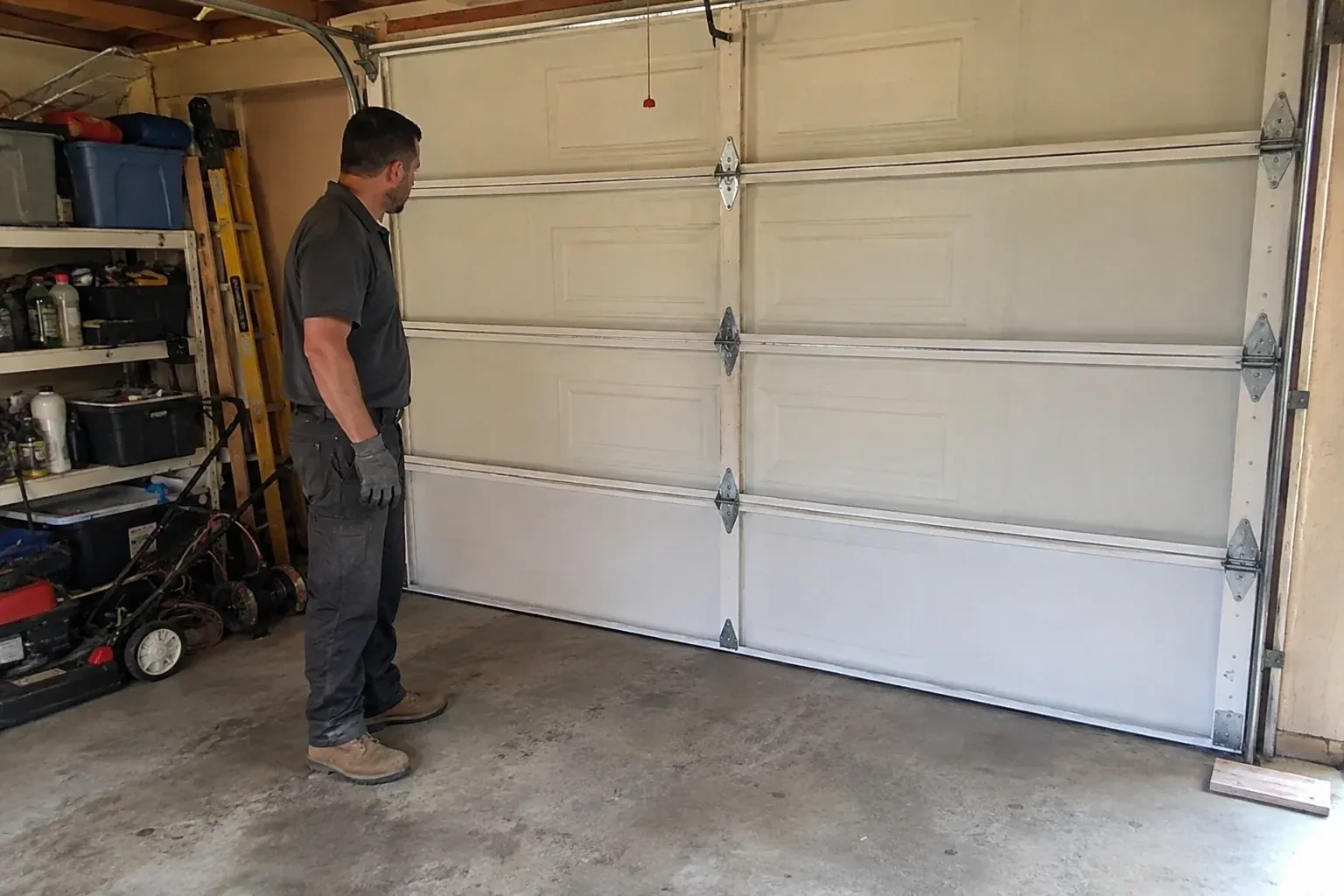
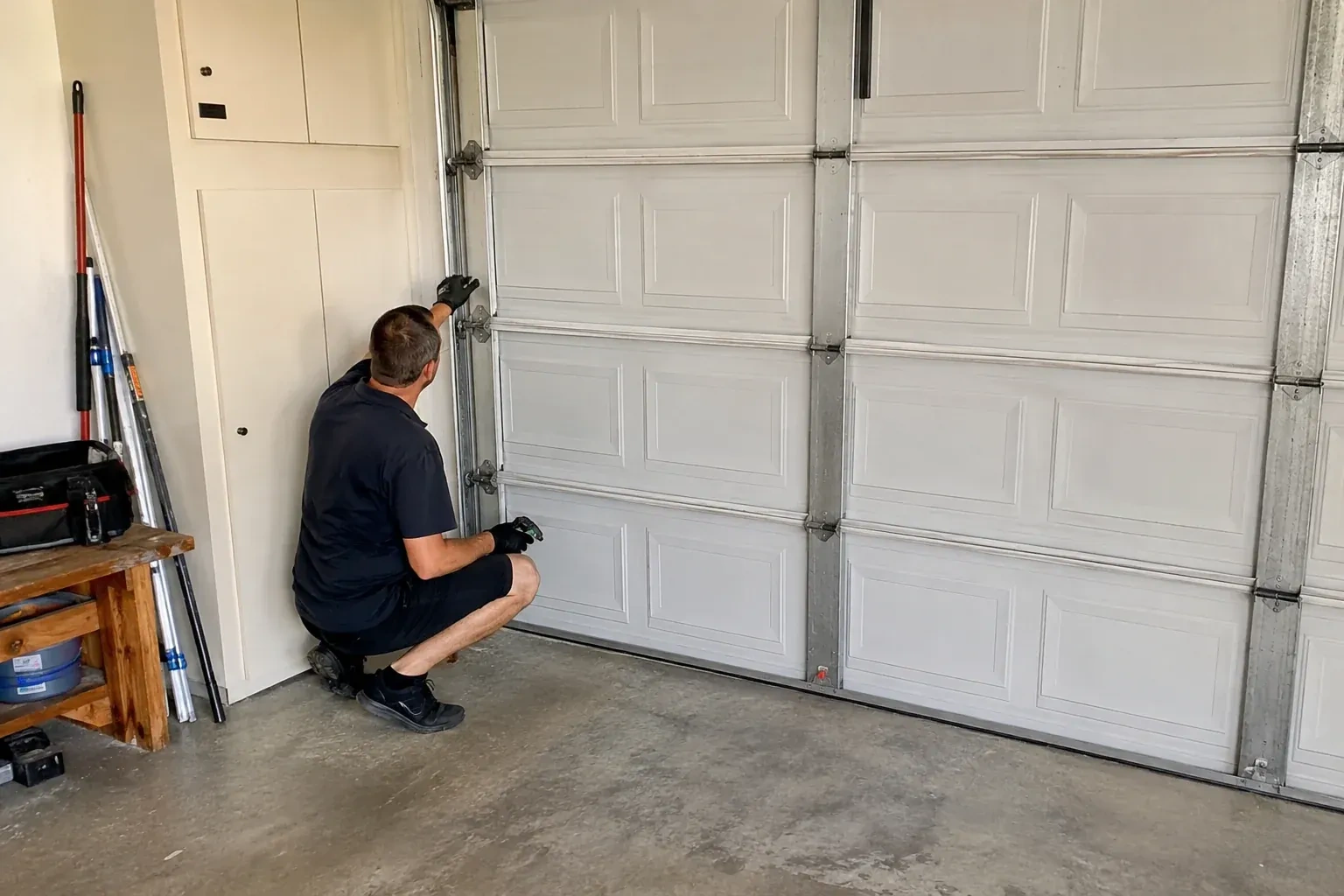
How the visit goesYou misjudged the last metre of the driveway and felt the bumper meet the door. The bottom section now carries a crease across most of its width. The door still opens, but it shudders as that section reaches the curve in the track.
Garage Door Panel Replacement
How the visit goes
Mapping the damage on the section
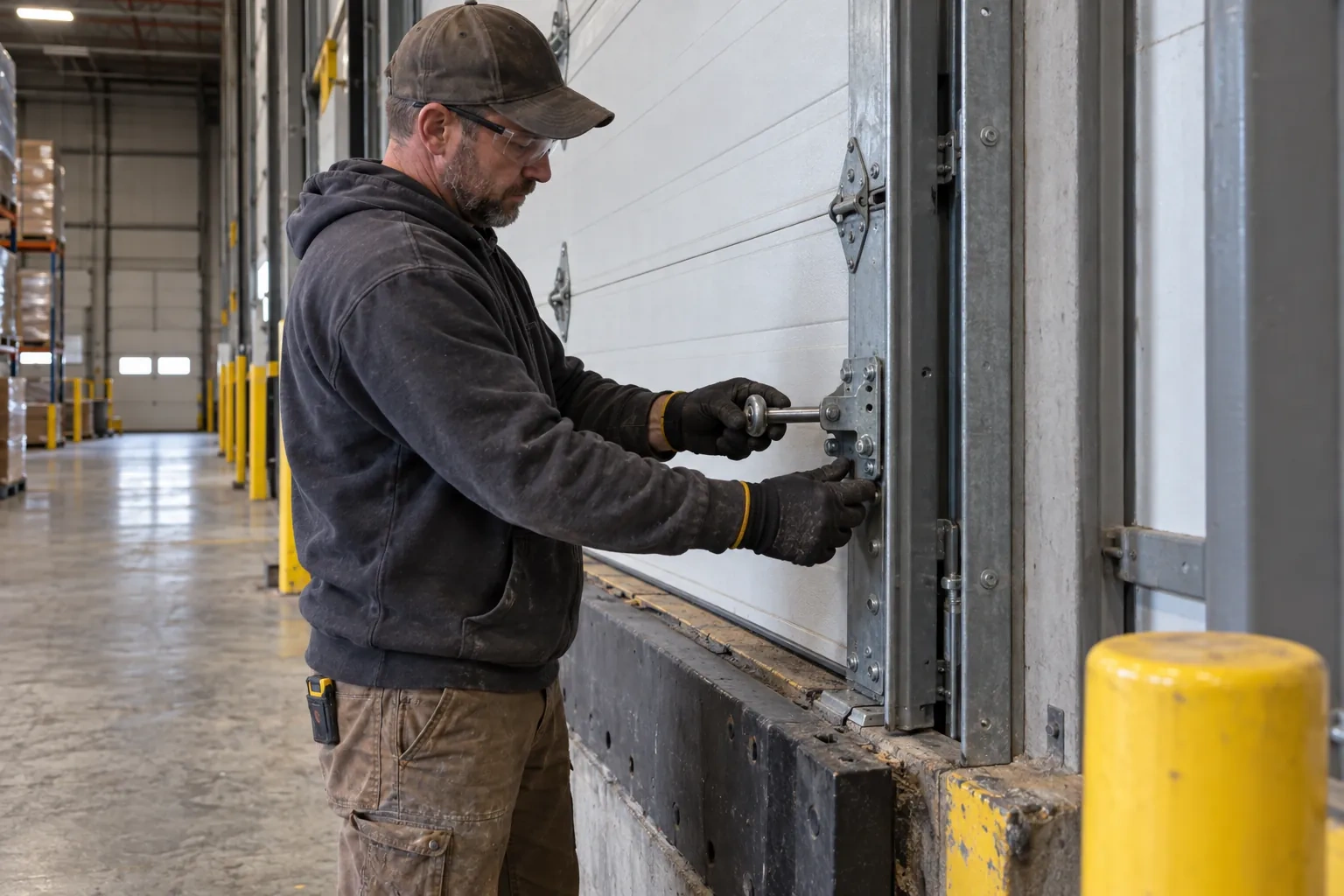
Where a dent sits matters as much as its size. A shallow dish in the middle of the skin is one thing; a crease that runs to the joint, a fold at an end stile, or a bend through a hinge point is another, because those areas carry the door's load as it moves. The technician records the depth of the damage, whether the inner skin or backer is affected, whether a strut has kinked and whether the section still lies flat when the door is closed. That map decides between working the dent out, replacing the single section, or looking harder at the rest of the door.
Locking the door before anything comes loose
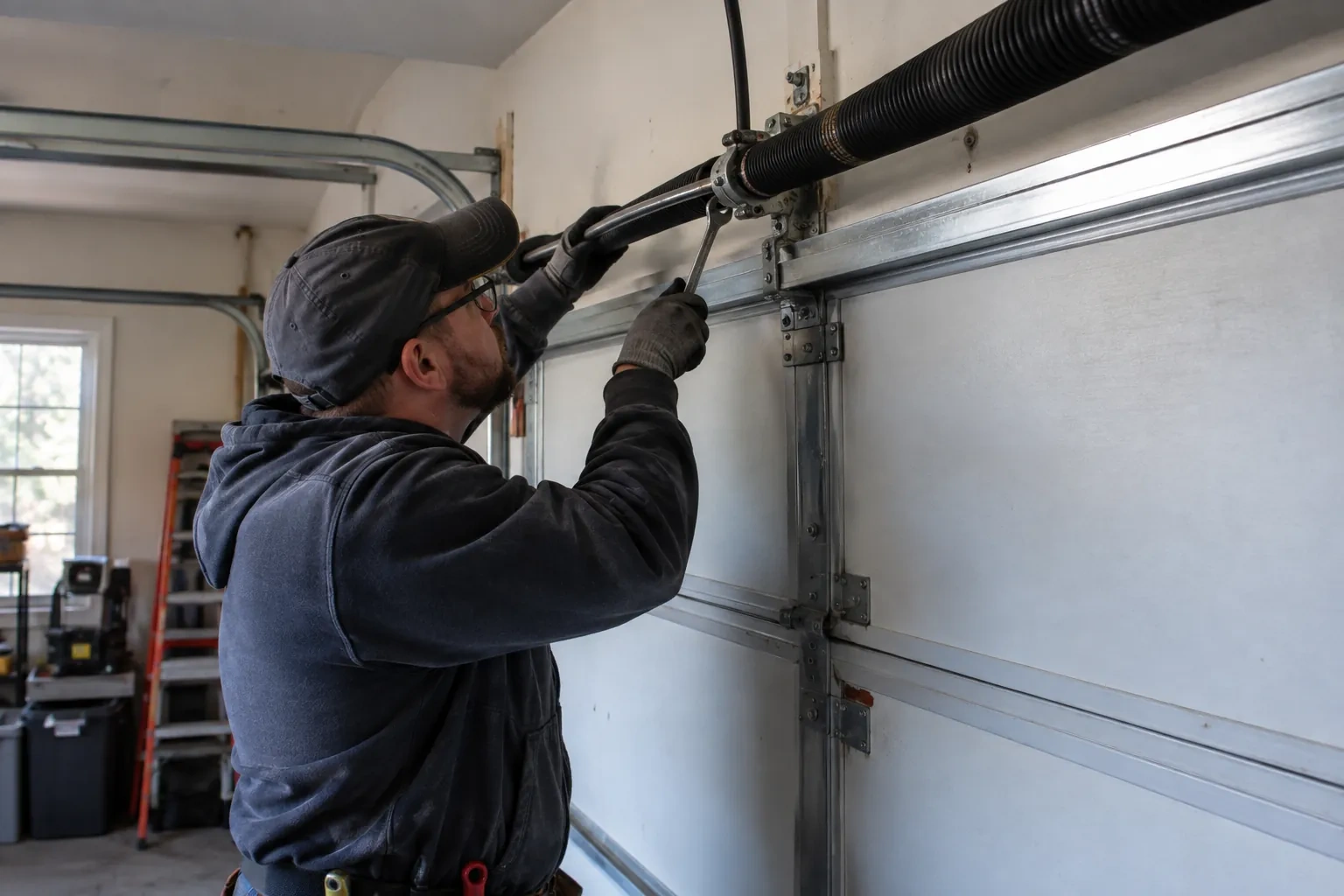
The exchange begins with the door closed, the opener disconnected at the release cord and its power unplugged, and a pair of locking pliers clamped onto each track just above a roller. Held that way, the door cannot creep up or slip down while a section is missing from it, and the sections above the gap have something to rest on. The technician then removes the section's rollers and hinges in an order that keeps the neighbouring sections supported, working from one side to the other. Nothing under spring tension is touched at this stage on a middle or top section; the springs stay loaded and simply hold still.
Keeping ice away from the bottom section
Since a bottom section frozen to the slab is the commonest way one gets bent, a few winter habits protect the new one. Sweep snow away from the outside of the door before it turns to slush and freezes under the seal. A light wipe of silicone on the new astragal helps it release from ice. If the door refuses to move on a cold morning, free the seal from the floor with warm water or a scraper before running the opener rather than letting the motor pull against it. A well-fitted bottom seal also keeps meltwater from wicking under the door in the first place.
Garage Door Panel Replacement
In the van
Bottom seal retainer and astragal
Matching replacement section
Window frame insert and glazing
Nylon or steel rollers
Garage-door lubricant
Garage Door Panel Replacement
What affects the quote
Opener adjustments afterwards
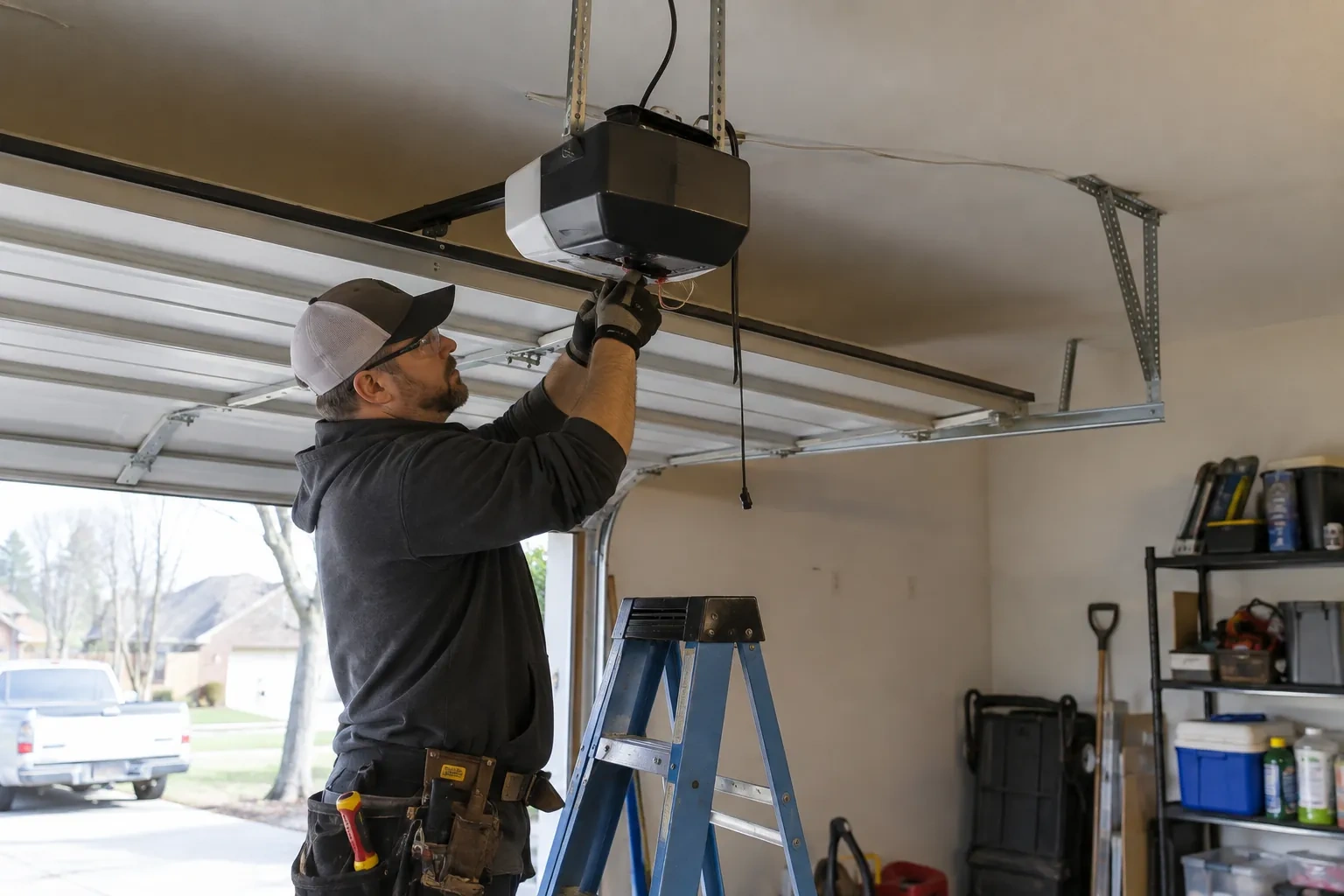
Resetting the opener's limits and force and testing the safety reversal is part of finishing the job. Where the opener arm bracket or a worn trolley needs replacing as well, that hardware is listed.
The age and condition of the rest of the door
On an older door with rust, worn hinges or tired springs, the quote may show the single section next to a whole-door option, so you can compare what each includes rather than choosing in the dark.
Door width and section size
A section for a double door is nearly twice the length of one for a single door, with more steel, more hinges and a heavier lift. Section height and thickness feed into the same line.
What to have ready
- Does the damaged section have windows in it?
- Are any hinges, rollers or cables visibly bent, loose or hanging?
- What colour and panel design is the door?
Garage Door Panel Replacement: questions
QuestionsDoes a new section bring back the door's original strength?
A section ordered to the same specification carries the same steel gauge, core and reinforcement as the original, and it is fitted with sound hinges, new fasteners and, where the design calls for it, a strut. Combined with the alignment and balance work done at the same time, the door returns to operating the way its manufacturer designed it to. Where an original section had bowed for want of a strut, adding one leaves that part stiffer than before.
Can one damaged section be replaced without replacing the whole door?
Usually, yes. A sectional door is built from separate sections joined by hinges, so a single creased, rusted or cracked section can be unhinged and exchanged while the others stay in place. The conditions are that a section for your make, model and size is still available and that the rest of the door and its hardware are in good order. When damage spans several sections or the design is discontinued, a full door is compared alongside.
How do I know whether the damage is only cosmetic?
Watch the door move. A cosmetic dent leaves the section flat at the joints, the door travelling without a catch, and the hinges and rollers seated normally. Signs that the damage goes further include a crease that reaches a joint or stile, a hinge screw that has pulled out, a roller sitting crooked in the track, a gap of daylight at a joint, or a shudder as that section reaches the track curve. Any of those calls for a proper assessment.
Related services
- Garage Door Tune-UpHalfway up, the door shudders.
- Off-Track Garage Door ResetYou tapped the door with the bumper while backing in, barely a nudge, and now the bottom corner has swung inward.
- Garage Door Bottom Seal ReplacementThe garage doubles as a workshop, and with the heater running the floor near the door stays cold and the draft finds your ankles at the bench.