Openers · Kawartha Lakes
Chain-Drive Opener Repair
Press the button and the opener hums for a second, then quits.
In plain words
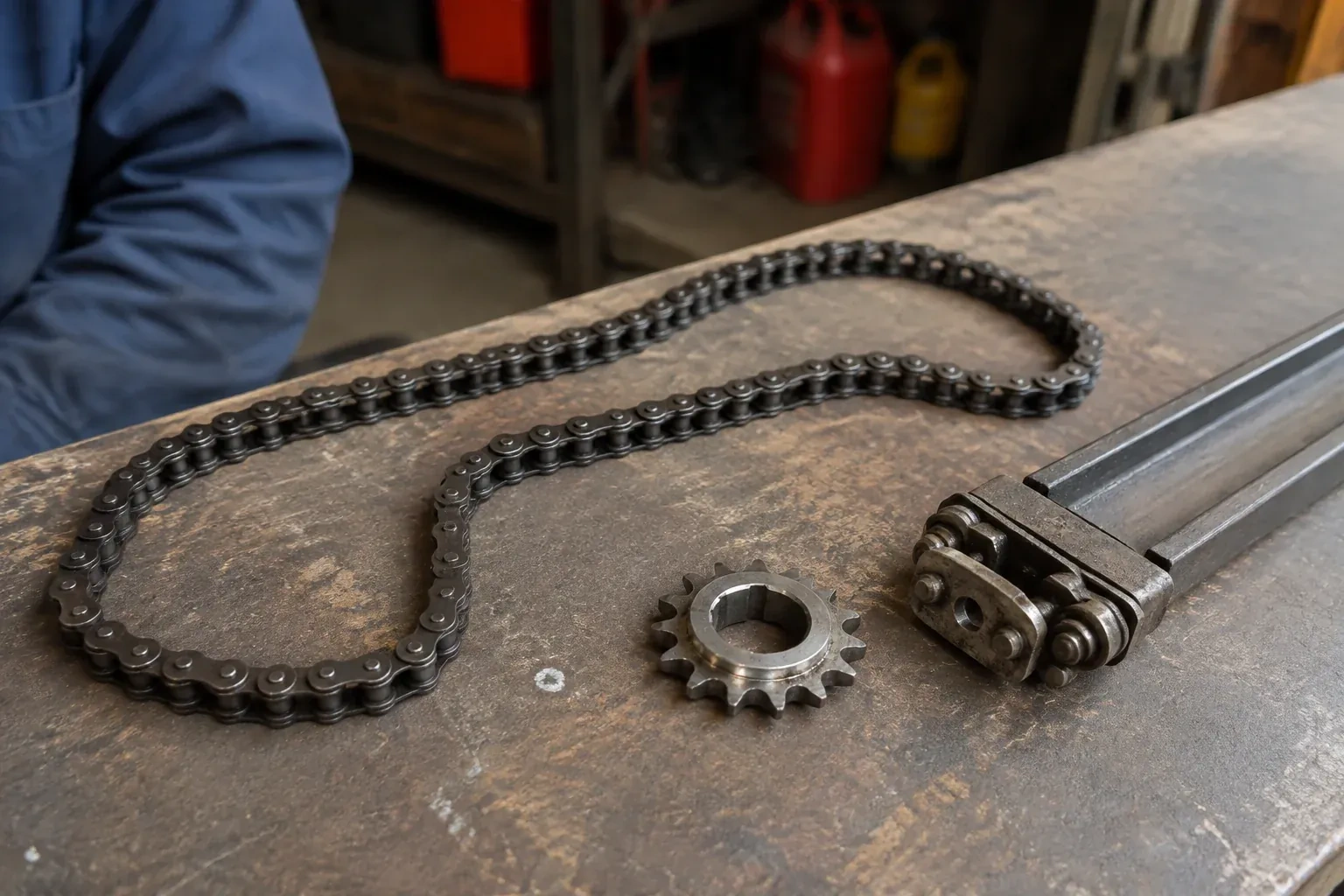
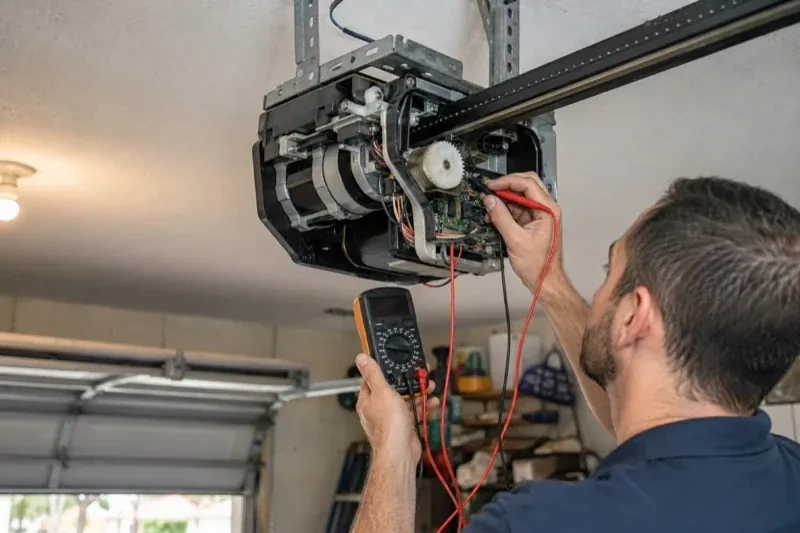
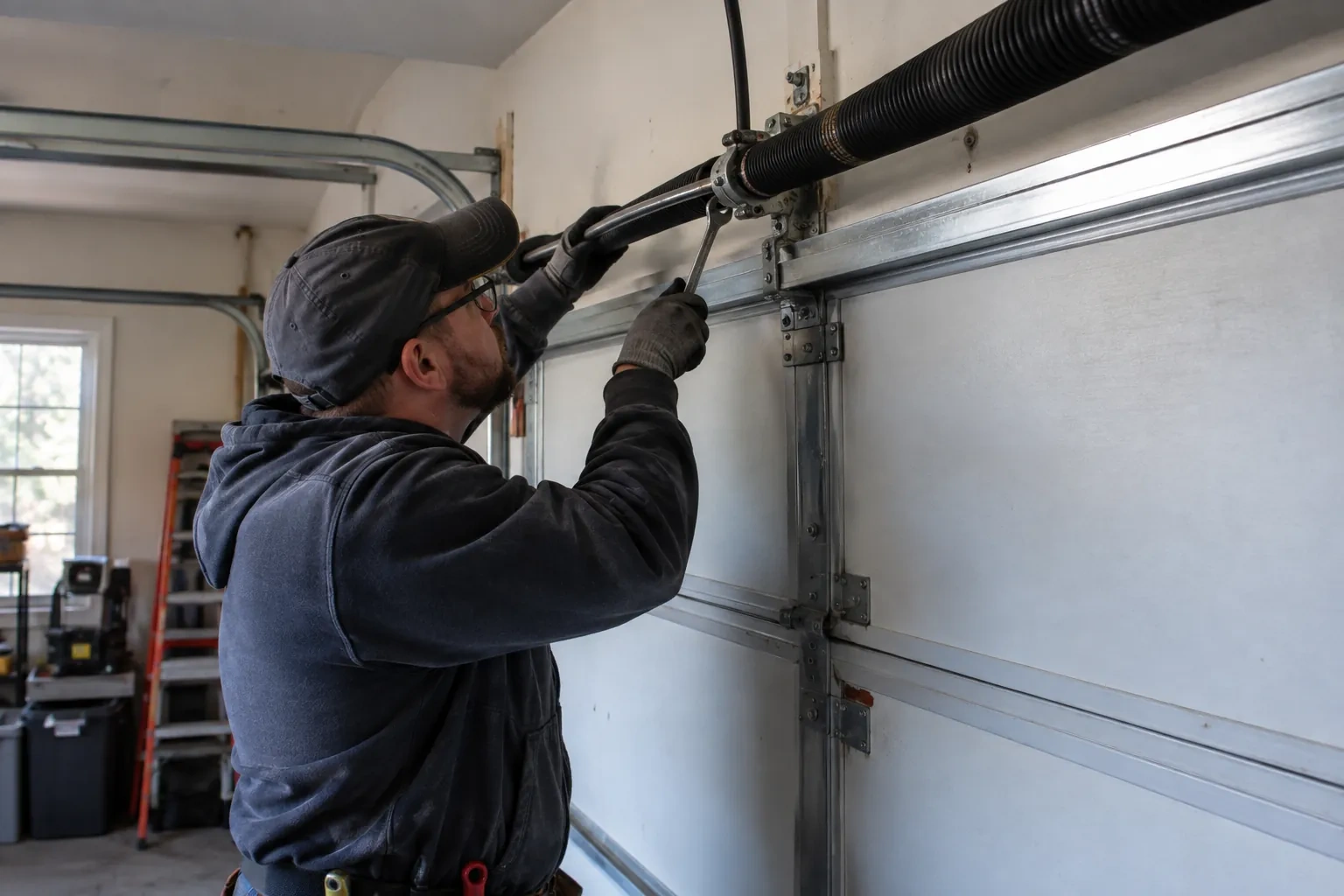
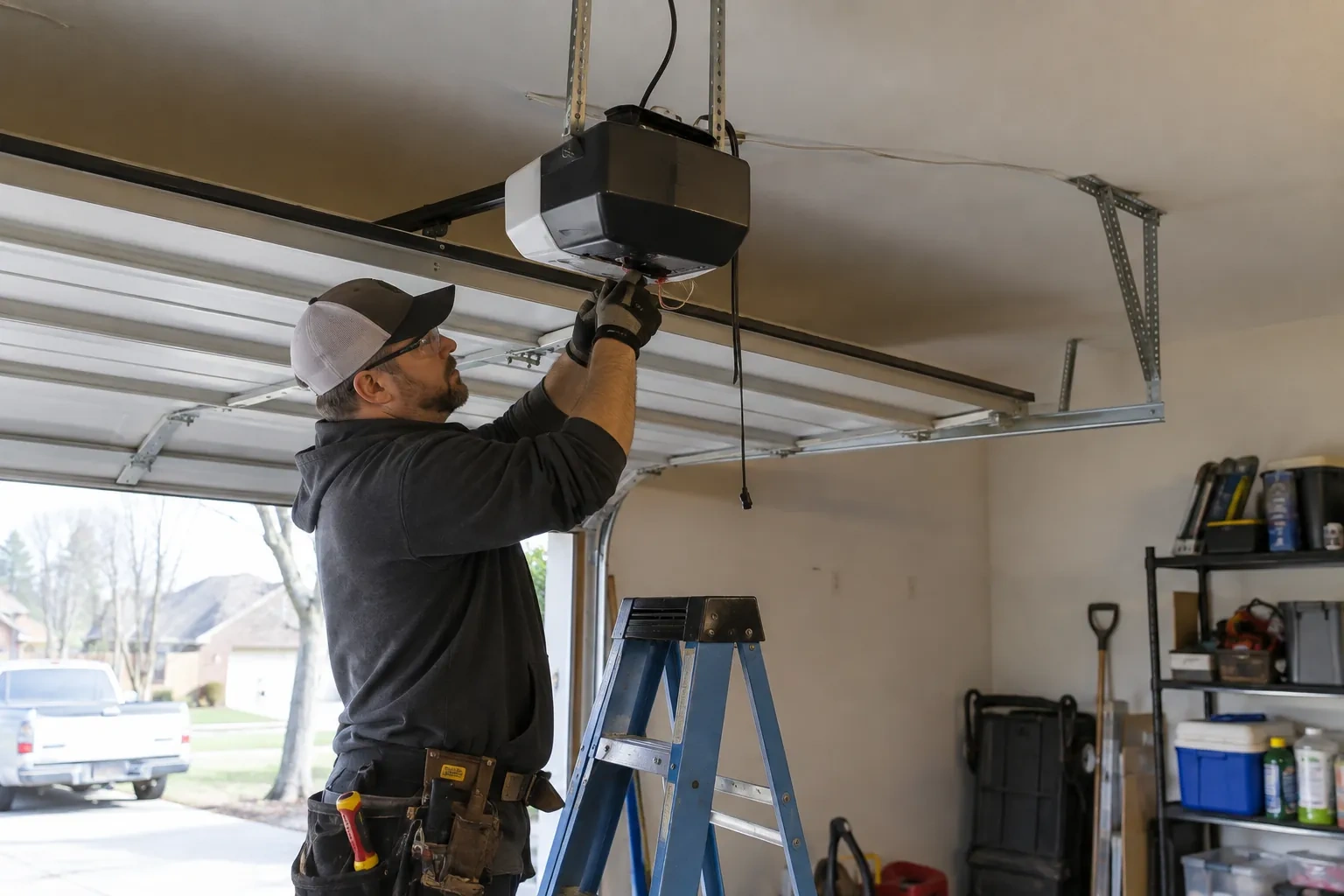
A chain-drive opener moves your door with a steel chain that runs along a rail from a sprocket on the motor head to a trolley hooked to the door arm. The technician first confirms the door is balanced, since the chain only guides a door the springs already carry. Then the chain is checked for stretch and rust, the sprocket and the gear behind it for worn teeth, the trolley and its release for wear, and the rail and hangers for movement. Whatever has failed is replaced with parts made for that model, tension and limits are set, and the safety reversal is tested.
How the visit goesThe door closes, touches the floor, then climbs straight back up as if it hit something. Nothing is in the way, the sensor lights are steady, and it has been doing this since the weather turned.
Chain-Drive Opener Repair
How the visit goes
Sensors, controls and the garage around them
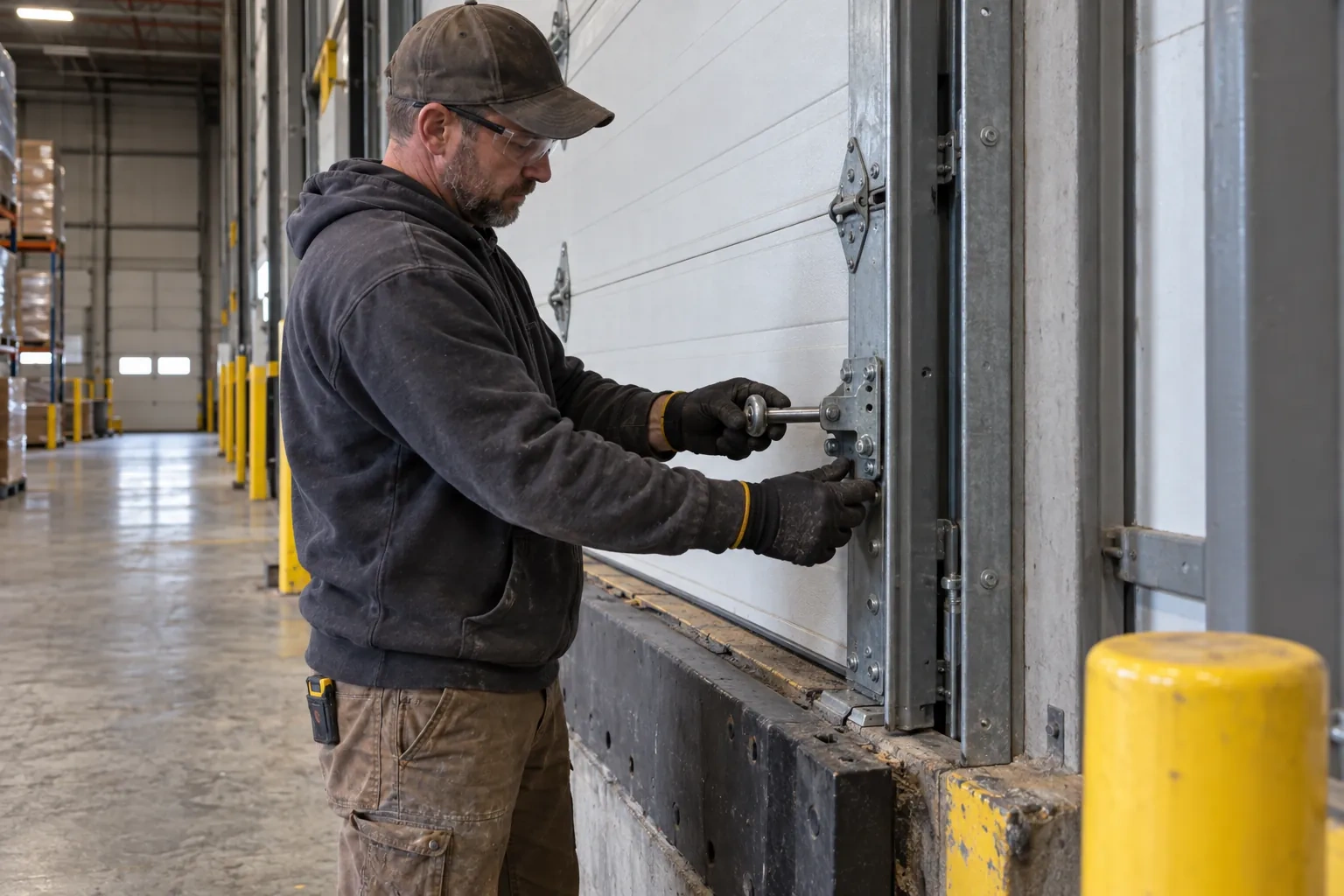
Before the repair begins, the technician confirms the parts that will be tested at the end are in place. The photo eyes should sit no higher than about 15 cm off the floor with steady indicator lights; the wall control at least 1.5 m up and in sight of the door; the red release handle no more than about 1.8 m above the floor; the manual slide lock on the door disabled. The garage itself is noted: whether it is heated, whether the chain shows salt corrosion from vehicles, and whether the head plugs into a nearby receptacle or a draped extension cord. These points shape the repair and the advice that follows it.
Bringing the chain back into phase
If the drive has been run without the chain on the sprocket, the motor and the trolley disagree about the door's position and the door travels partway no matter how the limits are set. The technician slackens the chain and lifts it off the sprocket, then runs the operator and watches the sprocket: when it turns and stops on its own in the closed direction, the motor is at its closed position. The trolley is moved to the closed end of the rail, the chain is refitted over the sprocket, and tension is set. On some heads the internal limit assembly is aligned instead. The limits are then adjusted so the door reaches the floor and its full open height.
Getting the chain drive through the cold
In a detached or unheated garage the drive has been set up for winter: force adjusted so the door moves at low temperature without the operator being oversensitive, the rail greased, and the door hardware lubricated before frost. Two habits help. Keep the threshold clear of snow and slush so the bottom seal does not freeze to the slab, and if the door reverses on a bitter morning, free the seal rather than pressing the button repeatedly; the operator is doing what it should. Expect the chain to sound a touch different at minus twenty, and let the garage warm before deciding something is wrong.
Chain-Drive Opener Repair
In the van
Chain tensioner nuts and shaft
Sprocket and shaft assembly
Inner and outer trolley
Roller chain with master link
RPM sensor
Chain-Drive Opener Repair
What affects the quote
Door hardware quieted at the same time
Nylon rollers, new hinges or a vibration isolator chosen to quiet the door and the ceiling alongside the drive repair are optional items listed on their own.
Rail hardware and hangers
Loose hangers, a header bracket that has pulled from the framing, or splice plates that need renewing add fasteners, angle iron and time on the ladder to a job that might otherwise be an adjustment.
Trolley and release parts
A worn inner or outer trolley, a cracked latch or a bent release lever are replaced as separate pieces, and whether any of them is needed shows only once the trolley has been run along the rail by hand.
What to have ready
- What make and model is on the opener's label, and roughly how old is it?
- Has anyone adjusted the limit or force screws, or run the opener with the chain off?
- Is the noise a rattle along the rail, a clack at one spot, or a grinding from the head?
Chain-Drive Opener Repair: questions
QuestionsShould I use the slide lock on the door with a chain drive?
No. The manual slide lock on the door is disabled or removed once an operator is connected, and the technician checks that during the repair. A motor pulling against a locked door strains the chain, strips the drive gear and can bend the top section of the door. If you want the door secured against remotes, the lock button on the wall control switches them off, and a track lock designed to work with an operator does the rest.
Can you turn the force up so the door closes on cold mornings?
Force is set to the lightest level that moves the door reliably, and it is raised only a little for a cold garage. Turning it up further to overcome a heavy door or a seal frozen to the slab is not done, because too much force interferes with the safety reversal and can bend the top section. If the door is hard to move in the cold, the springs, rollers or the frozen seal are dealt with instead.
Will the safety reversal be tested as part of the repair?
Always, and after every adjustment, because changing tension, limits or force changes how the operator senses an obstruction. The door is closed onto a 38 mm block on the floor and must return to open on contact, then closed again while the low sensor beam is interrupted and must reverse the same way. If either test fails the settings are revisited until both pass, and you are shown the tests so you can repeat them monthly.
Related services
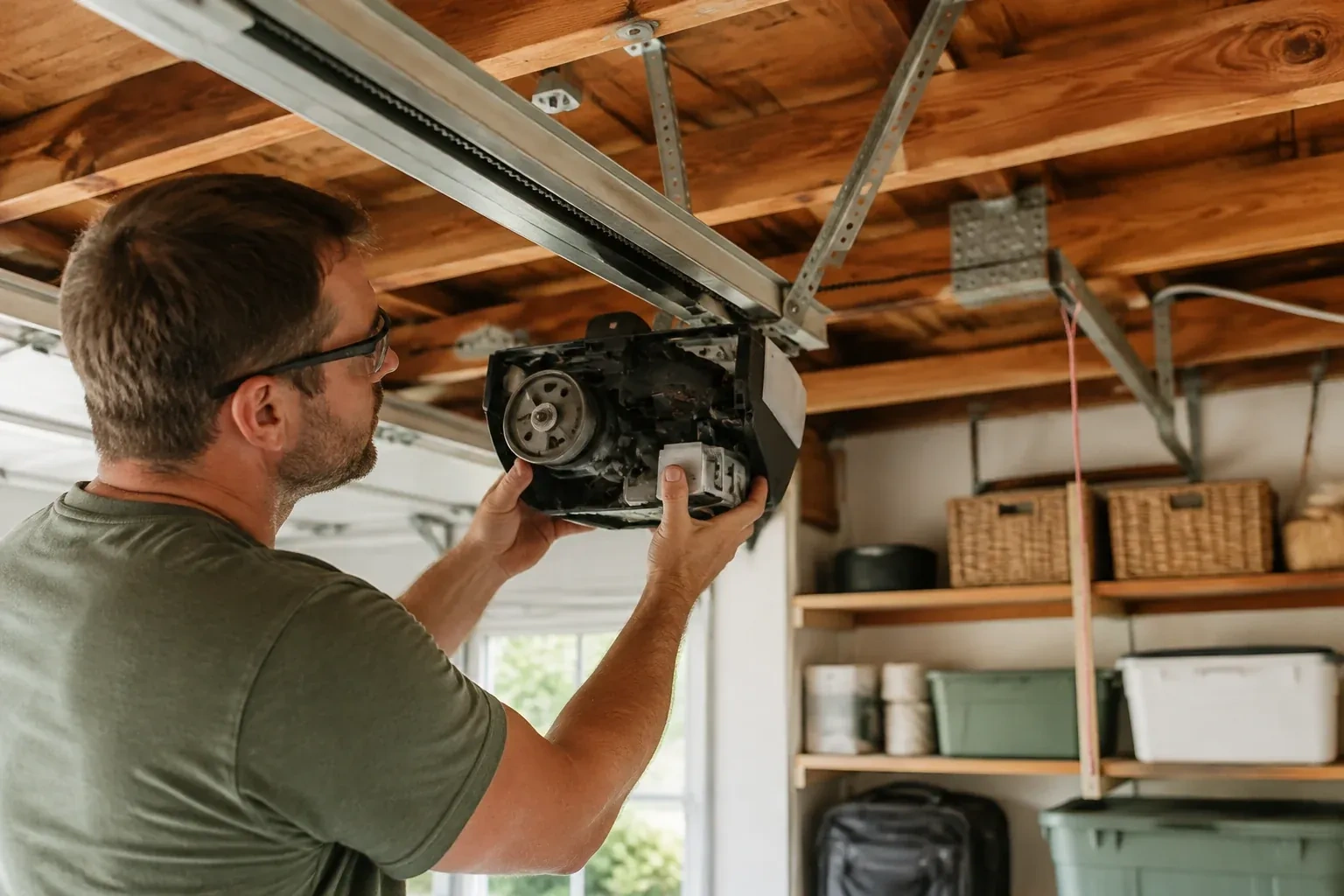
- Belt-Drive Opener RepairSomeone tightened the belt last month to stop the sag.
- Garage Door Opener ReplacementPress the button and the motor hums, but the door stays exactly where it is.
- Photo-Eye Sensor Alignment or ReplacementSomeone backed the car in a little too far, a bin or a bicycle brushed the track, and since then the door starts to close and comes back up.