Openers · Kawartha Lakes
Garage Door Opener Replacement
Press the button and the motor hums, but the door stays exactly where it is.
In plain words
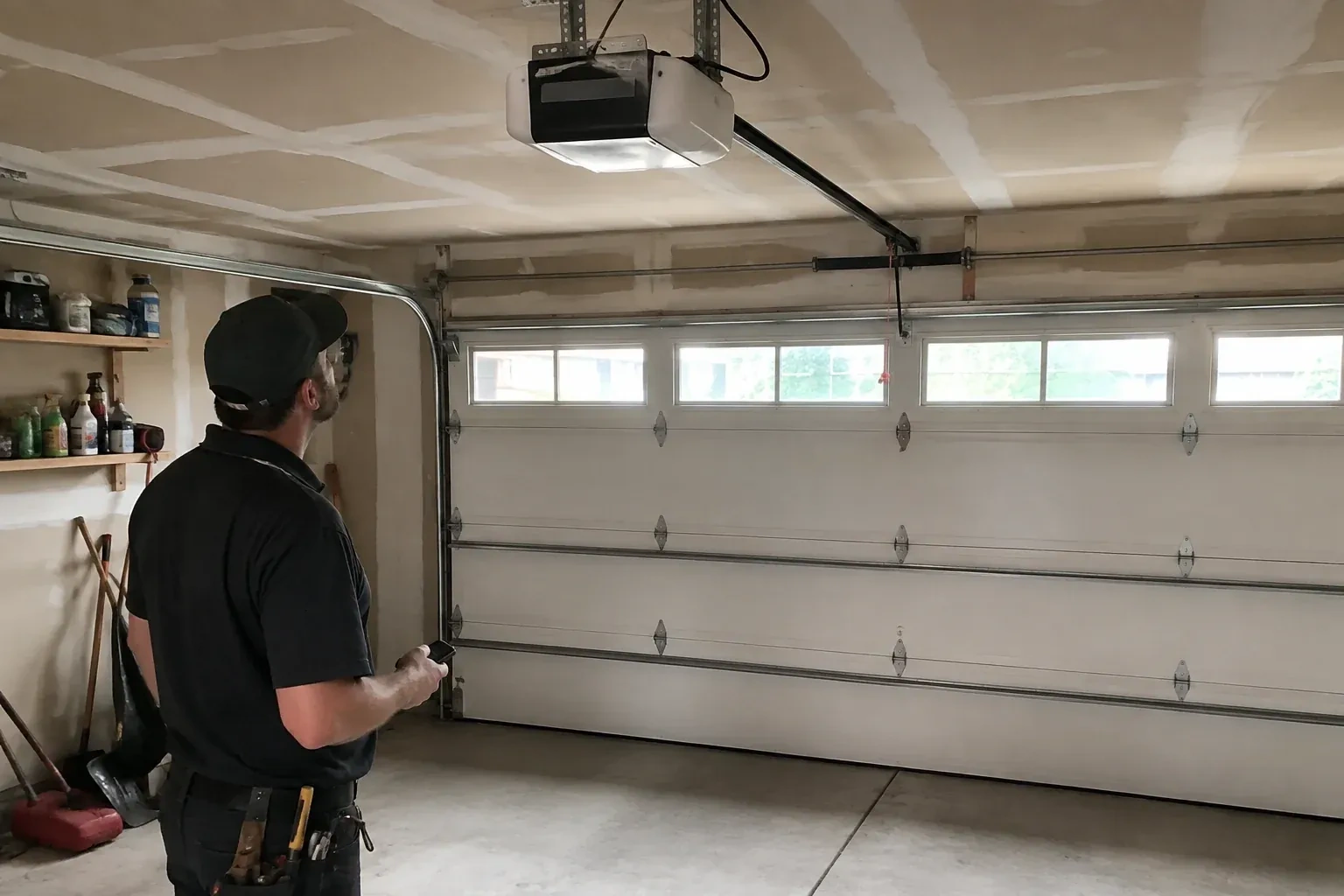
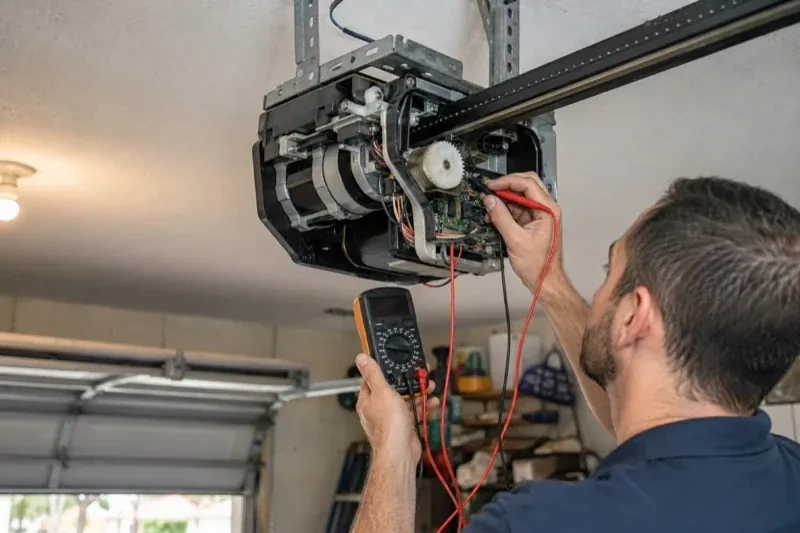
How do you tell whether an opener has reached its end or simply needs a part? A snapped gear or a worn trolley on an otherwise sound, recent unit is a repair. Replacement makes sense when the operator predates photo-eye sensors, when the board or motor has failed and is no longer made, when the same fault keeps returning, when the door has become heavier, or when you want features it was never built for, such as battery backup or phone control. The technician lays both paths side by side so the choice is yours, and a new operator brings the door up to today's safety standard.
How the visit goesDuring the ice storm the power was off for two days. You came home in the dark, found the door dead, and had to climb out of the car to pull the red cord in the cold. A door that keeps working through an outage is now on the list.
Garage Door Opener Replacement
How the visit goes
The rest of the door hardware
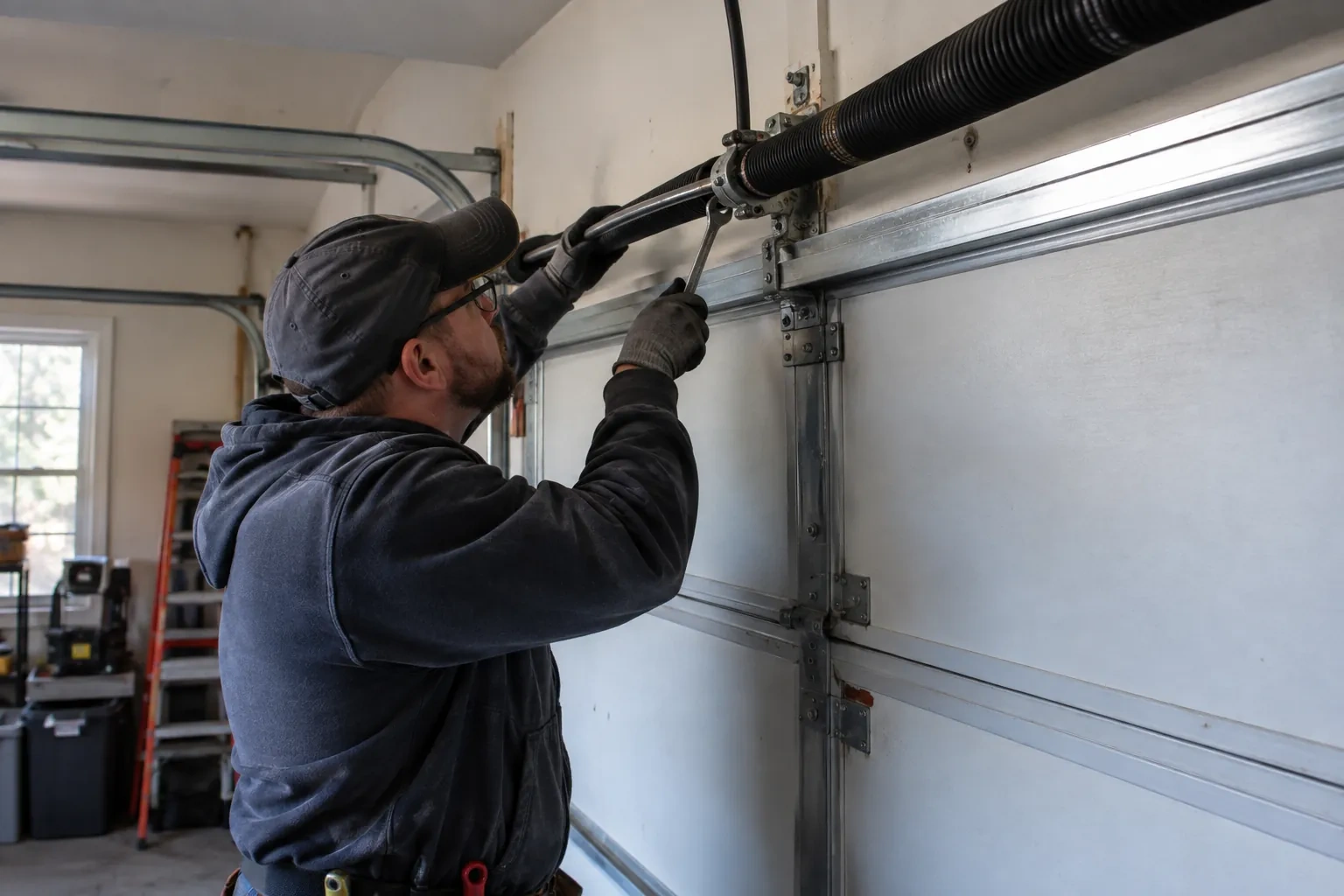
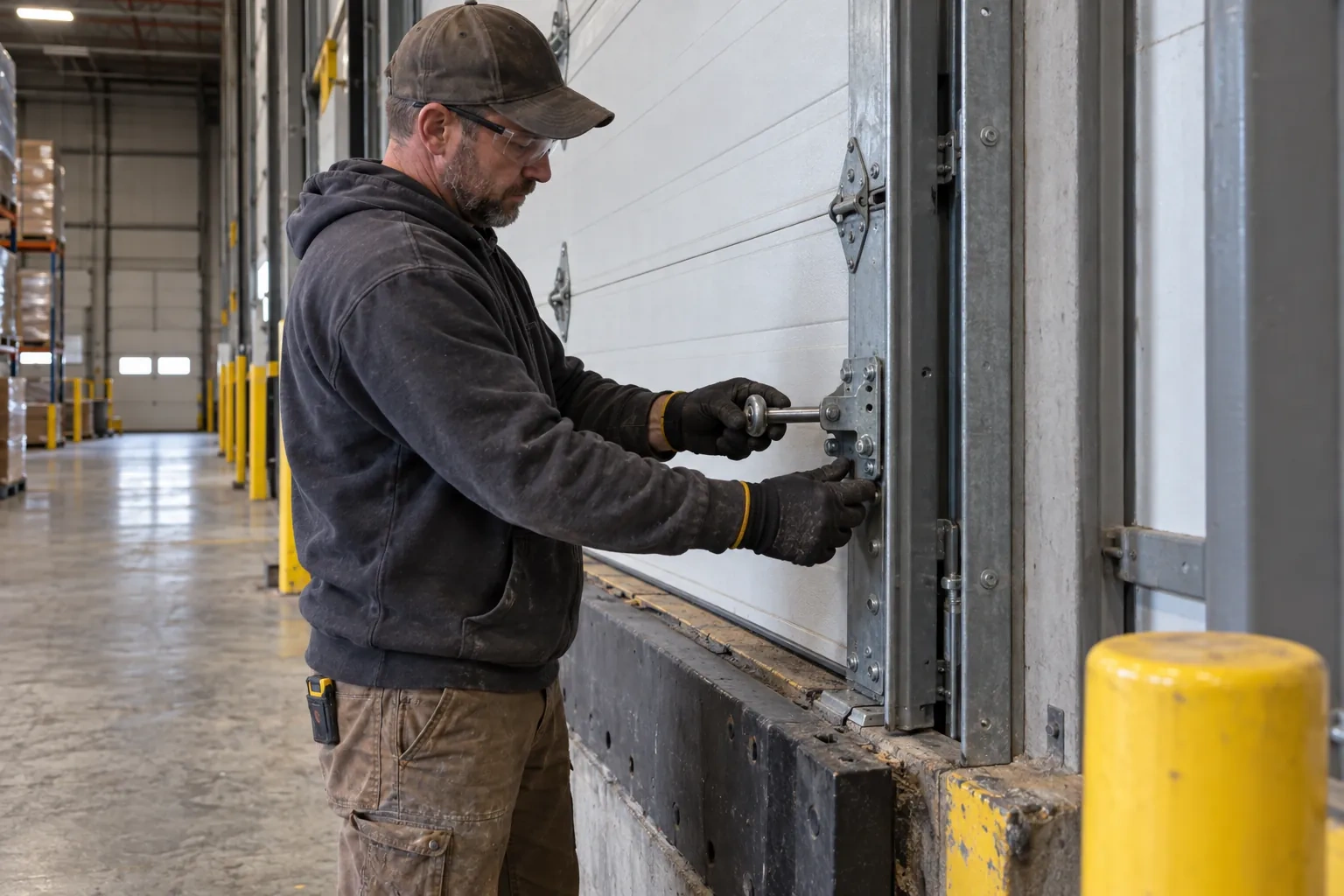
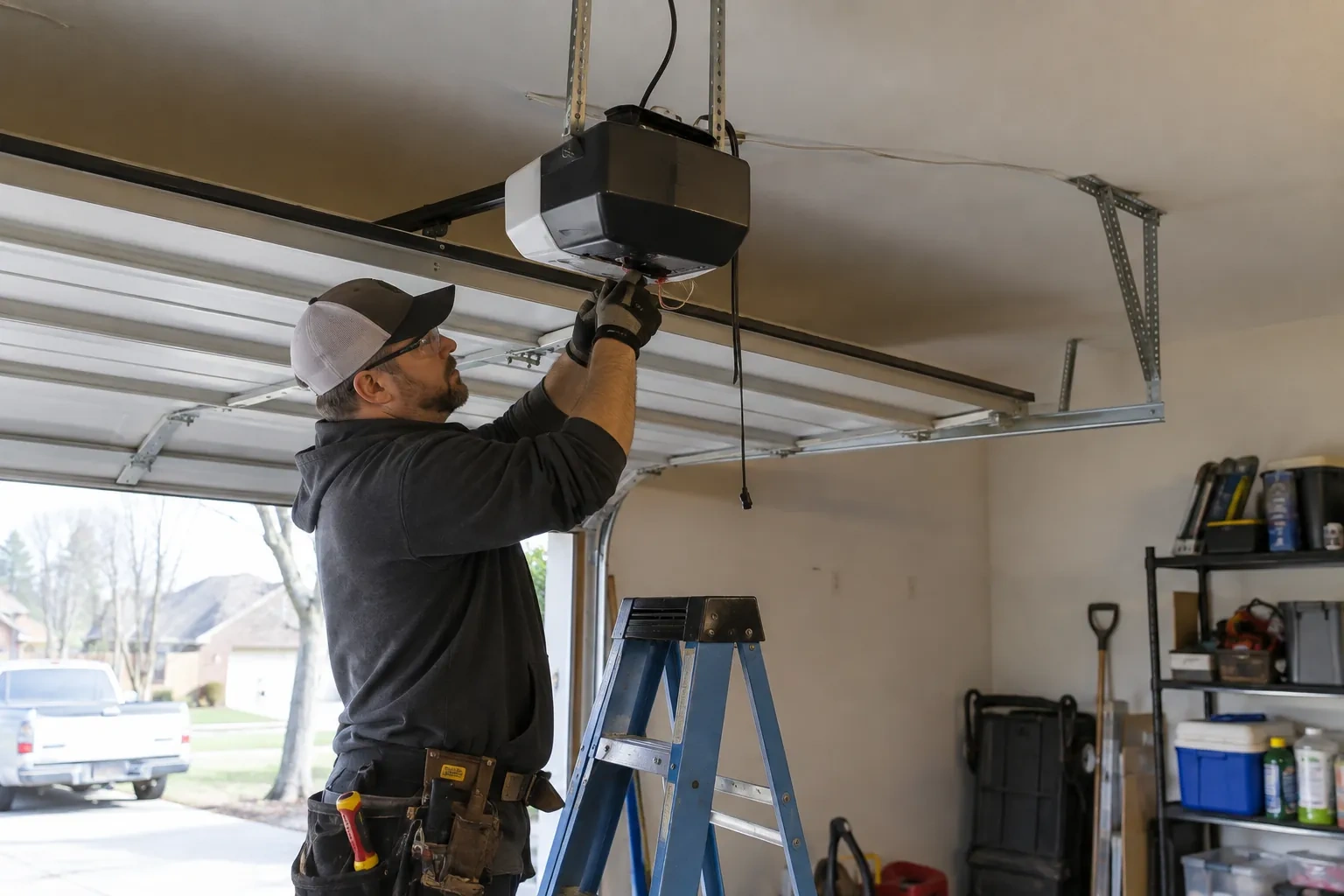
Because a new operator will run this door thousands of times, the technician gives the rest of the system a look while the door is disconnected. Rollers are checked for flat spots and worn bearings, hinges for cracks and loose fasteners, cables for fraying at the drums and bottom brackets, and track for dents, loose brackets or a misaligned curve. A door that rumbles or catches on the way up with the opener disconnected will do the same with a new one. Small hardware fixes agreed at this stage give the new operator a smooth door to work with and keep the finished result quiet.
Proving the safety reversal
Two tests are performed while you watch, before the job is called finished. A 2x4 is laid flat under the centre of the door and the door is closed from the wall console; on touching the wood it must stop and return to fully open. Then the door is closed again while an object is waved through the photo-eye beam, and again it must reverse. The red release cord is checked to hang no higher than about 1.8 m so it stays reachable while clearing a vehicle roof. The door's manual slide lock is disabled or removed so it can never be thrown while the operator is connected. Any adjustment is made and the tests are repeated.
Ceiling space and light you did not have before
A wall-mount operator hands the whole ceiling back: no rail, no motor box, just the small unit next to the spring shaft. Racks, a loft or a vehicle lift can go where the old opener hung, and the door itself runs quietly because nothing above it is shaking. Any new operator also brings better light, usually LED lamps that come on when the door moves or when a motion sensor sees you walk in, and switch off on a timer. If you notice remote range shrinking after fitting your own LED bulbs, swap them for the type the operator's maker lists, since some bulbs interfere with the radio signal.
Garage Door Opener Replacement
In the van
Photo-eye sensors
Rail sections and trolley
Low-voltage bell wire and staples
Opener head unit
Backup battery
Garage Door Opener Replacement
What affects the quote
Connectivity and camera
Wi-Fi control from a phone, a built-in camera and a range extender for a detached garage with a weak signal are each optional items that the quote names individually.
Ceiling height and mounting
A head unit hung from a high or cathedral ceiling needs longer angle iron and more time on the ladder than one mounted under a standard joist, and a finished drywall ceiling takes more care to fasten into.
Working around what is in the garage
A vehicle lift, a storage loft, ductwork or shelving where the rail will run, or a garage that cannot be emptied before the visit, adds handling time that the technician accounts for after seeing the space.
What to have ready
- Is there a bedroom or living space above or beside the garage?
- Is the door steel, wood or aluminum, and is it insulated?
- How many remotes do you need, and do any vehicles have built-in opener buttons?
Garage Door Opener Replacement: questions
QuestionsHow long does an opener replacement take?
Plan on about half a day for a straightforward swap on a balanced door: removal, hanging the new rail and head, wiring the sensors and console, setting travel and force, running the safety tests and programming remotes. If the door balance check turns up spring or roller work, or a receptacle needs adding by an electrical contractor, allow extra time or a second visit for that part.
Will a new opener make the door quieter?
A belt or direct drive with a soft-start DC motor removes most of the operator's own noise, and a level, well-tensioned rail removes the rattle. The door contributes its own sound through rollers, hinges and springs, so the technician looks those over during the balance check and can fit nylon rollers or fresh hinges at the same time. Together the two changes turn a morning rumble into a hum.
Should an opener from before the mid-1990s be replaced rather than repaired?
Manufacturers recommend replacing units made before 1993, since most lacked external entrapment protection such as a photo-eye pair, a sensing edge or a constant-contact close control. Identify the model rather than guessing its age or remote type, since a fixed-code remote with small switches is not proof by itself. Replacing rather than repairing brings the sensor beam, a contact-sensitive force setting, remotes whose code changes on every press and a console lock button.
Related services
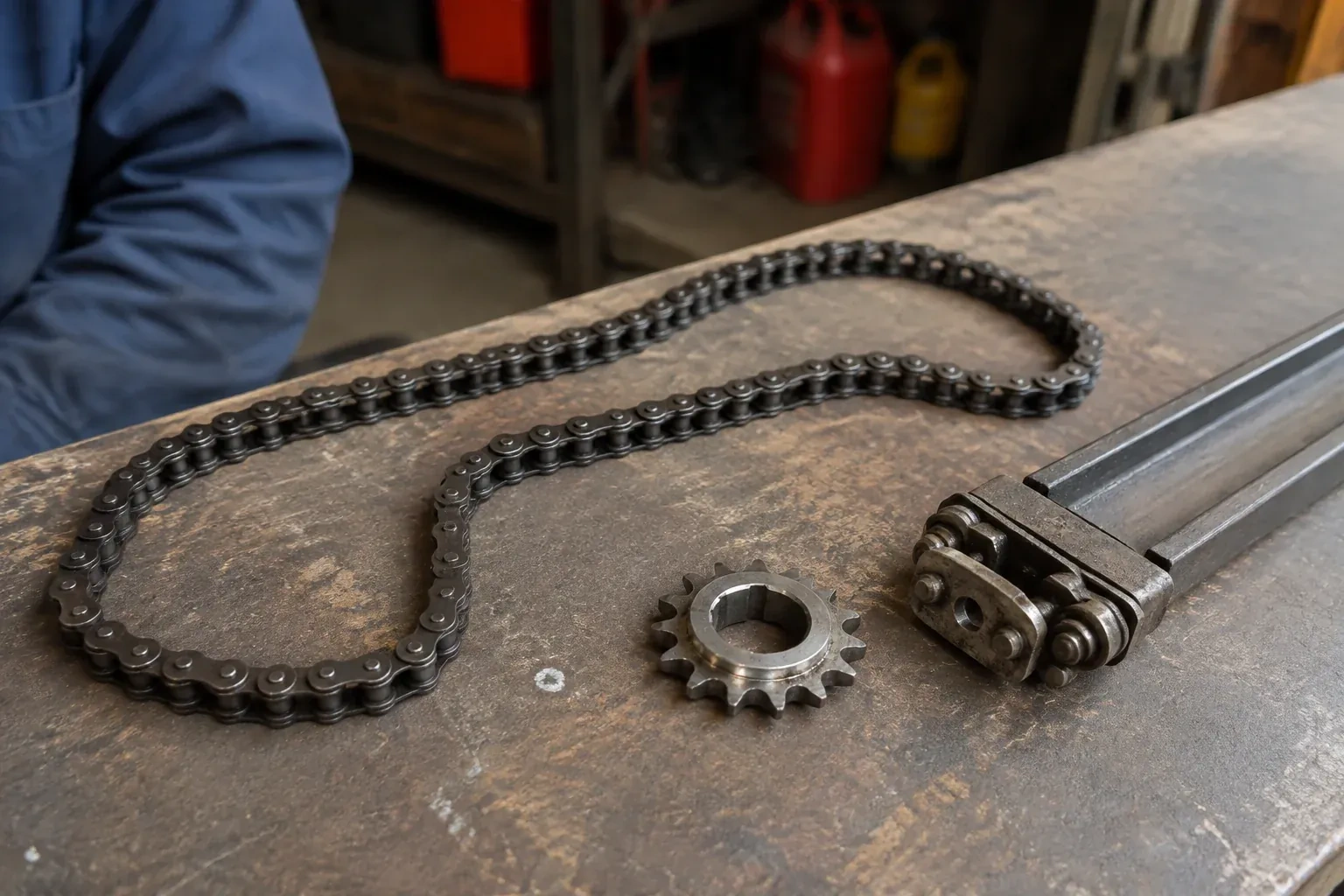
- Chain-Drive Opener RepairPress the button and the opener hums for a second, then quits.
- Belt-Drive Opener RepairSomeone tightened the belt last month to stop the sag.
- Photo-Eye Sensor Alignment or ReplacementSomeone backed the car in a little too far, a bin or a bicycle brushed the track, and since then the door starts to close and comes back up.