Springs · Kawartha Lakes
Garage Door Track Repair or Replacement
The garage floor has settled at one corner, and the door now scrapes the concrete on that side while daylight shows at the other.
In plain words
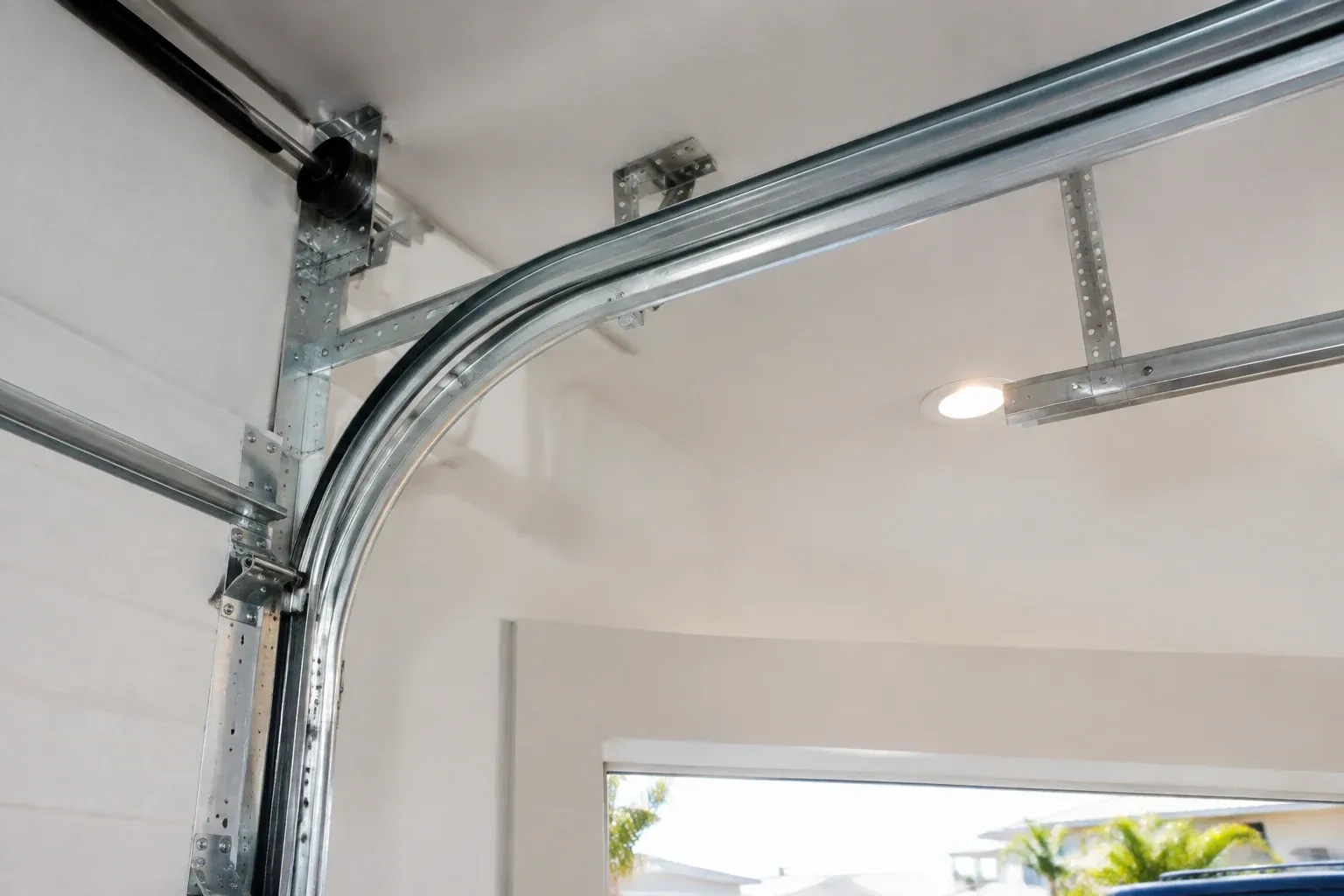
Track has to be in the right place, not merely straight. Each vertical run is set plumb with a slight taper away from the jamb at the top, so the door presses against its stop when closed and swings clear as it opens. The gap between track and door edge is equal on both sides. The horizontal runs are level with each other, square to the vertical runs and matched in radius so the door turns the curve without twisting. Track repair measures all of this and resets whatever has drifted, because a door is only as smooth as the path it is given.
How the visit goesThe door has started rubbing the frame on the left, leaving a shiny stripe down the weatherstrip. Looking closely, the bracket near the floor stands a finger's width off the wood, its screws half out.
Garage Door Track Repair or Replacement
How the visit goes
Rollers, hinges and top fixtures along the path
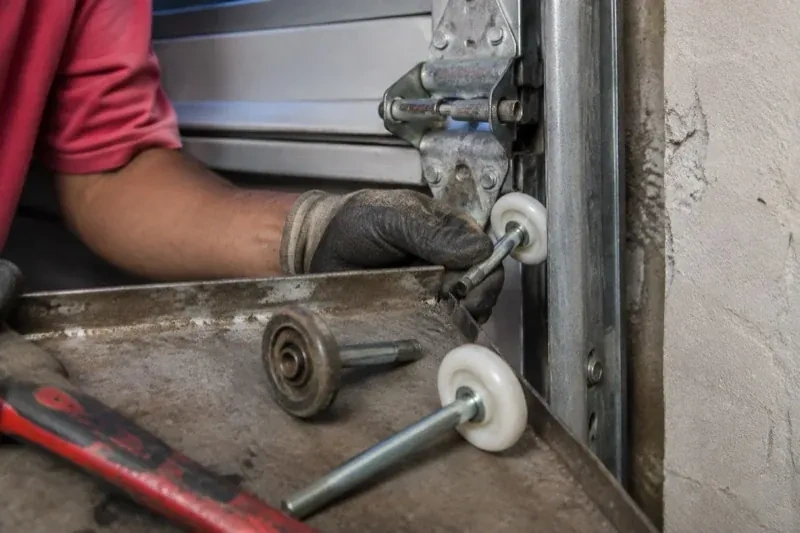
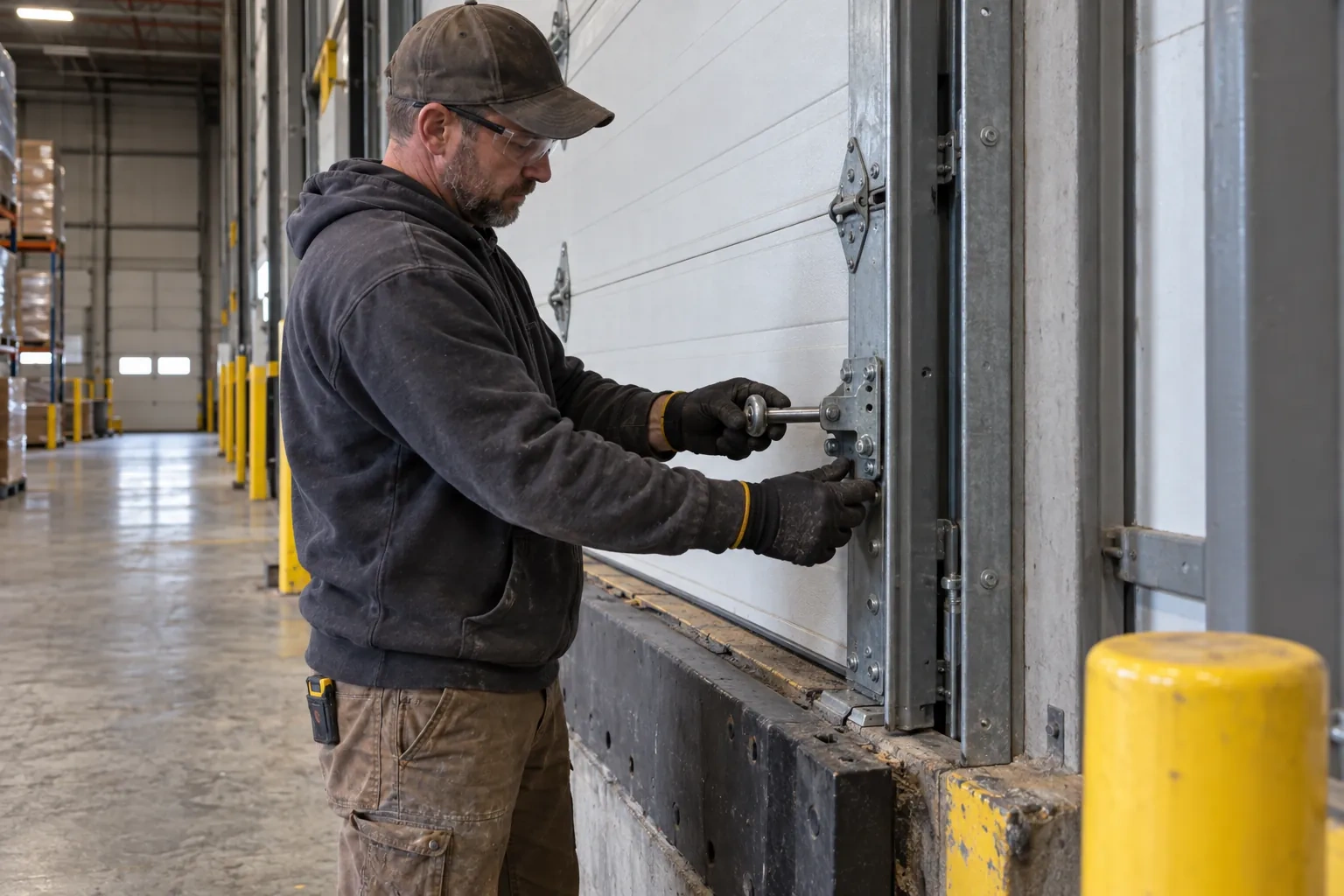
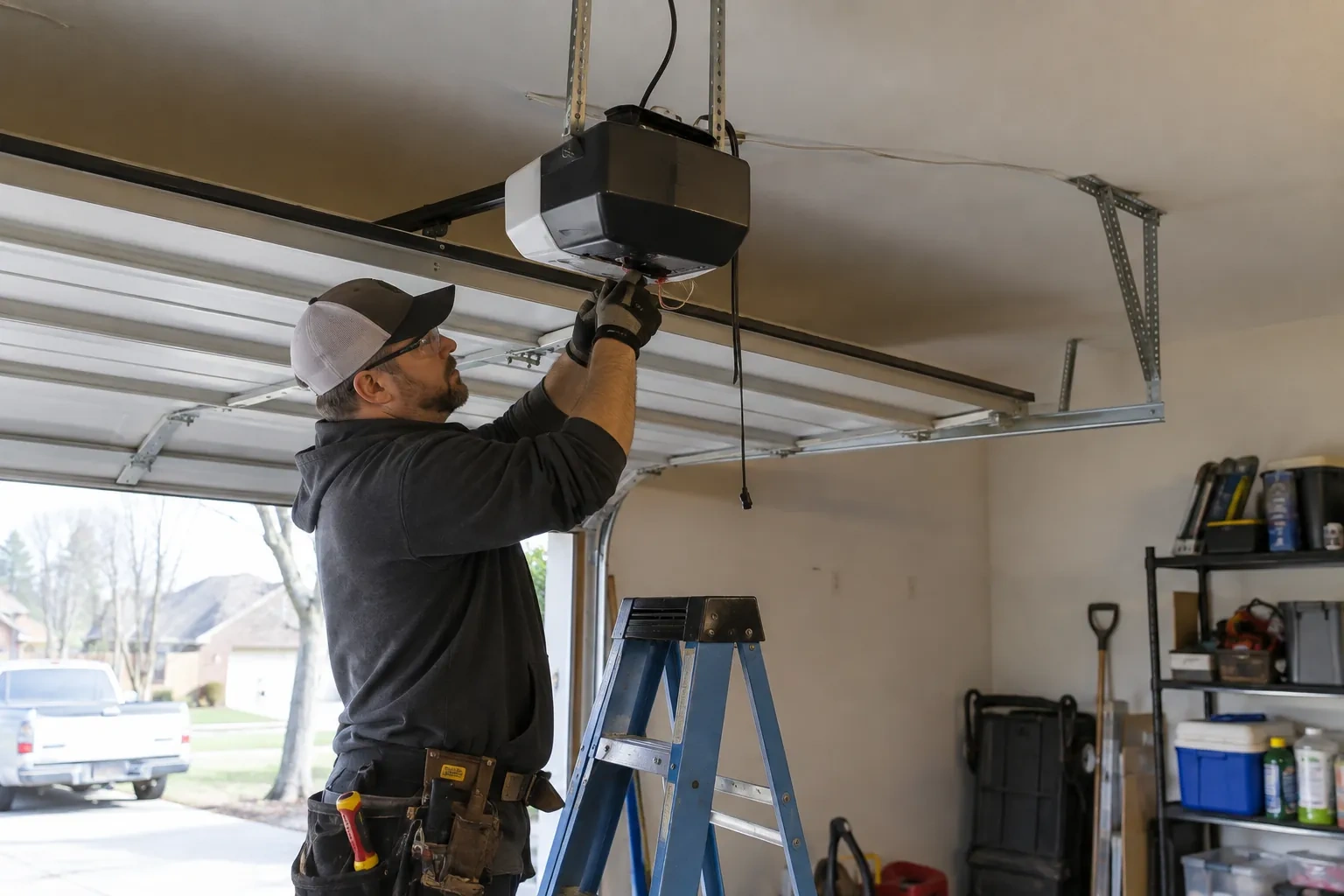
With the door held, the technician works along both sides checking how each roller sits. A roller should rest in the channel without being pinched, and its stem should turn and slide in the hinge or bracket that carries it. A stem that is stuck, a wheel riding up on the lip, or a roller that has popped free are signs of a spread or misaligned section nearby. Worn wheels are also a cause rather than just a casualty, since a roller that no longer rolls drags on the track edge and slowly opens it. The top fixtures are checked for bending, and hinges for splits, so the parts that guided the door into trouble are corrected with the track.
Renewing the curve or the horizontal run
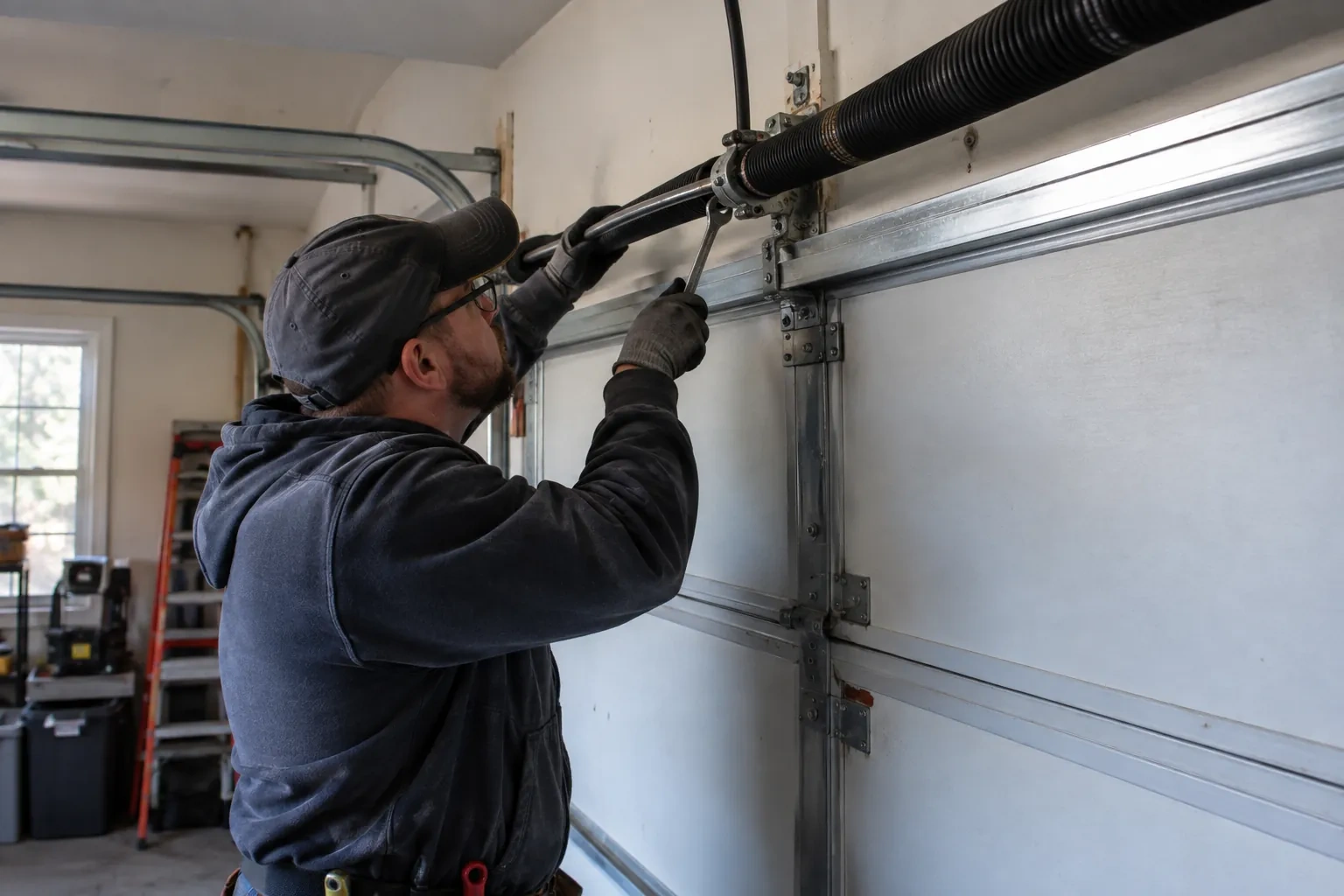
Overhead work starts with the springs unloaded, since the flag bracket carrying the end bearing plate has to come loose for the curve to change. The technician fits a curve of the same radius so the door meets the horizontal run at the same height, then hangs a new or straightened horizontal track from back hangs screwed into joists, not drywall, with a stiffening angle along its length. The rear of each run is set level with its partner, or to the same pitch, and square to the vertical track, and the two hangers are adjusted until a straightedge across the pair reads true. A bent hanger is replaced rather than bent back.
A door that runs the full path without a catch
The change is felt more than seen. The door rises without the bang or hesitation that marked the damaged spot, both sides climb together, and it turns the curve overhead without the top section twisting. Closed, it sits flush against the stop moulding on both jambs with no stripe of daylight, and open, it stays where the opener leaves it instead of drifting back. The opener sounds calmer because it is no longer dragging a door through a pinch point. Lifted by hand with the opener released, the door moves lightly and holds at waist height, which tells you the track and springs are working together again.
Garage Door Track Repair or Replacement
In the van
Winding bars and track clamps
Jamb brackets or continuous angle
Track pliers and dead-blow hammer
Perforated angle back hangs
Level, plumb line and square
Garage Door Track Repair or Replacement
What affects the quote
Bracket-mounted or continuous angle
Track on jamb brackets is adjusted bracket by bracket, while a full-height angle comes off and goes back as one piece. Each mounting style shapes the time and the fasteners quoted.
Access and storage around the track
Shelving, a workbench or a ceiling full of stored goods around the horizontal run slows the work. Clearing the area beforehand changes the time quoted.
Track profile and radius
Two-inch track in a 12-inch or 15-inch radius is stock for most residential doors; three-inch track, unusual radii and high-lift pieces are ordered to the door and priced as such.
What to have ready
- Where is the damage: near the floor, at the curve, or on the overhead run?
- Is it a single or a double door, and roughly how tall?
- Does the door rub the frame or catch at the same spot every time?
Garage Door Track Repair or Replacement: questions
QuestionsWhy is there a gap between the track and the edge of the door?
That gap is intentional. The rollers sit on stems that reach out from the hinges, and the track stands a set distance from the door so the wheels ride in the channel without the door's edge touching the track. The gap should be equal on both sides and slightly larger at the top of the vertical run, which is the taper that lets the door seal at the stop and release on opening. Unequal gaps are a sign the track has moved.
Why does the door catch at the same spot every trip?
A catch that repeats in one place is the signature of a local track fault: a dent, a spread section, a step at a joint, or a bracket that has let the track drift. Each roller reaches the flaw at the same point in the travel and bumps over it. The technician finds the spot by running a roller through the channel by hand, then dresses or replaces that length and checks the rest of the run for the same problem.
Does a heavy insulated door need heavier track?
Usually the standard two-inch track handles a residential insulated door well, provided the gauge matches what the door maker specified and the brackets and hangers are properly fixed. Very heavy or oversized doors, and some carriage-style wood doors, are set up on three-inch track or on heavier-gauge two-inch. If a heavier door was hung on the light track from an earlier door, flexing and spreading follow, and the technician will say so.
Related services
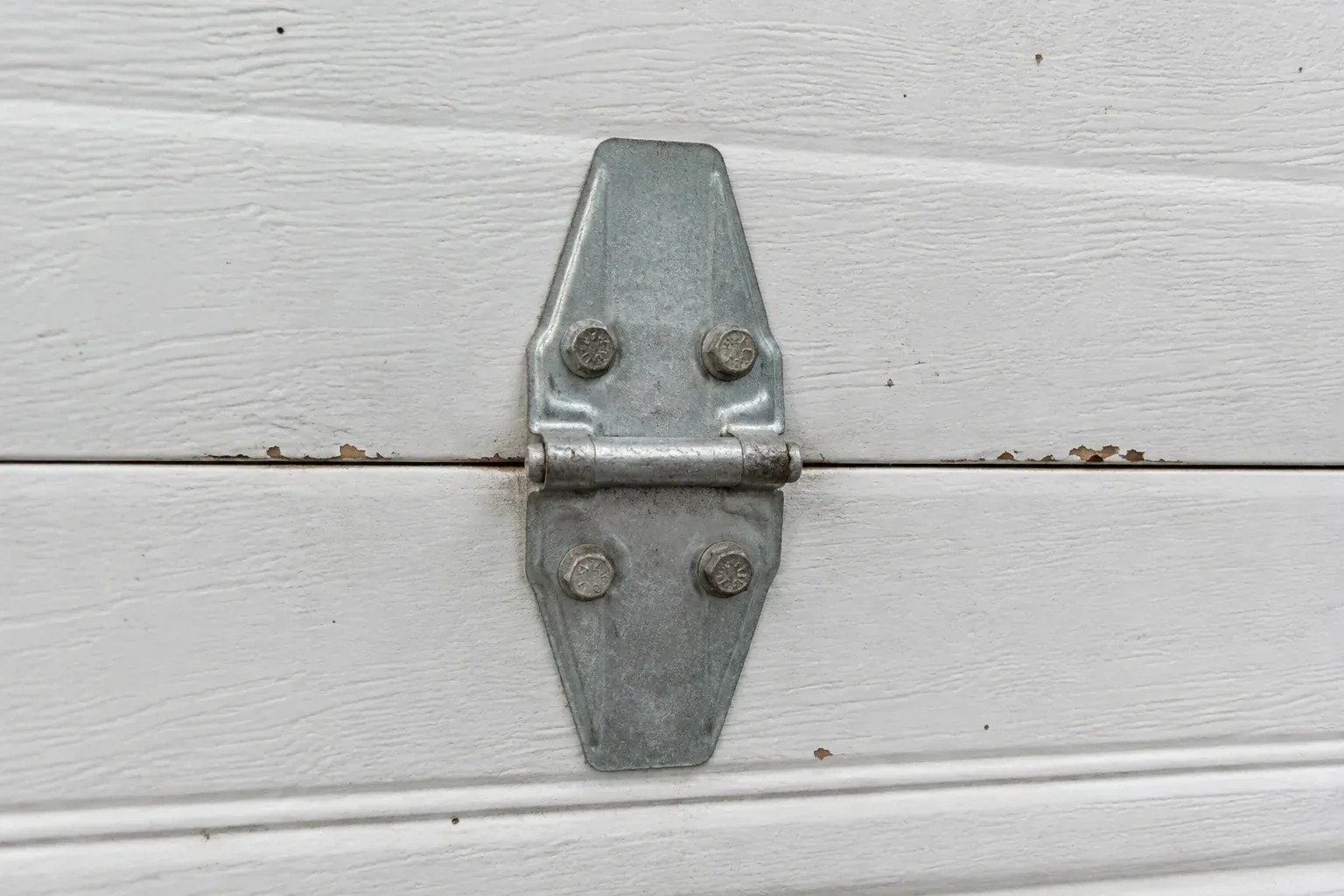
- Garage Door Hinge ReplacementEvery time the door goes up there is a sharp pop from the same spot, about a metre off the floor, and the whole door gives a little shudder.
- Garage Door Cable ReplacementYour older door has springs along the tracks, and one cable has slipped off its pulley and dangles slack.
- Torsion Spring ReplacementAfter pulling the red release cord, you tried lifting the door yourself and it would barely leave the floor.