Repairs · Little Britain
Garage Door Bottom Seal Replacement in Little Britain
The garage doubles as a workshop, and with the heater running the floor near the door stays cold and the draft finds your ankles at the bench.
In plain words
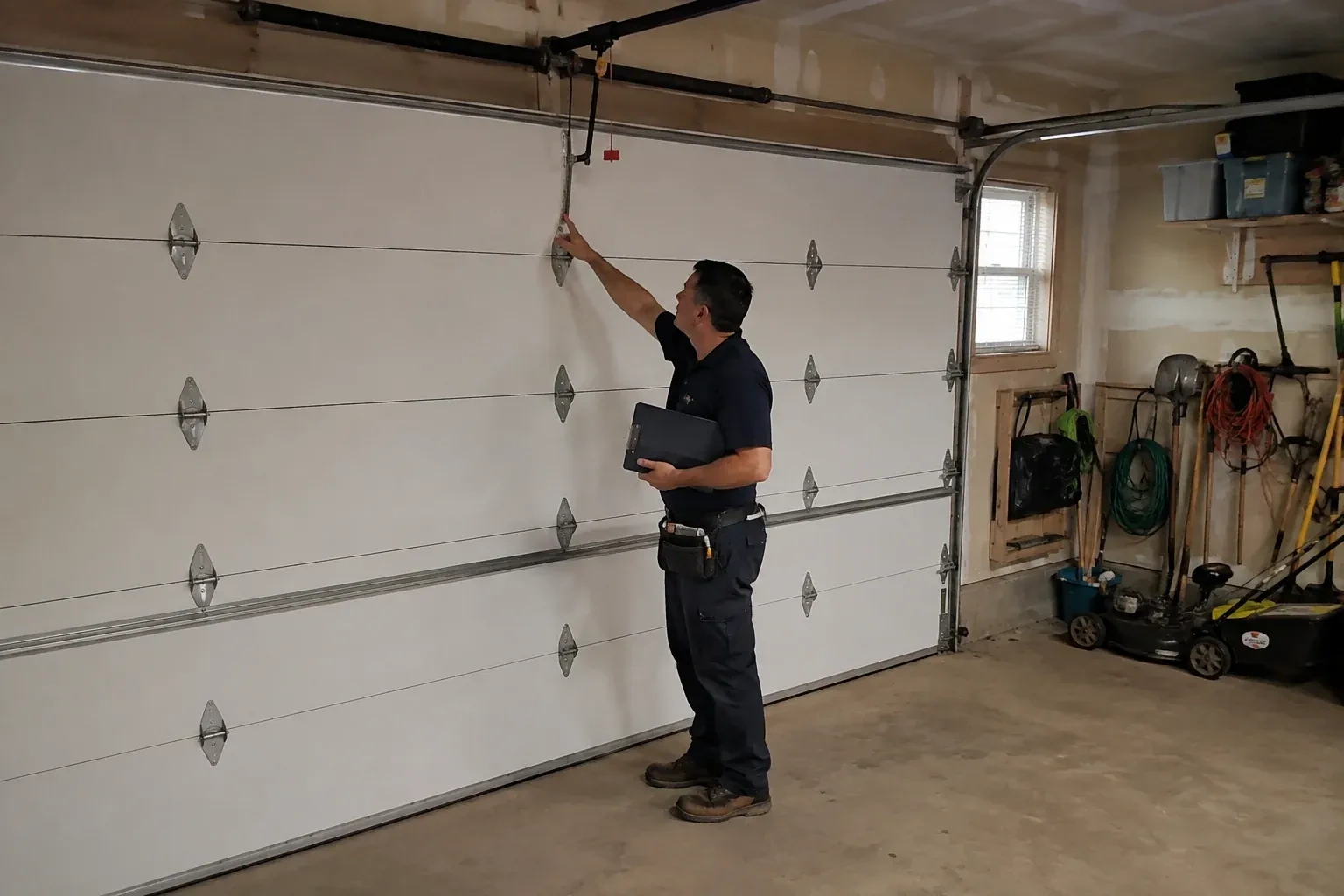
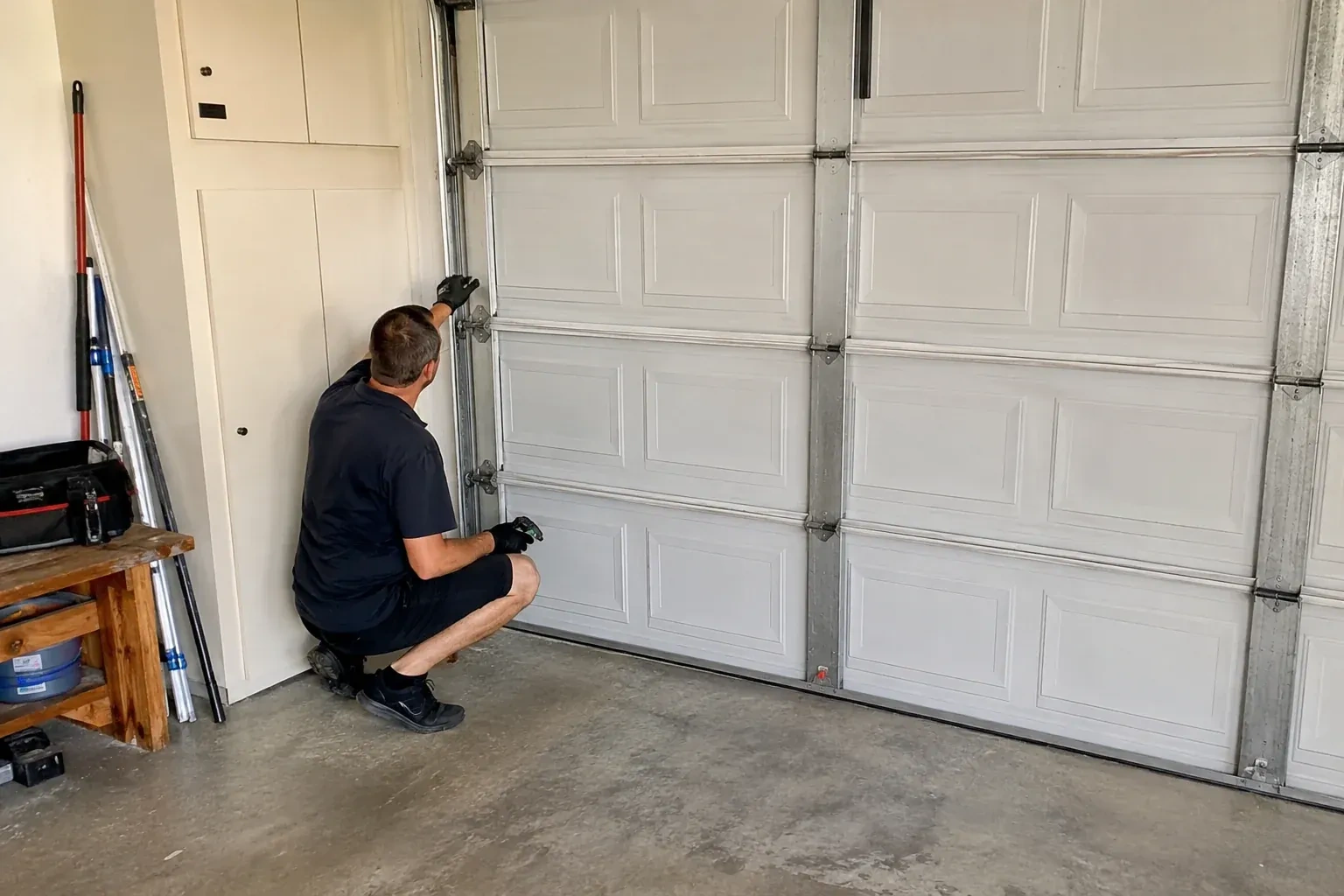
A seal visit runs in a set order. With the door closed, the technician looks for daylight along the floor line and notes whether the gap is even or concentrated at one point. The door is checked for level and the bottom section for straightness, then the retainer is identified and measured. The opener is disconnected and the door secured before the old strip comes out and the channels are cleaned. A new seal, cut a little long, is fed into the channels and trimmed. Finally the door is closed onto the new seal, the opener's limits are reset, and the reversing test is run before the tools go away.
How the visit goesEvery mild afternoon the snow melts off the car, runs to the door, and by morning the rubber strip along the bottom is frozen to the concrete. Last week the opener lifted the door and left half the seal on the floor.
Garage Door Bottom Seal Replacement
How the visit goes
The bottom section and its rail
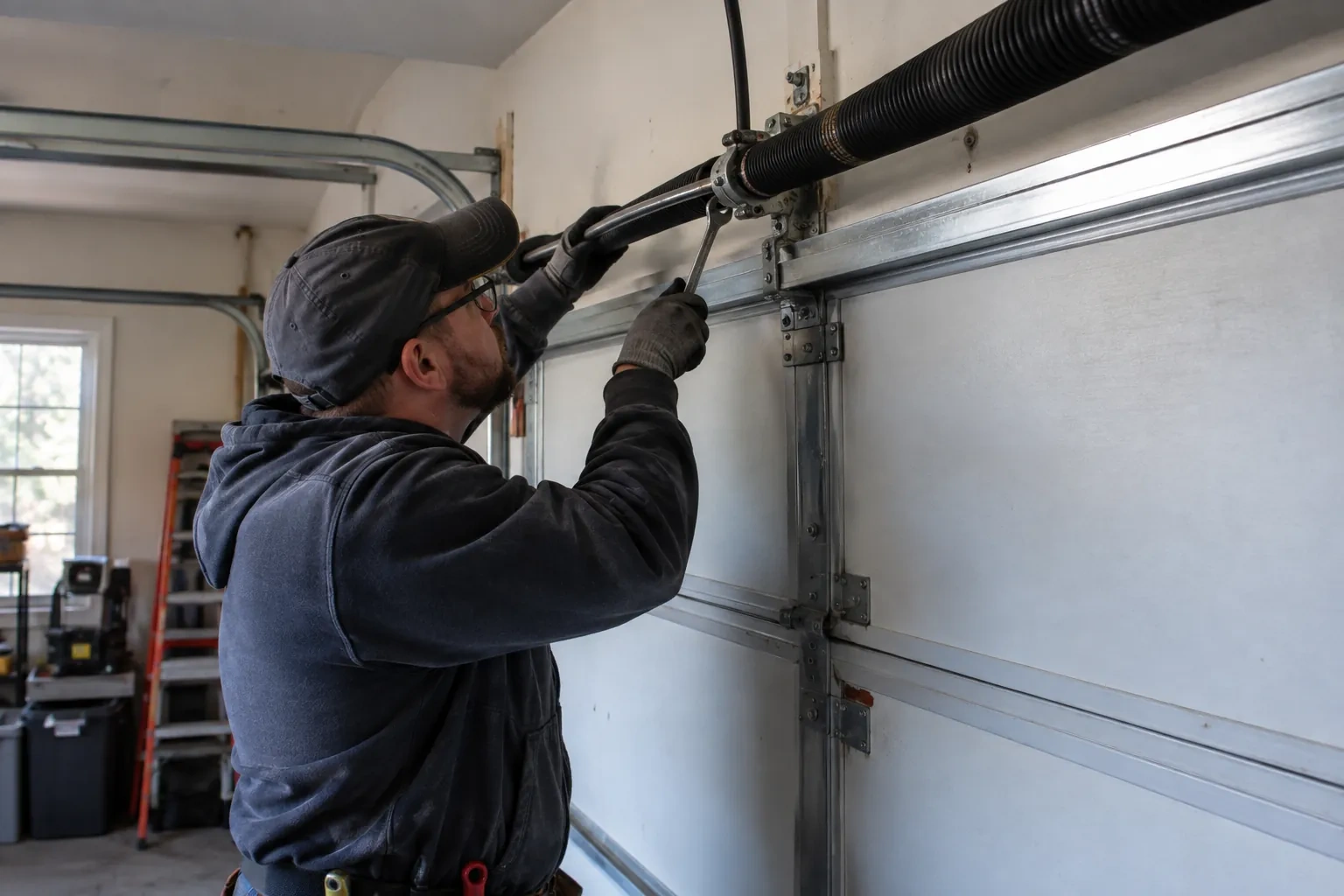
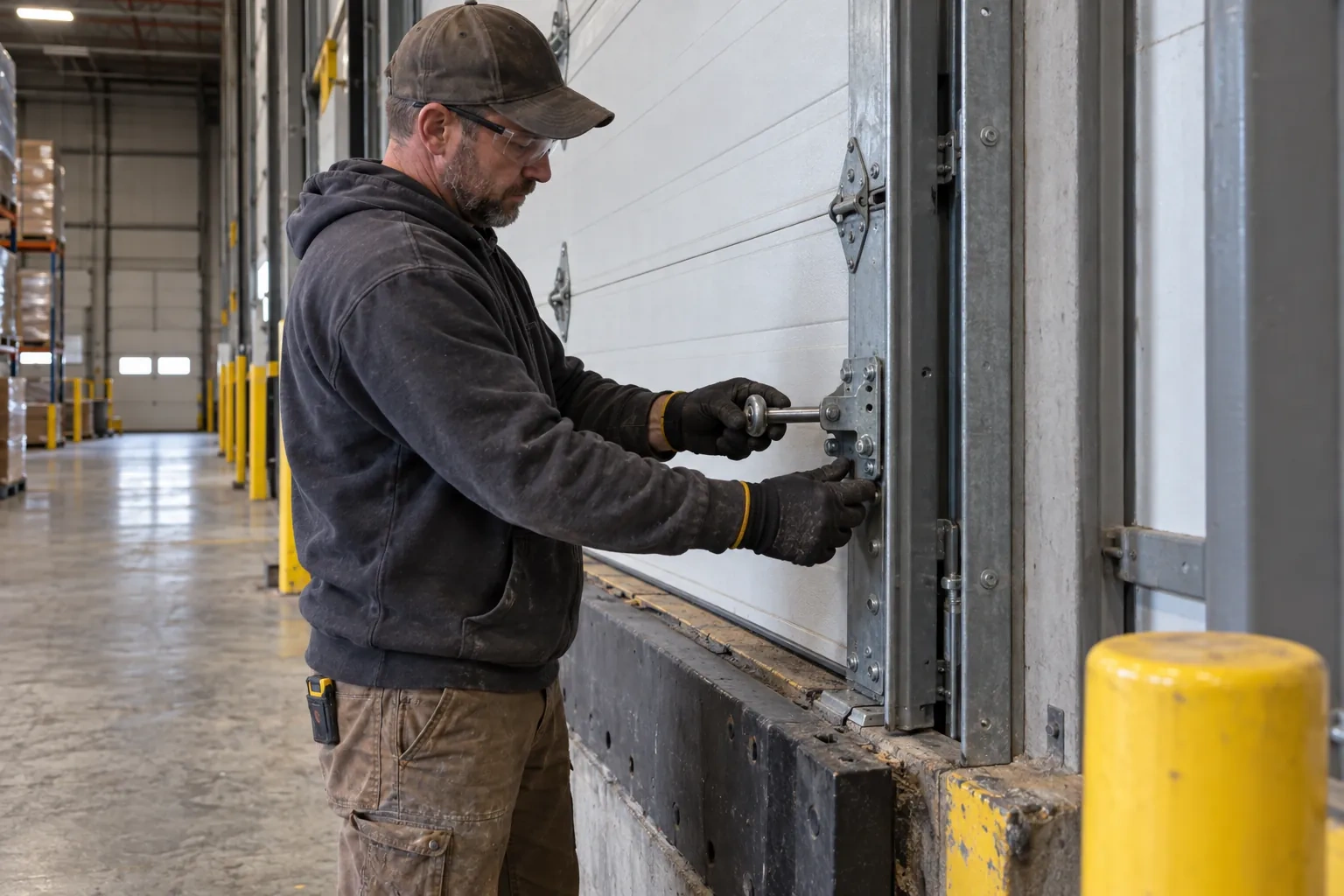
The seal can only be as straight as the edge it hangs from, so the bottom section gets a careful look. On a steel door the technician checks the bottom rail for rust where salt water has sat, dents from a bumper or a shovel, and any bow across the width. On a wood door the rail is checked for rot, cupping and the upturned corners of an old door that has dried unevenly. Fasteners for the retainer and the bottom brackets are checked for corrosion. A sound, straight rail lets a standard seal do its job; a damaged one is pointed out so you can decide on repair, a taller seal, or both.
Adding a threshold seal on a difficult floor
Where the slab slopes toward the garage or has a dished edge, a threshold seal glued to the floor follows the existing contour and gives the bottom strip a raised, consistent edge to meet, rather than levelling the floor itself. The floor line is marked with the door closed, the concrete is swept and cleaned for the adhesive, and the threshold is dry-fitted and trimmed against each jamb. Adhesive is laid along the underside, the threshold pressed down, and the door lowered onto it while it sets. The result is a small raised lip on the outside that turns water back to the driveway and a bottom seal that lands on a consistent edge along its length.
Fewer visitors of the four-legged kind
A continuous seal removes the easy route mice and insects used along the floor. If rodents were part of the reason for the visit, a few habits finish the job: keep birdseed, pet food and grass seed in lidded bins, move firewood and cardboard away from the walls, and check the jamb seals at floor level, where a gap beside the door is as inviting as one under it. Seals with a stainless mesh embedded in the vinyl are available for garages that have had repeated trouble. A sealed bottom edge plus tidy corners keeps the garage a place where nothing wants to nest.
Garage Door Bottom Seal Replacement
In the van
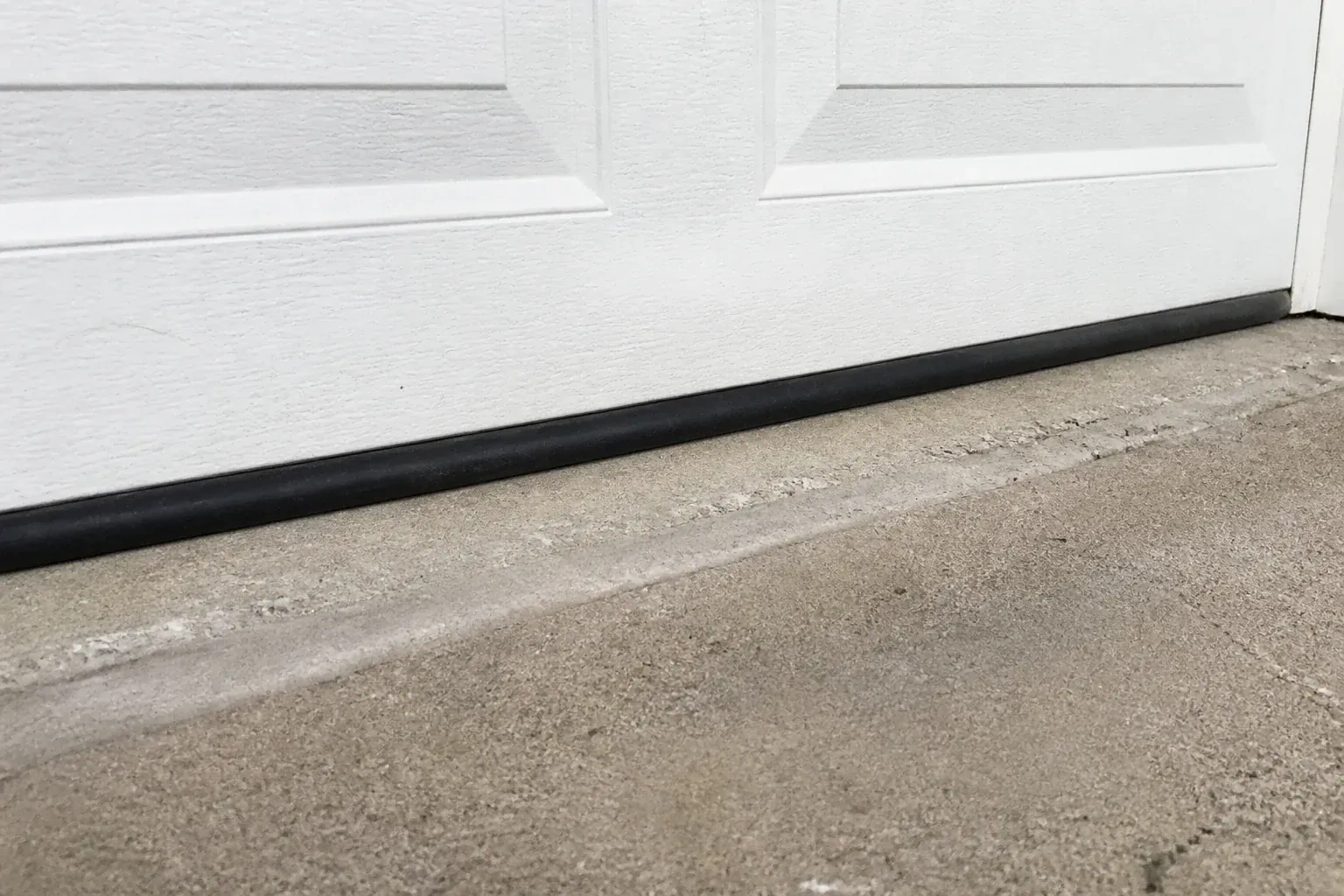
Bead-style bottom seal
Self-drilling retainer screws
Straightedge and tape measure
Bulb or U-style bottom seal
Nail-on vinyl strip for wood doors
Garage Door Bottom Seal Replacement
What affects the quote
Bottom section repairs
A rusted, dented or bowed steel bottom rail, or a rotted wood rail, is pointed out and any repair or reinforcement offered as an option beside the seal work.
Season and conditions
A seal frozen to the slab, ice at the threshold or working in deep cold adds time for freeing the old strip, clearing the line and keeping the new roll warm enough to feed.
Rodent-resistant seal
A profile with embedded stainless mesh for a garage that has had repeated chewing costs more per length than plain vinyl and is offered where the history calls for it.
What to have ready
- Is the door steel, wood, or insulated with a plastic bottom cap?
- Is there a car or storage inside that needs moving before the visit?
- Does the driveway slope toward the garage, or does water pool at the door?
Garage Door Bottom Seal Replacement: questions
QuestionsWhat does a new bottom seal do about water coming in?
It closes the gap between the door and the slab so rain and meltwater meet a continuous barrier. Where the driveway slopes toward the garage, or the slab edge has dipped, the seal alone is working against gravity, and a threshold seal glued to the floor adds a lip that turns water back toward the drive. The technician looks at where the water comes from and recommends the combination that suits your threshold.
Why does the seal freeze to the floor, and what should I do when it does?
Snow melts off the car, runs to the low point at the door and refreezes overnight around the seal. When that happens, leave the remote alone, since the opener will tear the strip or pull the door out of level. Free the seal by hand with gentle warmth along the line or by working a plastic scraper under it, then run the door. A film of silicone on the seal each autumn largely prevents it.
What happens during the visit?
The technician maps the gap with the door closed, checks the door is level and the bottom section straight, and identifies the retainer and profile. The opener is disconnected and the door clamped at working height. The old seal comes out, the channels are cleaned, a new seal is cut and fed in, and any retainer work is done. The door is then closed under power, the opener reset, and the reversing and photo-eye tests run.