Repairs · Little Britain
Garage Door Tune-Up in Little Britain
Halfway up, the door shudders.
In plain words
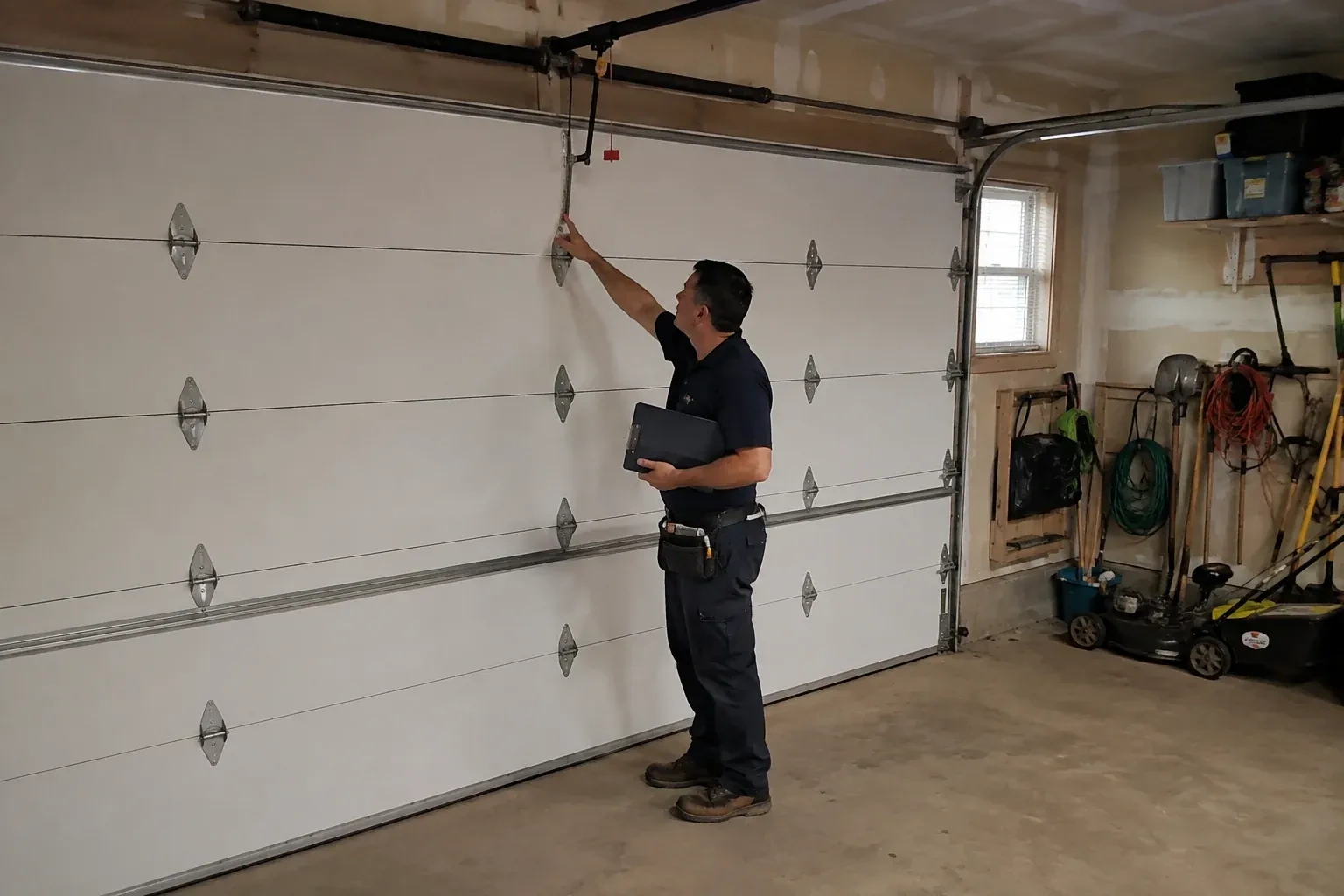
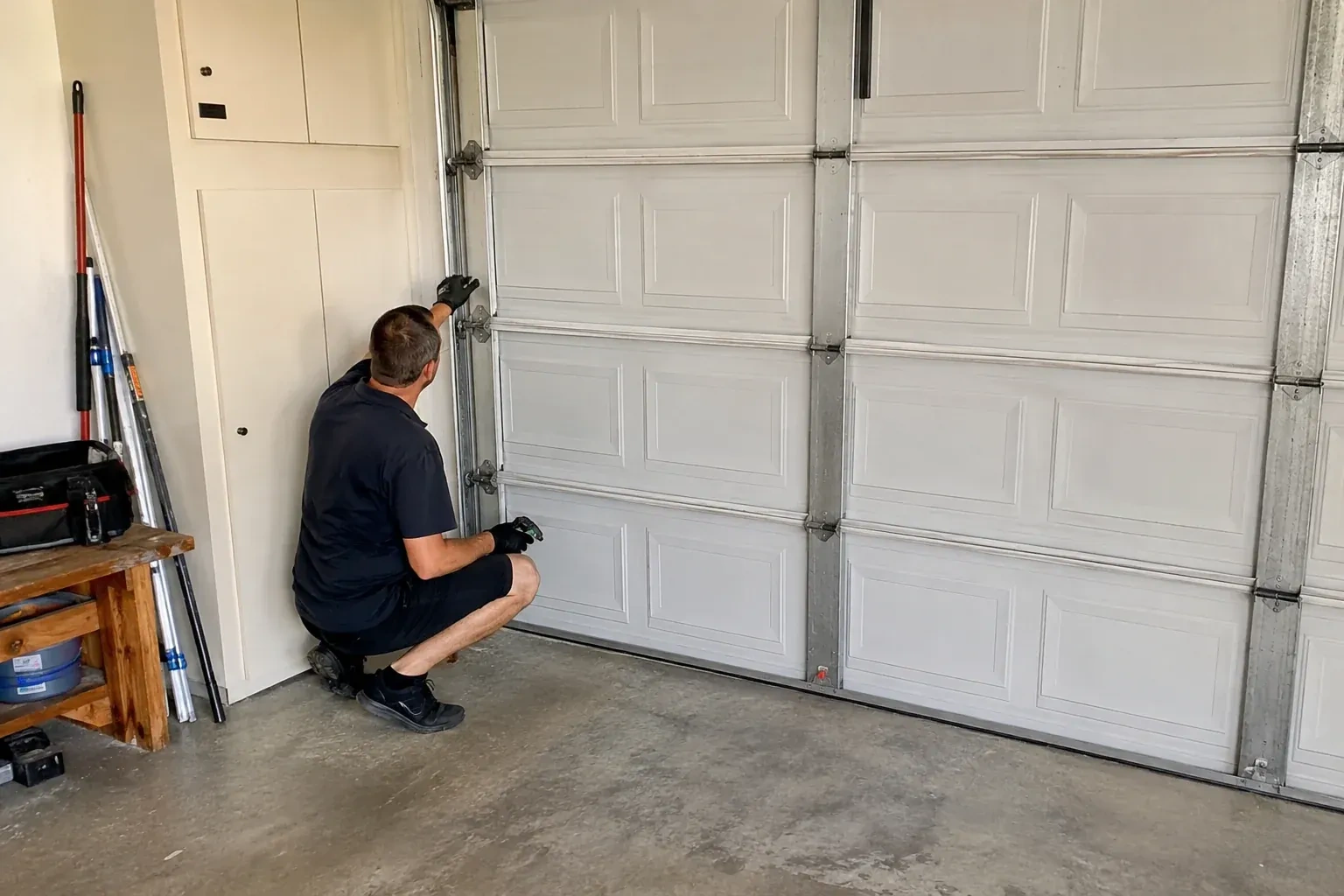
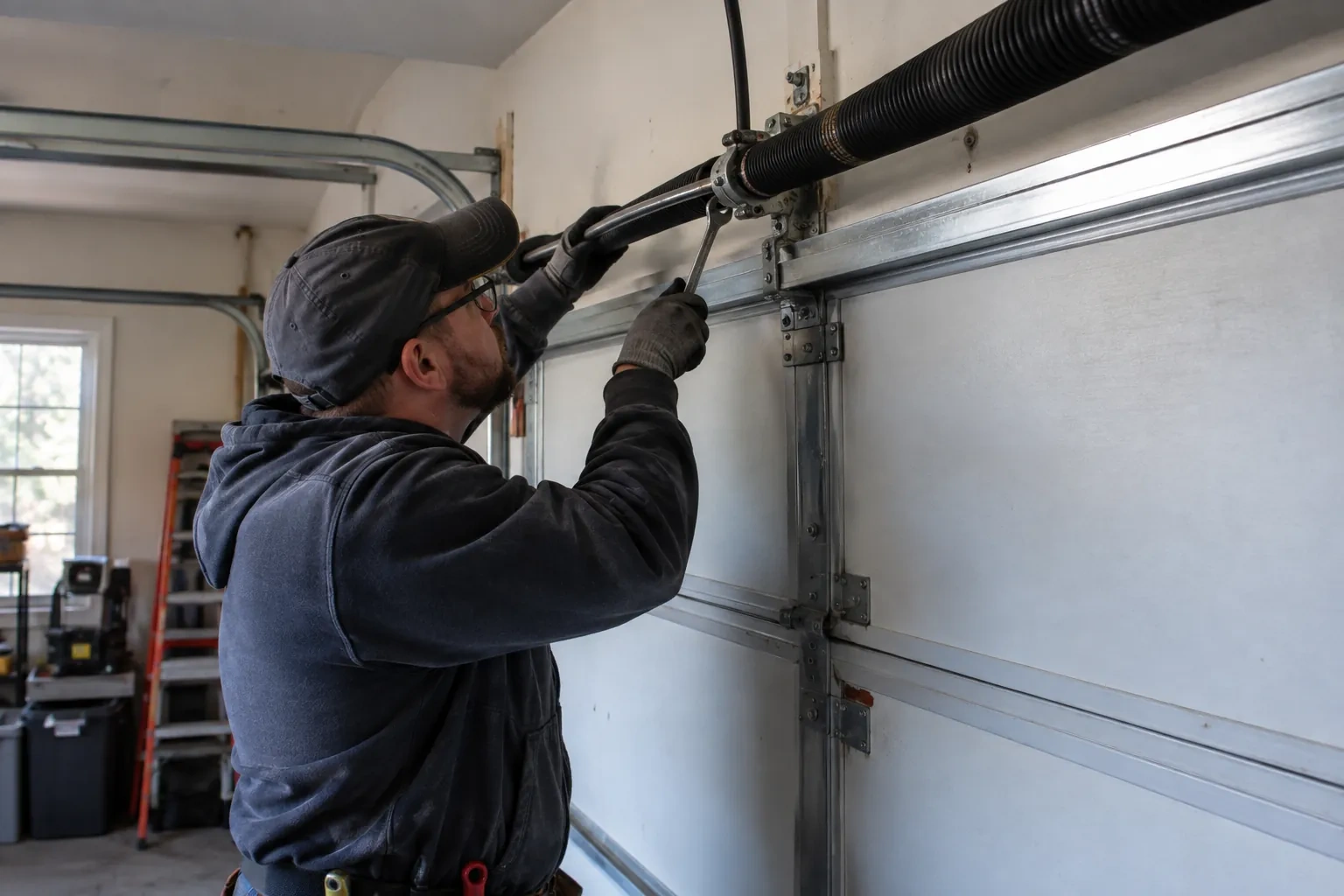
The visit follows a set order. First the technician watches a full cycle, up and down, from a safe distance, noting where the noise, shaking or hesitation lives. Then the door is closed and inspected hardware by hardware, from the bottom brackets to the torsion shaft. The manual release is pulled and the door is lifted by hand to feel the balance. Only then does the work start: fasteners, lubrication, opener adjustments and sensor alignment. A second cycle and the reversal tests close the visit, and the difference between the first run and the last is the measure of the tune-up.
How the visit goesHalfway up, the door shudders. The sections seem to catch for a moment, the whole assembly shakes, then it carries on as if nothing happened. You have started holding your breath at that spot each time.
Garage Door Tune-Up
How the visit goes
Feeling the balance by hand
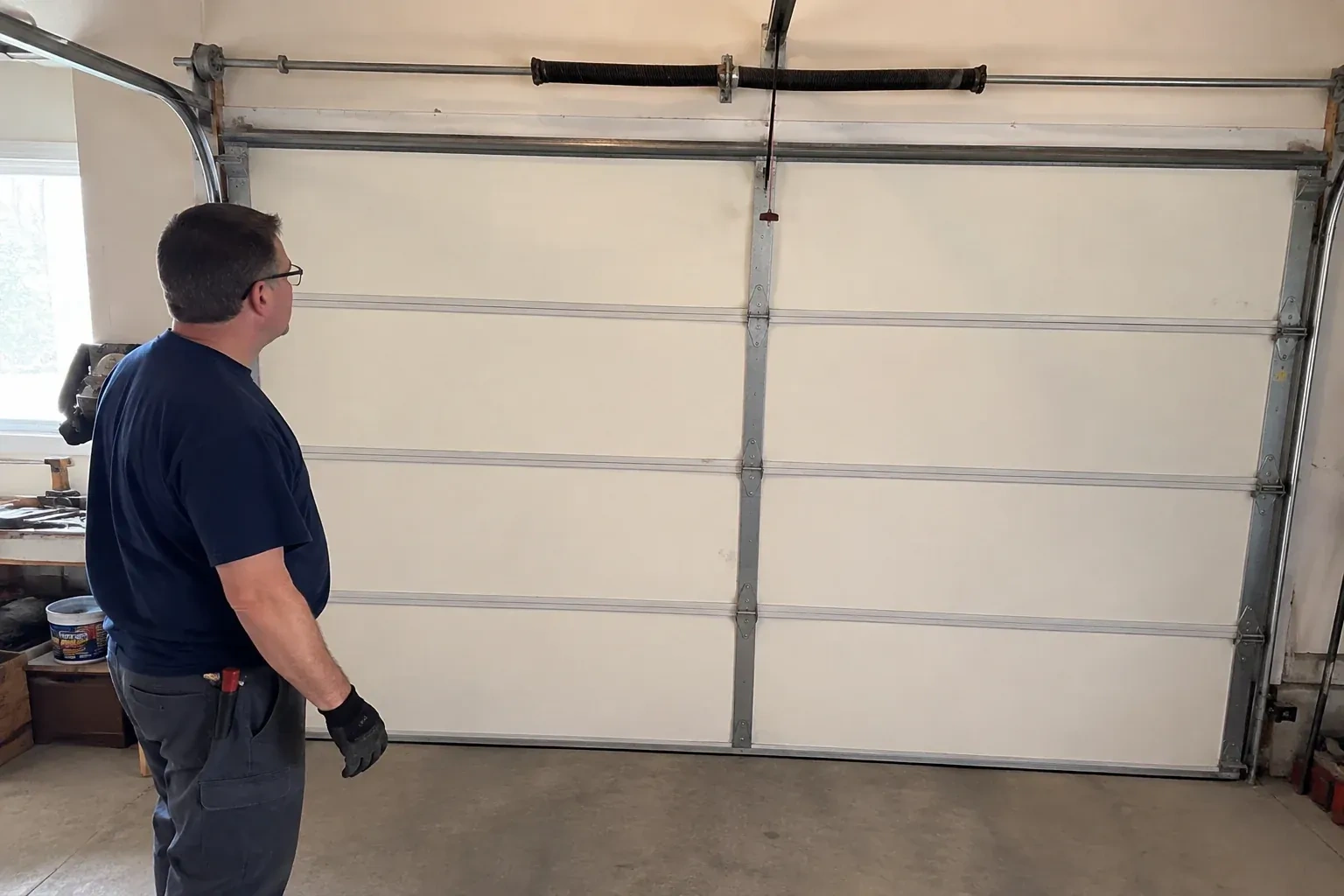
The door is disconnected from the opener with the red release handle, and the technician lifts it by hand, gripping only the handles or a safe edge. A properly balanced door rises with modest effort, stays fully open on its own and holds still when left about a metre off the floor. A door that sinks back down, or that takes real strength to raise, has springs that have lost tension and an opener that has been carrying weight it was not designed for. This check takes a minute and decides more than any other: it tells the technician whether the tune-up can proceed as maintenance or whether spring work needs to be quoted first.
Rollers and hinges that have earned attention
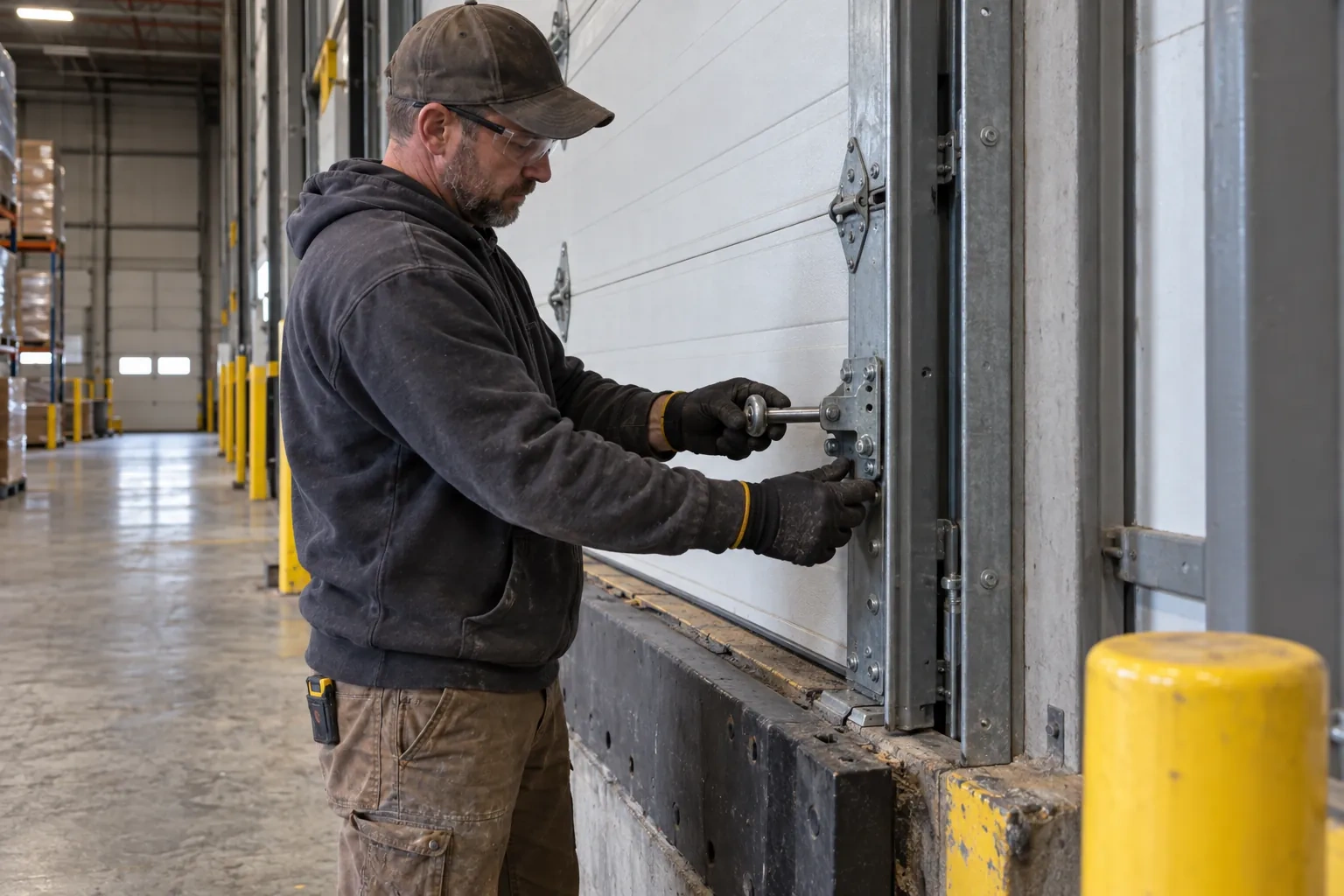
Sometimes the inspection finds a roller with a flat spot, a bearing that grinds even when lubricated, or a hinge with a cracked knuckle, and these are the small parts that make a door loud and rough. Where the customer agrees, a worn roller or hinge on the middle sections can be changed during the visit: the door is clamped to the track so it cannot move, the hinge is unbolted, the roller stem is drawn out and the new part goes in with fresh fasteners. Rollers at the bottom section stay with the tension-bearing hardware and are handled separately. Even a single replaced roller can remove the loudest sound in the cycle.
A door you hear less and trust more
The most noticeable change is the sound. With the hinge pins and roller bearings lubricated and the loose hardware tightened, the squeal and the rattle that woke the household are gone or reduced to a low hum of rollers in a clean track. The door starts without the shudder and lands on the floor with a soft contact instead of a slam. Because the technician ran the same cycle before and after the work, you can hear the difference for yourself before they leave, and the sounds that remain, if any, are explained: what they are, which part they come from and whether that part is worth replacing now or watching for a season.
Garage Door Tune-Up
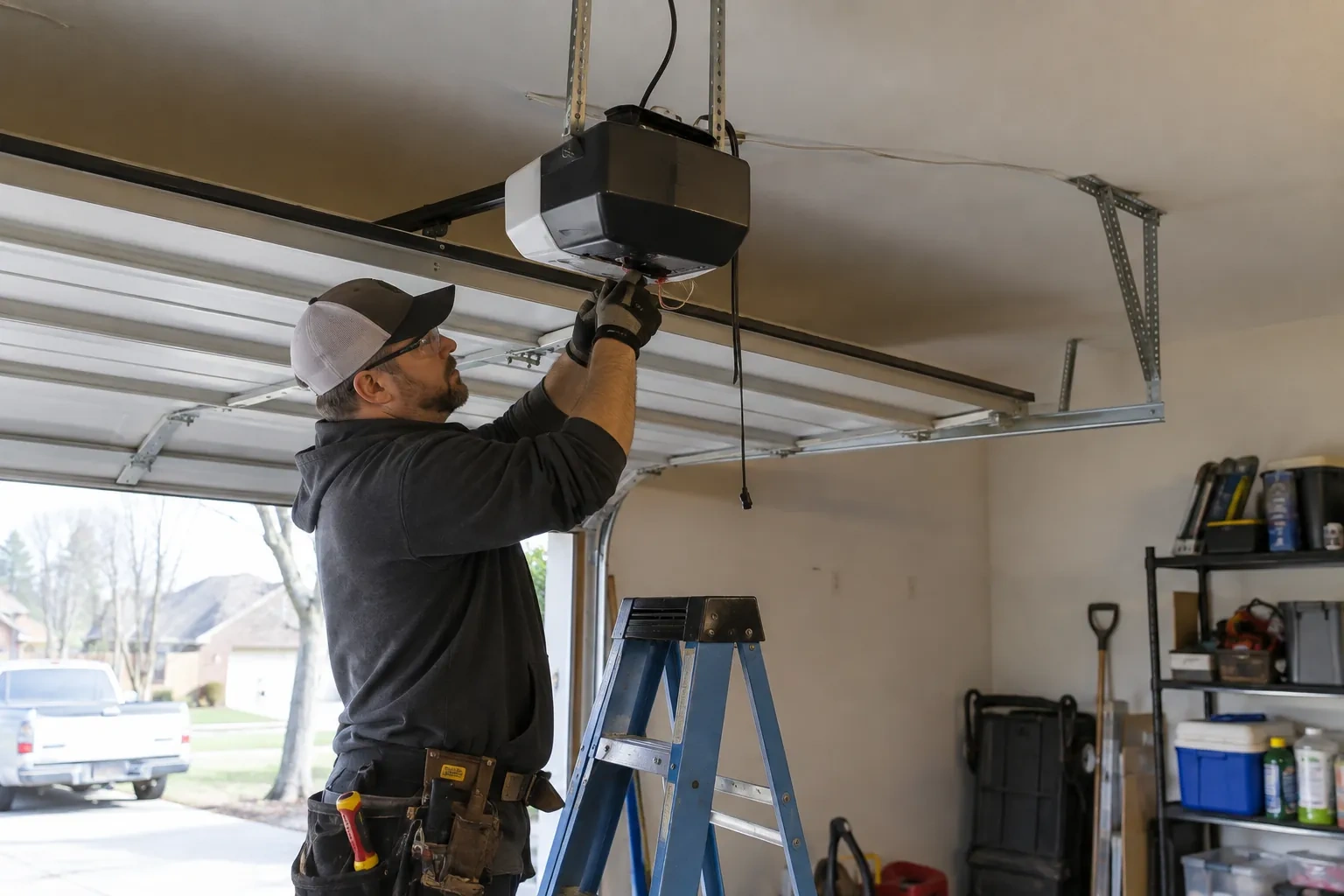
In the van
Locking pliers or C-clamps
2x4 test block and tape measure
Jamb and header weatherstrip
Photo-eye brackets and wire
Lag screws for brackets and header
Garage Door Tune-Up
What affects the quote
Torsion or extension springs
Torsion springs above the header and extension springs beside the tracks are inspected differently, and extension systems have pulleys and safety cables that add items to the checklist.
Balance findings
If the balance test shows the springs have lost tension, spring adjustment or replacement is a separate job with its own quote rather than part of the maintenance visit.
Door construction and weight
A heavy wood or insulated steel door works its hardware harder than a light aluminum one, and the balance check and fastener work take a little longer on the heavier door.
What to have ready
- Can vehicles and stored items be moved clear of the door and tracks before the visit?
- Are the springs mounted above the door or along the sides beside the tracks?
- When was the door last serviced, and do you have any paperwork?
Garage Door Tune-Up: questions
QuestionsCan a tune-up make my noisy door quieter?
Usually, yes, and often dramatically. Most garage door noise comes from dry hinge pins, dry roller bearings and hardware that vibration has loosened, and those three are exactly what a tune-up addresses. Some noise comes from parts that have worn, such as a roller gone out of round or a chain that has stretched, and the technician tells you which sounds were settled by maintenance and which point to a part worth replacing, with a separate quote for that.
What should I do if the bottom seal freezes to the floor?
Do not keep pressing the button; the opener can tear the seal or pull the top section out of shape. Free the seal by clearing the ice along the threshold, with warm water poured on the concrete rather than the door, or by working a plastic scraper along the seal. Then treat the seal with a silicone spray. Keeping snow and meltwater cleared from the threshold and keeping the seal flexible with silicone prevents most repeats.
Will the tune-up include replacing worn parts?
Small wear items found on the day, such as a roller or a hinge on a middle section, a bottom seal or a few fasteners, can often be replaced during the visit if you agree and the part is on the truck. Larger items, including springs, cables, drums, bottom brackets, a bent track or an opener gear, are written up as separate repairs with their own quote so you can decide with the facts in hand rather than under a raised ladder.
Related services
- Off-Track Garage Door ResetYou tapped the door with the bumper while backing in, barely a nudge, and now the bottom corner has swung inward.
- Garage Door Panel ReplacementYou misjudged the last metre of the driveway and felt the bumper meet the door.
- Garage Door Bottom Seal ReplacementThe garage doubles as a workshop, and with the heater running the floor near the door stays cold and the draft finds your ankles at the bench.