Openers · Keneden Park
Garage Door Opener Diagnosis and Repair in Keneden Park
You press the remote from the driveway and hear the motor hum overhead, a steady drone with no movement behind it.
In plain words
Diagnosis answers a question you cannot settle from the driveway: repair or replace? Age matters, because boards and gear kits for a twenty-five-year-old unit may no longer be made. Safety matters, because a unit with no photo eyes is one the industry recommends replacing rather than patching. The nature of the fault matters too: a capacitor or a gear kit is a routine repair, while a burnt-out motor in an old chain-drive head is usually the signal to move on. You leave with the finding, the reasoning and the choice in your hands, not a replacement sold before anyone looked.
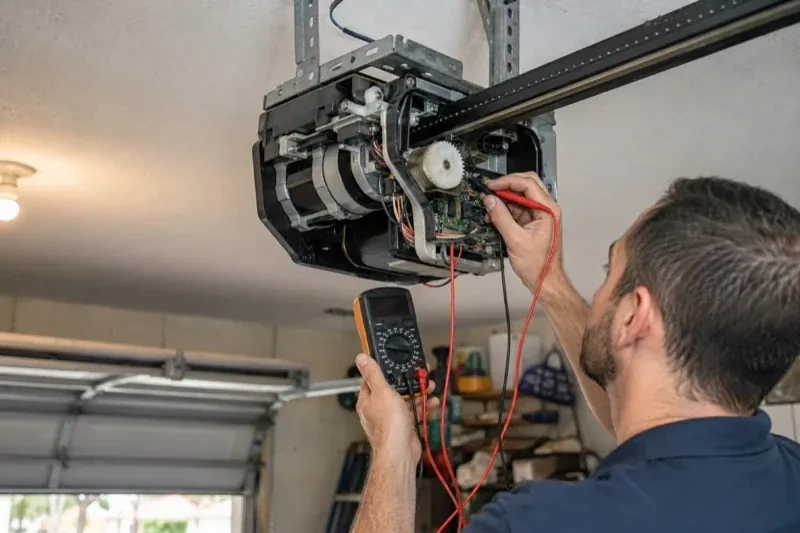
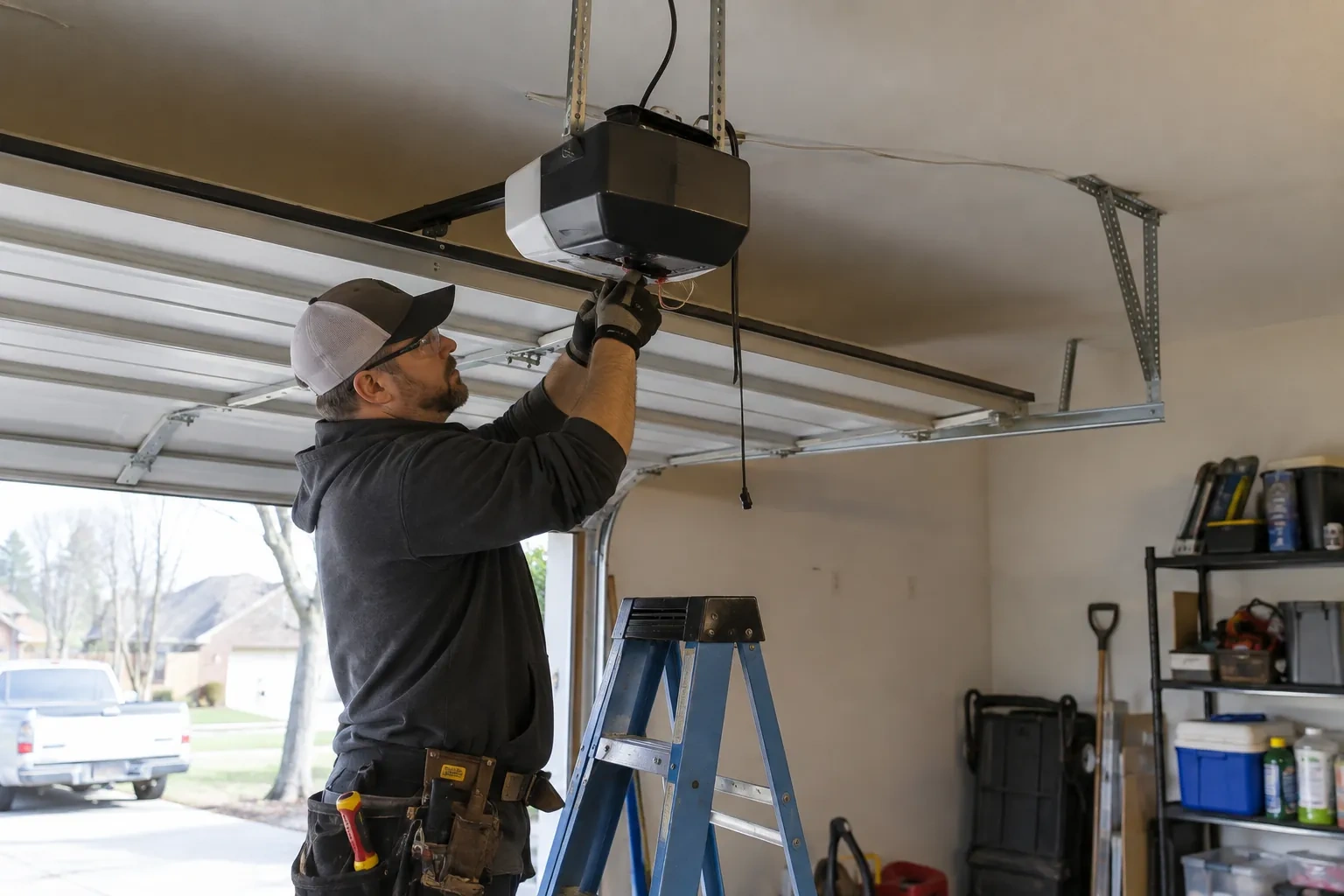
How the visit goesYou press the remote from the driveway and hear the motor hum overhead, a steady drone with no movement behind it. The door stays shut. Press again and the hum returns, then quits, as if the machine is trying and cannot get a grip on anything.
Garage Door Opener Diagnosis and Repair
How the visit goes
The story before the tools
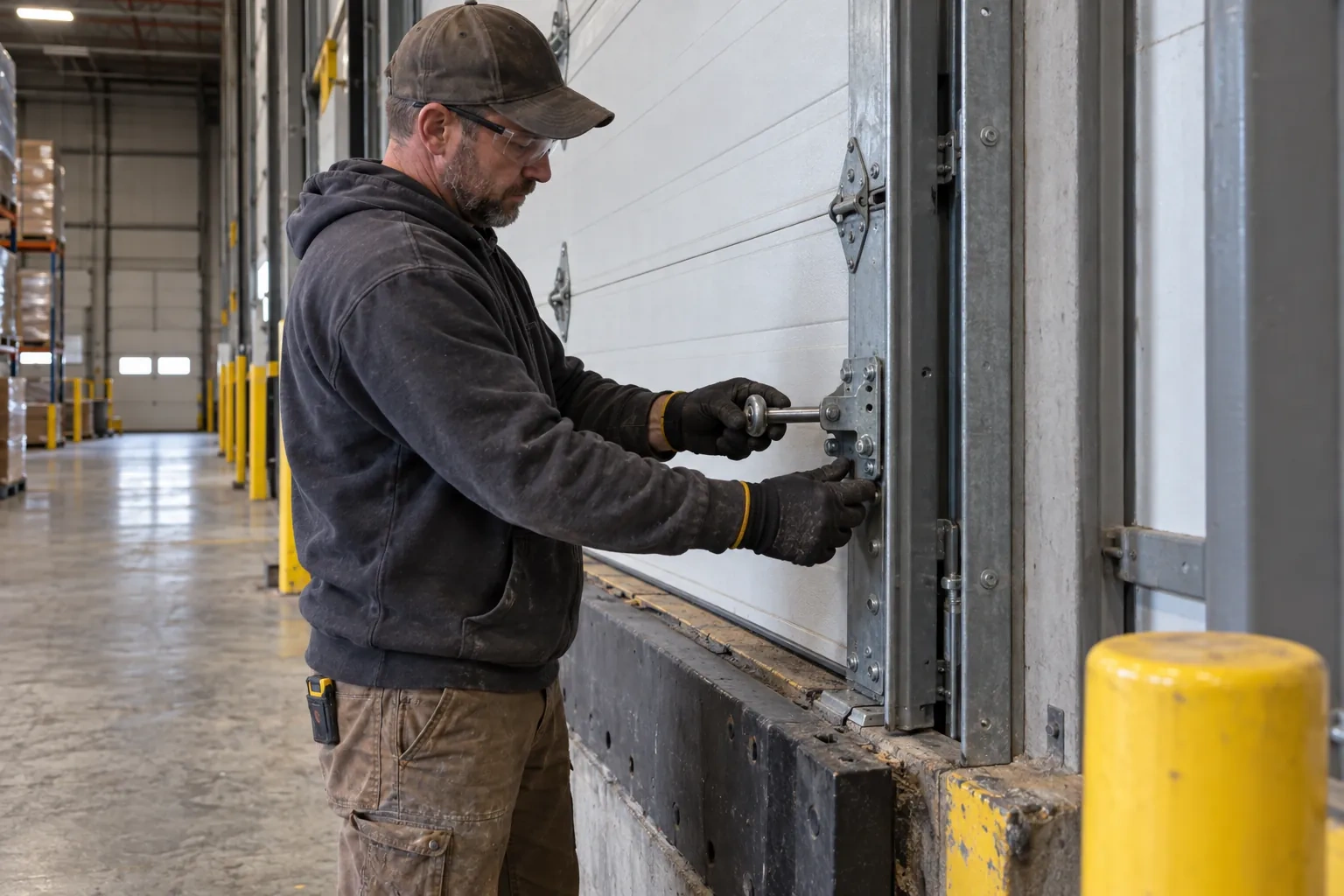
Diagnosis begins with what you saw and heard. When did the door last behave, and what changed between then and now: a power outage, a storm, a new light bulb, a shovel leaning against the sensor, someone pulling the red cord? Does the motor hum, click, run or stay silent? Does the fault follow one control or all of them? Is the door stranded up or stranded down, and does it move at all by hand? A few minutes of this on the phone or at the door points the technician at one part of the system instead of all of it, and often shortens the visit considerably.
Capacitor and motor work
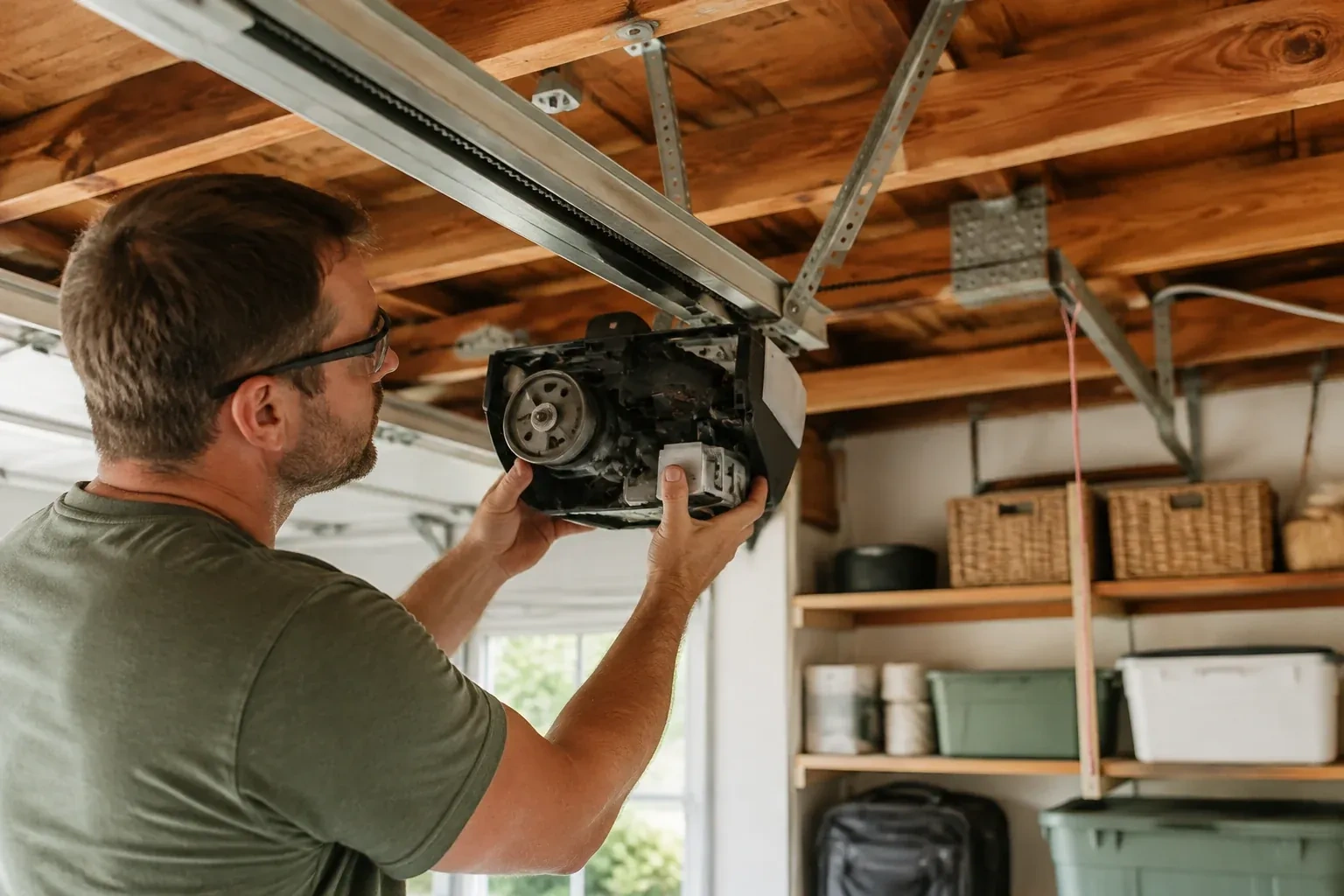
On an AC opener that hums and clicks but never turns, the start capacitor is the first suspect. It is discharged, tested and replaced with one of the same rating, a routine job that returns a dead-sounding opener to normal in many cases. If the motor still fails to turn with a good capacitor, the technician checks for a seized shaft, burnt windings or a failed thermal cut-out, and confirms the motor is not simply being stalled by a locked or bound door. A motor replacement is weighed against the age of the unit and the availability of the part, and that judgement is explained before any decision.
A clear path if the unit is near its end
When the diagnosis finds an opener that is safe today but not for long, you leave with a plan rather than a surprise. You know which part is wearing, what the warning signs will be, and how the decision to replace is likely to present itself. If the unit is one the industry recommends replacing, such as a head unit with no photo eyes, that is set out plainly along with what a modern belt or direct-drive unit changes: quieter running, battery backup, soft start and stop, and sensors that meet the current standard. The door is left working and safe while you decide.
Garage Door Opener Diagnosis and Repair
In the van
Wall control
Start capacitor
Remote batteries (coin and cylinder cells)
Transformer and board fuse
Trolley and carriage
Garage Door Opener Diagnosis and Repair
What affects the quote
Wiring to be re-run
Damaged low-voltage wire to the sensors or the wall control is replaced along its whole length and clipped clear of the track, so the distance and route from head unit to door frame affect the time.
Ceiling height and access
A standard-height garage puts the head unit in easy ladder reach. High ceilings, high-lift tracks, storage lofts or a car that cannot be moved add setup time and sometimes a taller ladder.
Repair or replacement
When diagnosis points to replacement, the quote changes shape entirely: a new head unit, rail and sensors with installation, plus removal of the old opener, rather than a single part and labour.
What to have ready
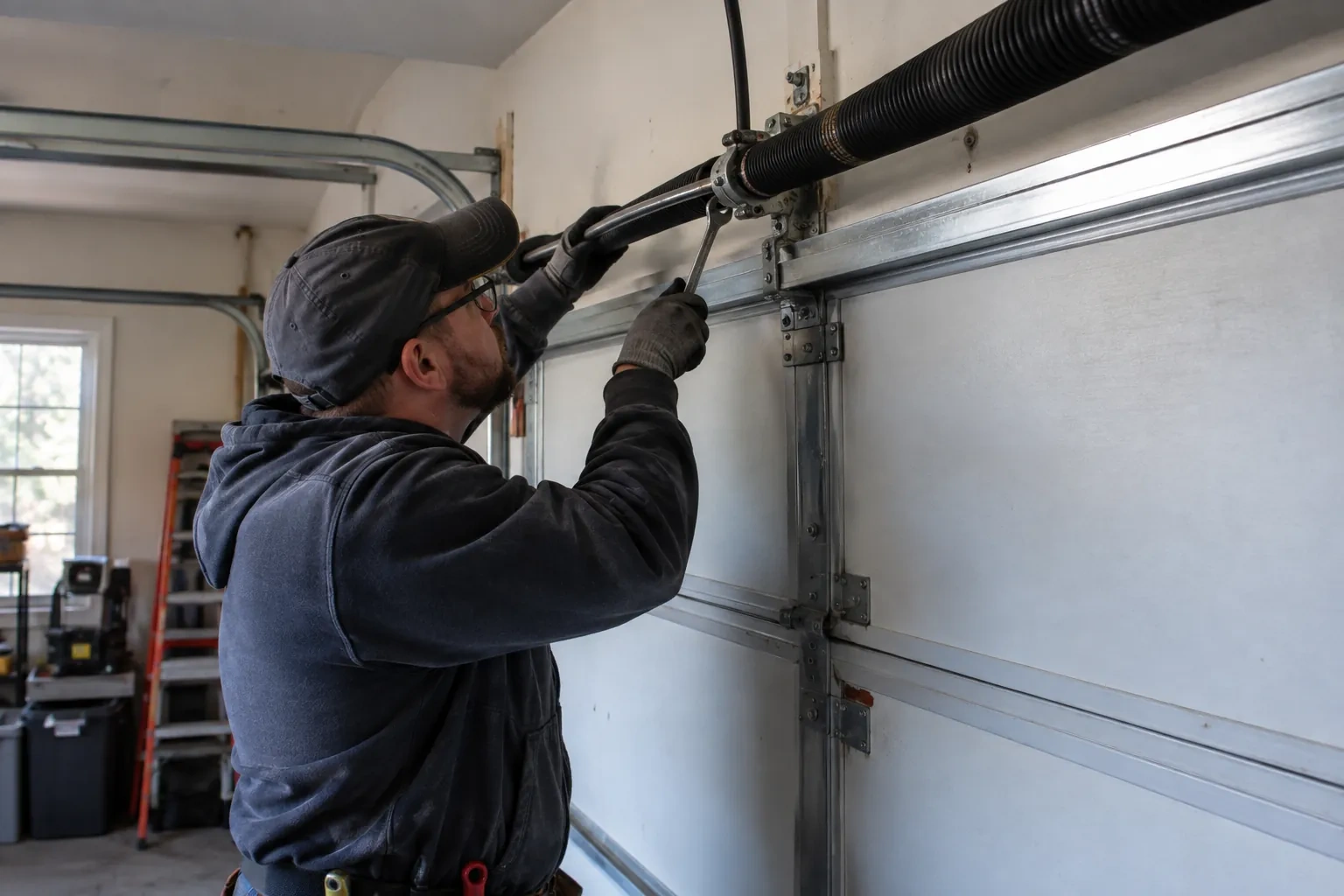
- Can you see a gap in a spring above the door, or a loose cable?
- How does the door feel when lifted by hand: light, heavy, or does it drift?
- Does the fault happen with the wall control, the remotes, the keypad, or all of them?
Garage Door Opener Diagnosis and Repair: questions
QuestionsWhat does an opener diagnosis actually involve?
A fixed sequence of checks, done in order so nothing is assumed. Power at the receptacle. Each control tried on its own. The photo eyes and their indicator lights. The head unit's flash code, if it has one. The drive train from motor to trolley. Then the door itself, disconnected and lifted by hand to test its balance. Only after that is a part named and, where it is a small one, replaced during the same visit.
How long does a diagnosis visit take?
The checks themselves run in a set order and take a modest part of an hour on most doors. What extends a visit is the repair that follows: a gear kit or capacitor adds a little, a sensor re-wire or a trolley change adds more, and a door-side problem such as a balance fault may mean a second piece of work. You are told where things stand once the cause is found, before any further work begins.
There are white plastic shavings under the opener. What are they?
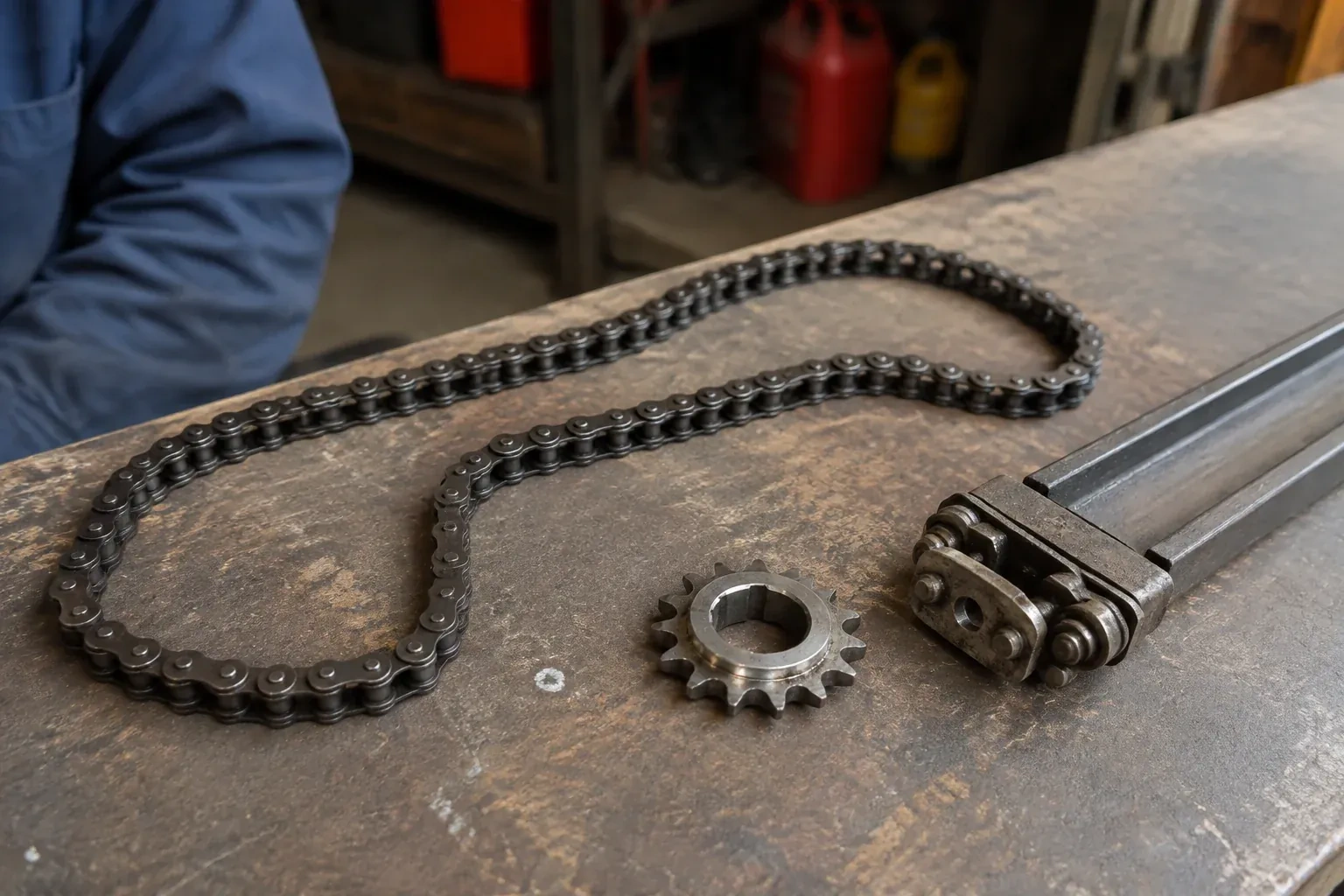
Teeth from the drive gear. Many chain-drive openers use a nylon gear between the motor and the sprocket, and after years of running, especially against a heavy or dry door, its teeth shear off and fall as fine white curls onto whatever is parked below. The motor then spins without moving the chain. The gear and sprocket are replaced as a kit, and the door balance is checked so the new gear is not asked to carry the same load.
Related services
- Belt-Drive Opener RepairSomeone tightened the belt last month to stop the sag.
- Garage Door Opener ReplacementPress the button and the motor hums, but the door stays exactly where it is.
- Photo-Eye Sensor Alignment or ReplacementSomeone backed the car in a little too far, a bin or a bicycle brushed the track, and since then the door starts to close and comes back up.