Springs · Keneden Park
Garage Door Cable Replacement in Keneden Park
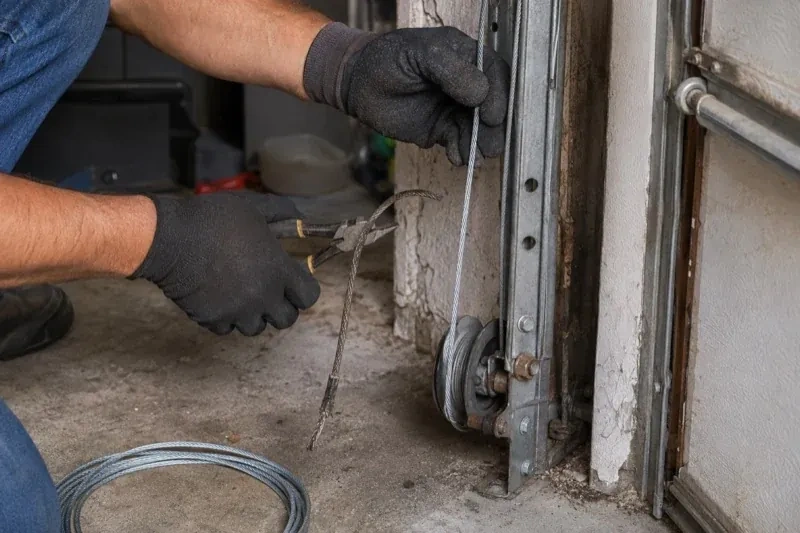
Your older door has springs along the tracks, and one cable has slipped off its pulley and dangles slack.
In plain words
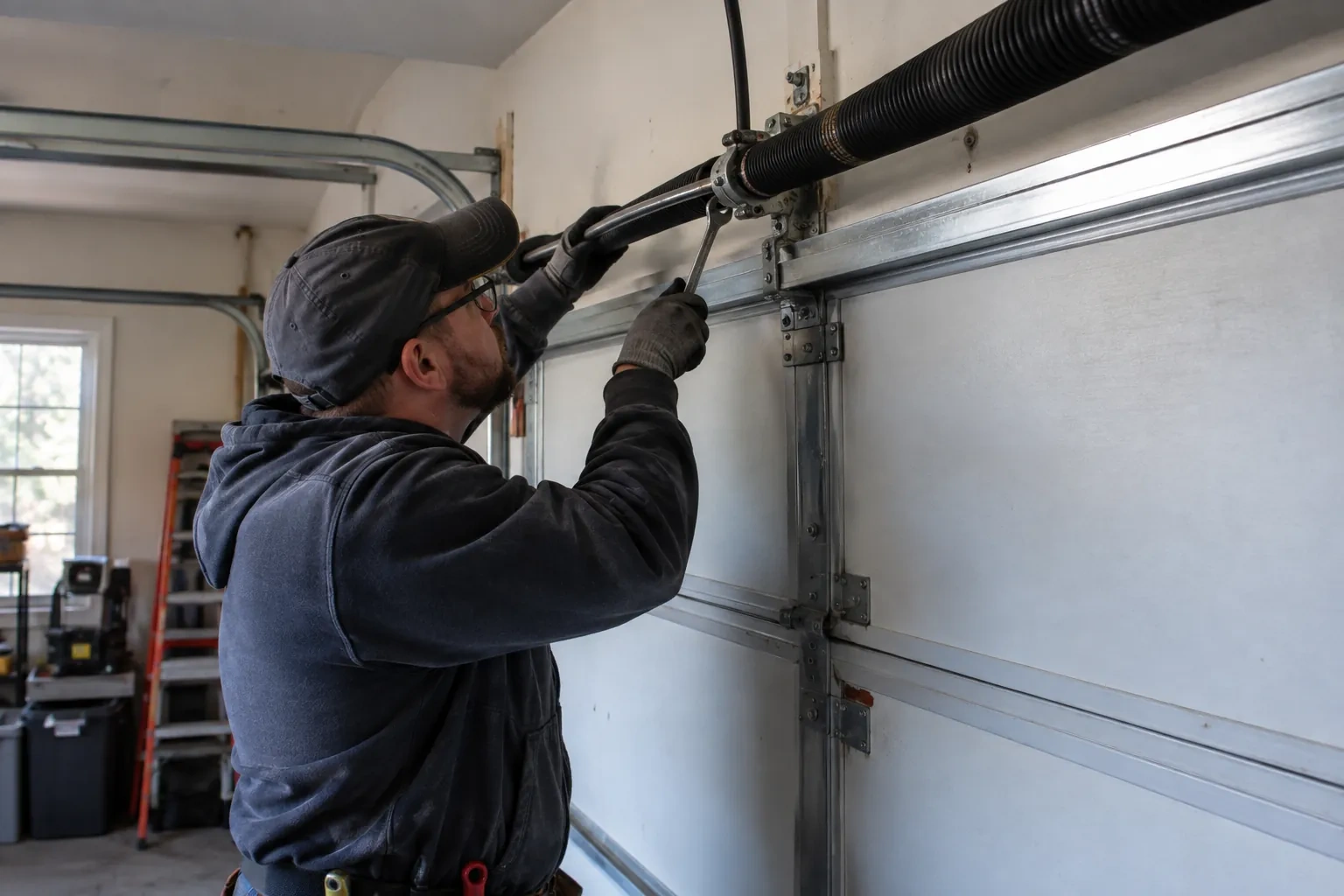
Which counterbalance your door has shapes the job. Torsion doors carry a spring on a shaft above the opening, and the cables wind onto grooved drums at each end; the technician winds the spring down with steel bars, swaps the cables, sets the drums and winds it back up. Extension doors, common on older detached garages, run the cables over pulleys beside the horizontal tracks with a spring stretched behind each; here the door is opened and clamped so the springs relax, then the cable is threaded, adjusted at its clip and checked against its containment cable. Either way, the service ends with a balanced door.
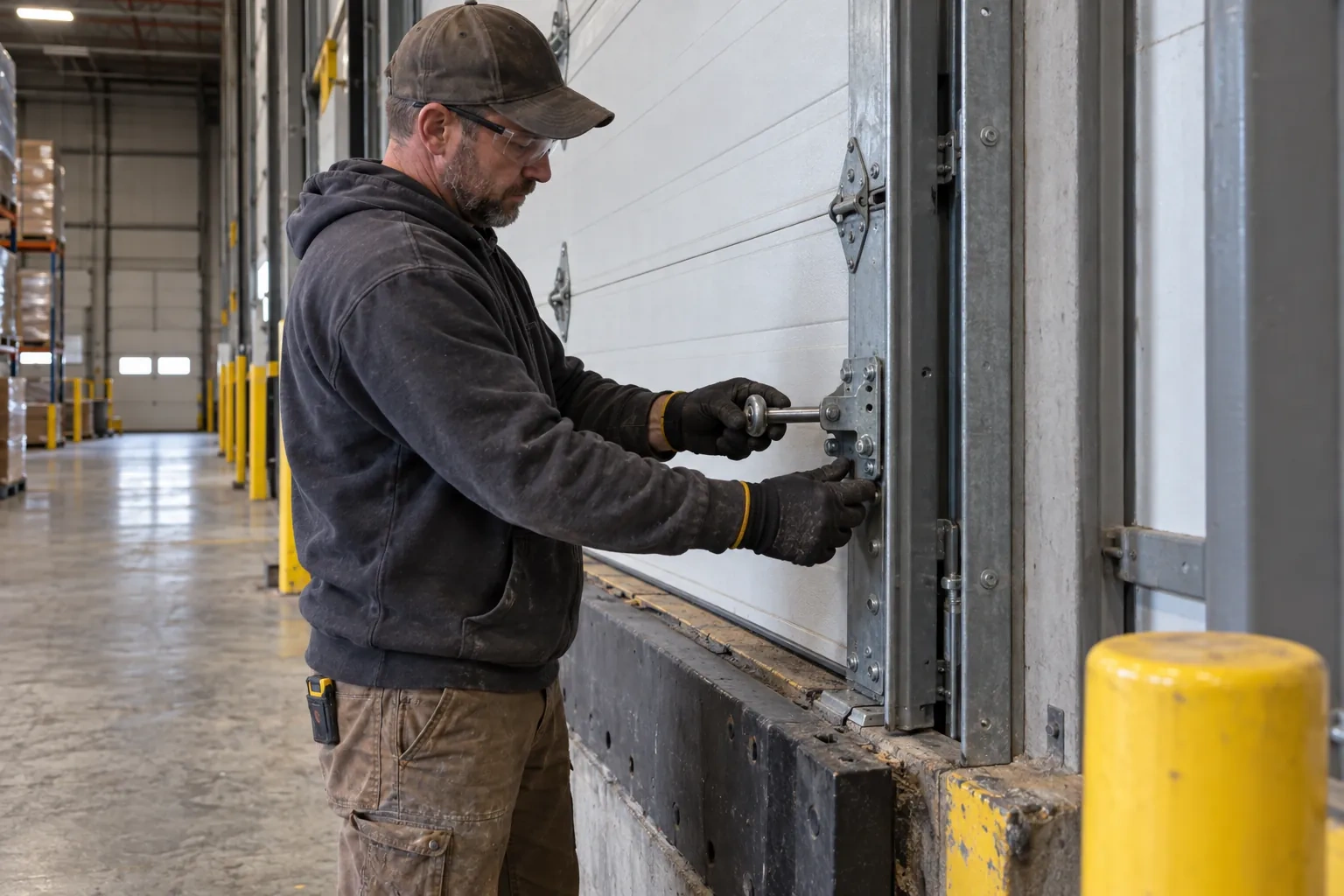
How the visit goesThe car bumper kissed the door on the way in. The bottom panel has a dent, the bracket in that corner sits crooked, and the cable on that side has jumped and gone slack, so the door reverses every time it tries to close.
Garage Door Cable Replacement
How the visit goes
Why the last cable failed
A new cable fitted onto the same problem does not last, so the technician wants the cause. Frayed wires along the length point to rubbing against a bent track or a rough drum. Rust at the loop points to slush at the floor. A cable that jumped its drum usually follows the door closing on something, a spring that has lost tension, or a drum that slipped. A snapped cable on a door that was level beforehand often means age and corrosion rather than misalignment. You will be asked what happened before the failure, because a shovel in the opening or a bump from the car is a fact only you can supply.
Extension-spring doors: pulleys, clips and containment
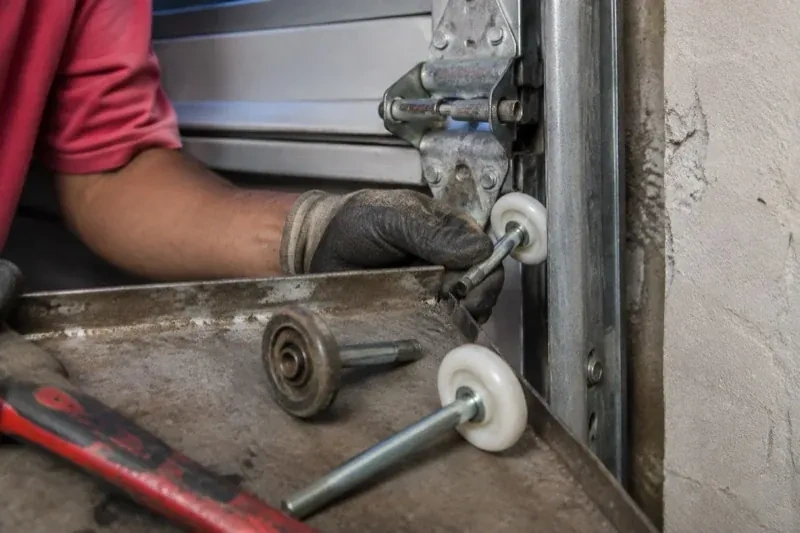
On a door with springs along the tracks, the new cable is threaded from the bottom bracket up over the pulley at the front of the horizontal track, back to the pulley on the end of the spring, and forward to the adjusting clip on the track hanger. The technician replaces a pulley whose wheel is grooved or whose bearing has seized, since that is often what wore the cable, and checks the S-hooks and sheave forks. Each side is set to the same clip position so the door hangs level. A containment cable is confirmed through the centre of each spring and added if the door was never fitted with one.
Keeping salt and slush off the bottom hardware
The new cables will last longest if the bottom brackets stay reasonably dry. Through winter, push slush away from the door's inside edge rather than letting it pool against the bottom section, and wipe the road salt off the brackets and the lowest stretch of cable when a mild day comes. A light spray of silicone lubricant on the cable loops and bracket pins in late autumn sheds meltwater. Park so the car does not drip directly onto the corners of the door. None of this is a chore, and it addresses the one spot where cables in this climate almost always fail first.
Garage Door Cable Replacement
In the van
Drum set screws
Torsion springs and winding cones
Galvanized aircraft-type lift cables
Winding bars
Track clamps or locking pliers
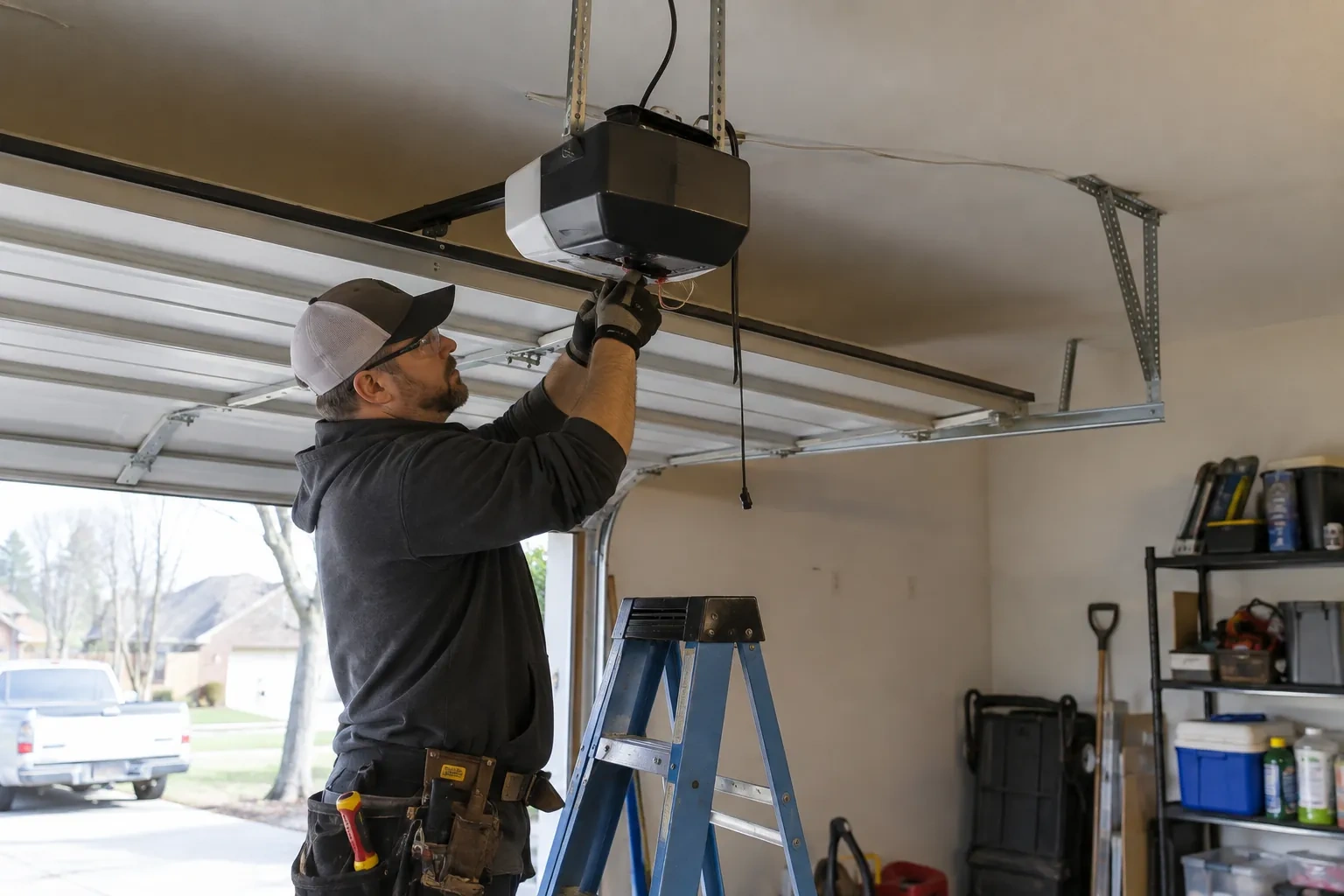
Garage Door Cable Replacement
What affects the quote
Corrosion and seized fasteners
Set screws and bracket bolts that have rusted solid take time to free or cut, and badly corroded hardware is replaced rather than reused, which shows in the parts list.
Torsion or extension system
A torsion door with drums and an extension door with pulleys are different jobs with different parts, and the counterbalance type is the first thing that shapes the quote.
How the door is sitting
A door resting closed is simpler than one wedged crooked in the opening or off its track, which has to be supported and straightened before the cables can be handled.
What to have ready
- Is the door sitting level, or is one corner higher than the other?
- Is it a single or a double door, and roughly how tall?
- Can you see a cable hanging loose, frayed, or wound around the shaft?
Garage Door Cable Replacement: questions
QuestionsCan I lift the door by hand while a cable is off?
Leave it. With one cable slack the door is being carried on one side only, so it is unbalanced and may bind or drop unevenly when moved. The technician arrives with clamps and a method for taking the door's weight before anything is moved, and that is the moment to lift it. Until then a stationary door is exactly what you want.
What are garage door cables made of?
They are galvanized aircraft-type wire rope: many fine steel wires twisted into strands, and the strands laid around a core, which gives a cable that bends around a small drum thousands of times without fatiguing. One end carries a swaged stop or a loop for the drum, the other a loop that fits over the bottom bracket pin. Diameter and length are chosen for the door's weight and height.
What is the difference between a lift cable and a safety cable?
A lift cable does the work: it connects the door's bottom corner to the spring system and carries the door's weight. A safety or containment cable does no lifting at all. It runs through the middle of an extension spring and is anchored at both ends so that if the spring breaks, the pieces stay put. Torsion springs sit on a shaft and do not need one.
Related services
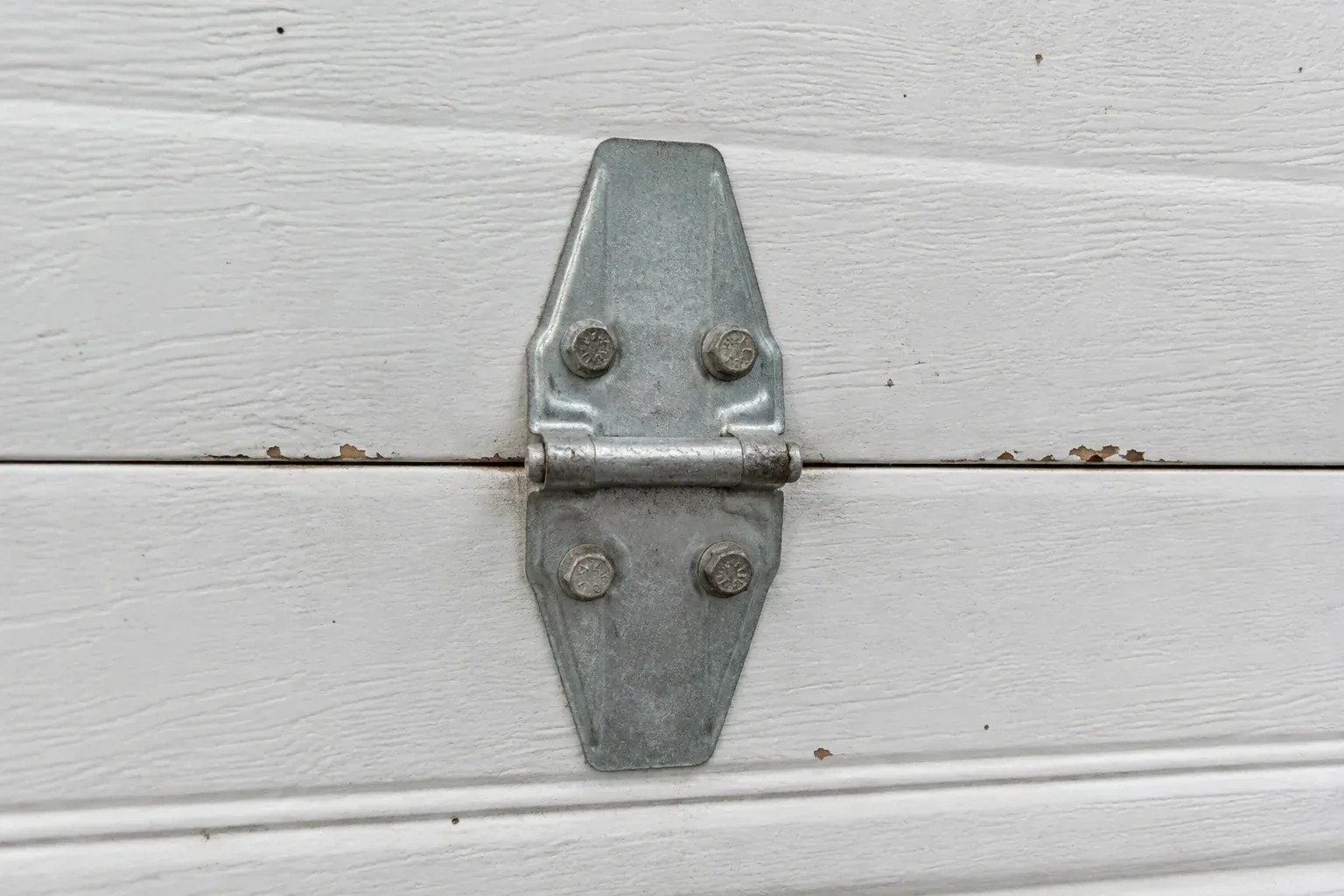
- Garage Door Hinge ReplacementEvery time the door goes up there is a sharp pop from the same spot, about a metre off the floor, and the whole door gives a little shudder.
- Garage Door Track Repair or ReplacementThe garage floor has settled at one corner, and the door now scrapes the concrete on that side while daylight shows at the other.
- Torsion Spring ReplacementAfter pulling the red release cord, you tried lifting the door yourself and it would barely leave the floor.