Repairs · Bethany
Garage Door Perimeter Weatherstrip in Bethany
The new door went in last year and looks perfect, but the old wooden stop and its tired seal were left in place.
In plain words
When the work is finished you have a door that closes against a soft, continuous line of contact on both sides and across the top. From inside with the lights off there is no daylight at the edges; from outside, the new stop matches the trim colour. The door moves through its full travel without the fin catching or squealing. You are told what profile, colour and lengths were fitted, so a match is simple later, and shown the few habits that keep the seal supple: no paint on the fin, a silicone wipe before freezing rain, and slush kept off the bottom of the jambs.
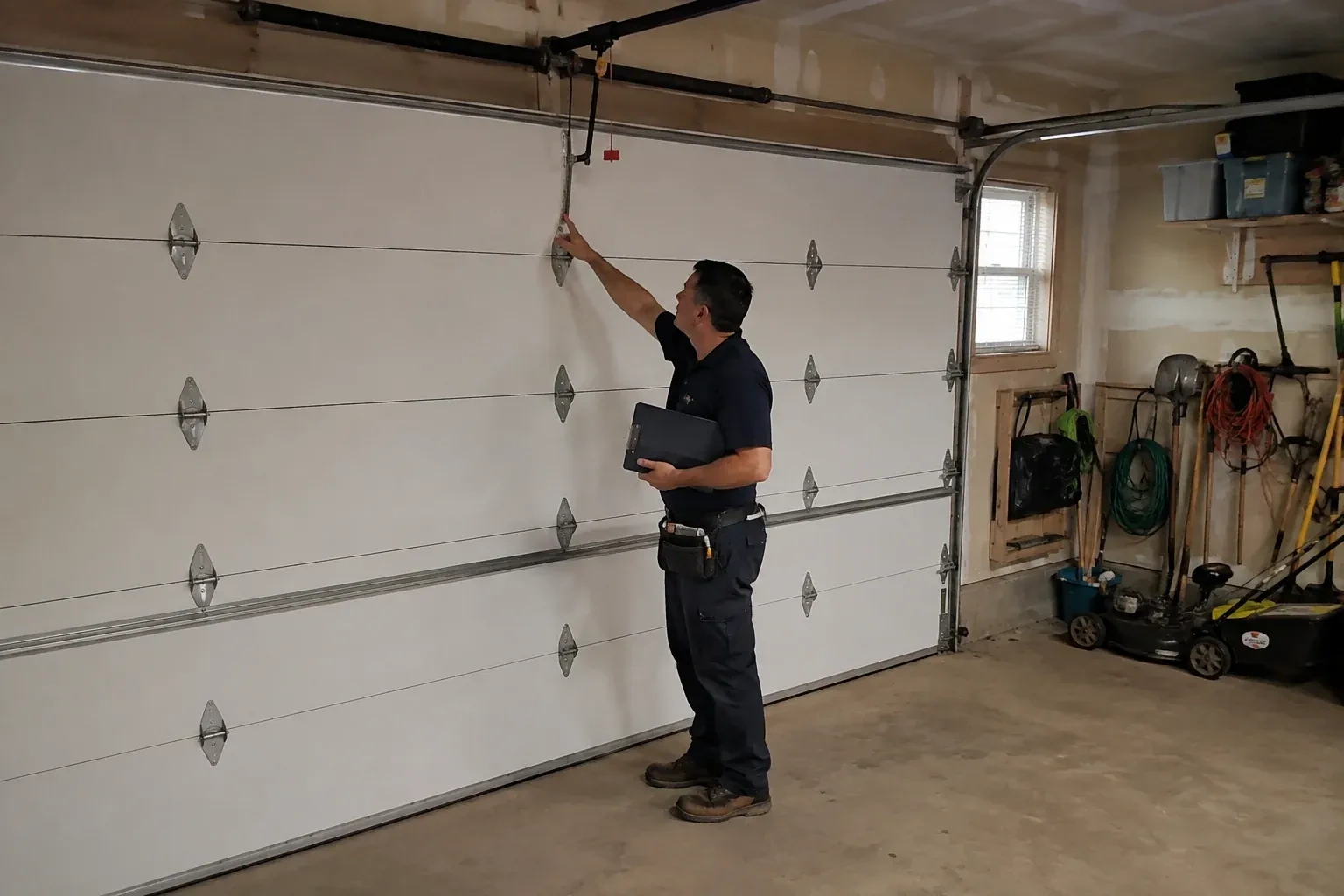
How the visit goesThe bedroom over the garage is always the cold room, and standing in the garage you can feel why: a steady draft along the door edges that moves the cobwebs on the wall. The seal around the opening has flattened to nothing.
Garage Door Perimeter Weatherstrip
How the visit goes
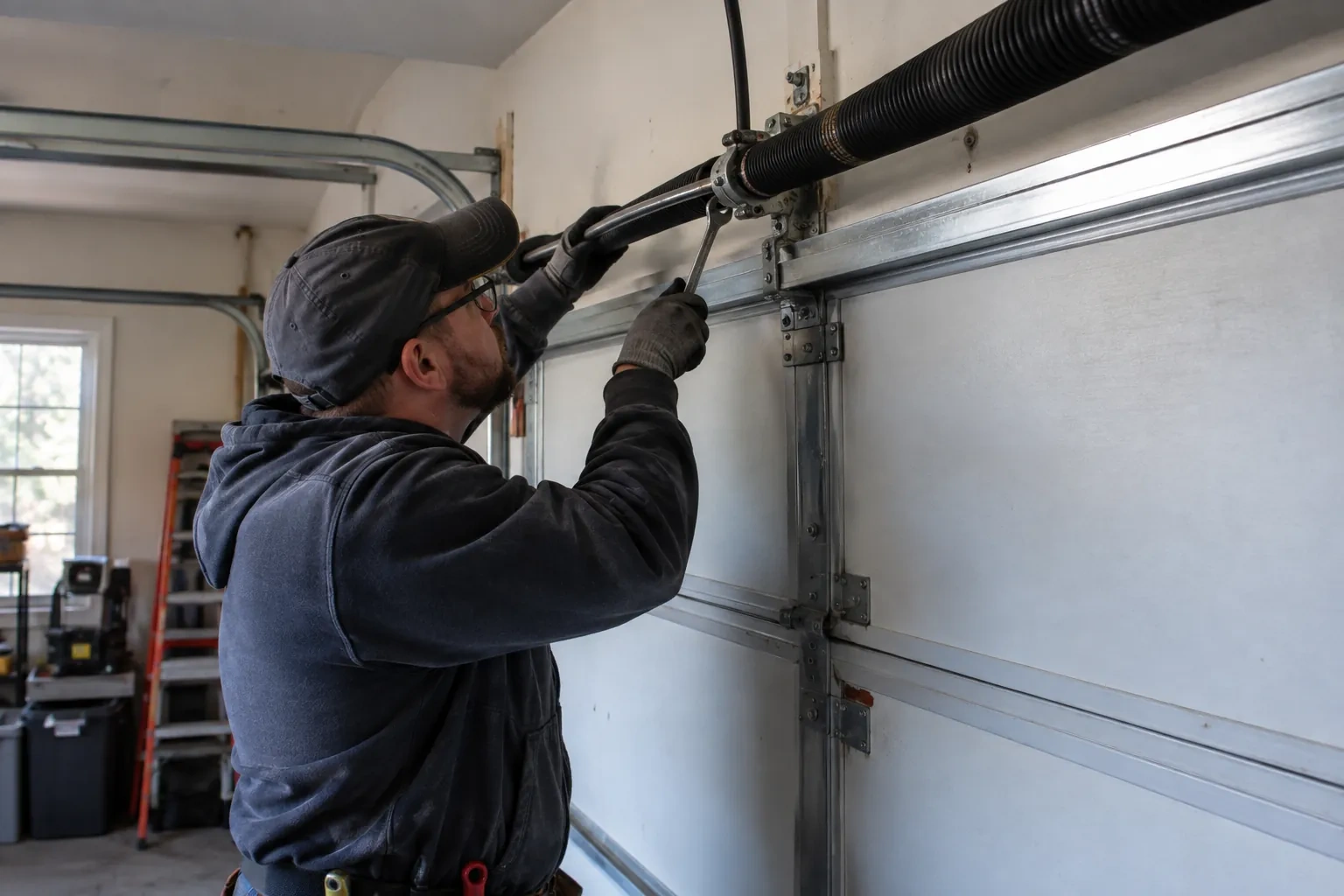
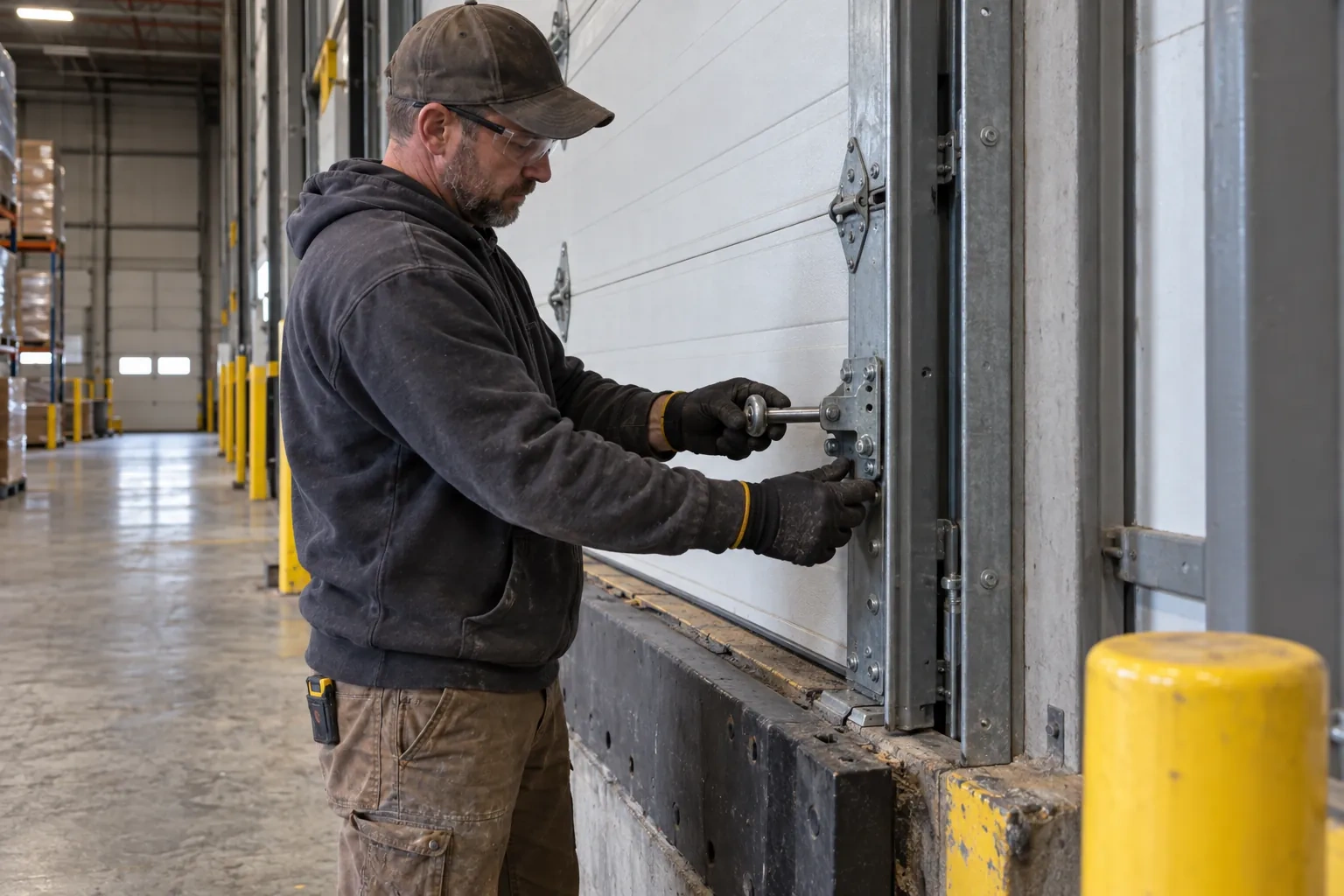
Probing the jambs and header
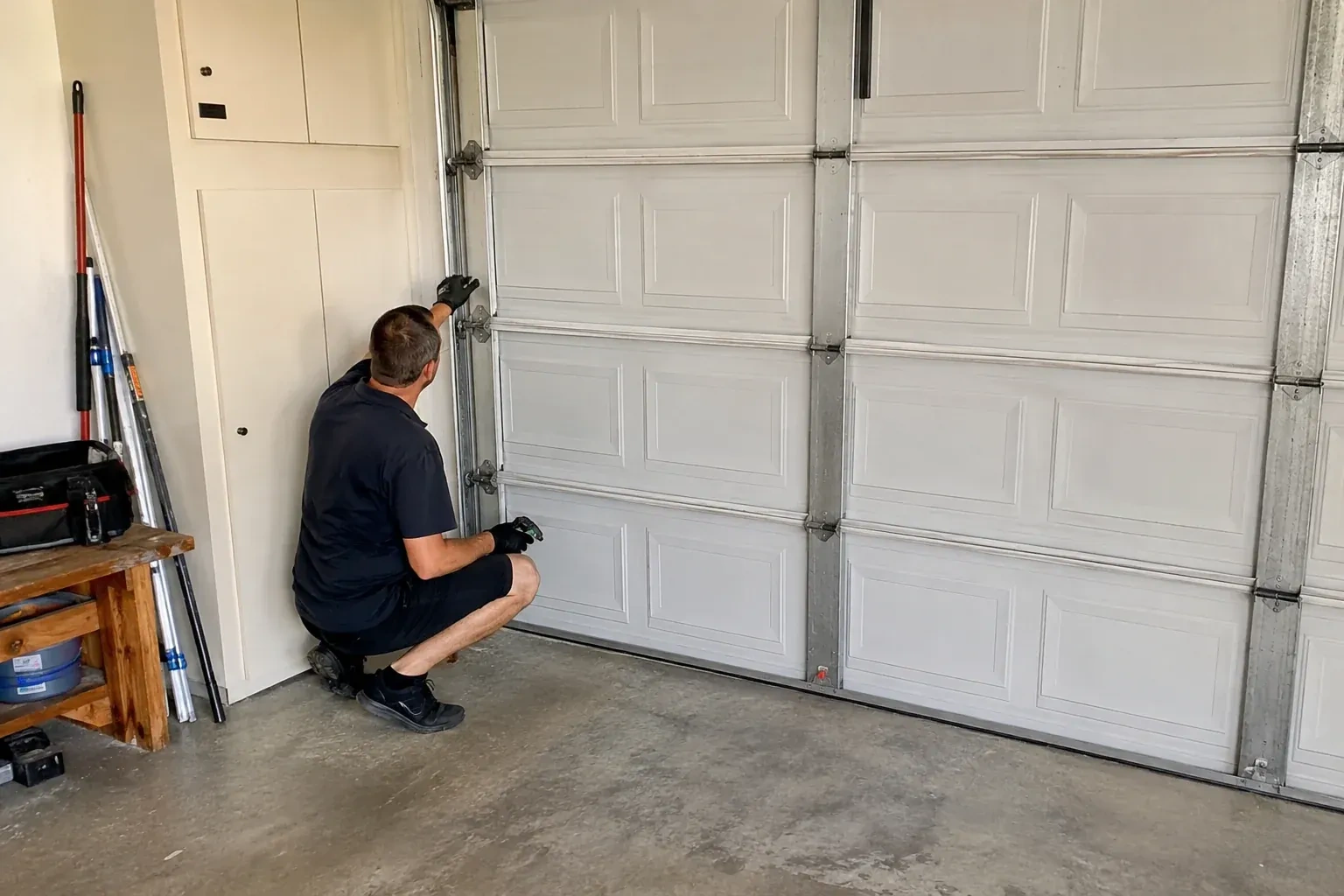
The strip is only as secure as the wood behind it, so the jambs are probed with an awl along their length and especially the lowest part, where slush and salt sit all winter. Soft, dark or crumbling wood is marked for repair. The header is checked for sag and for gaps opening between it and the top section. Where the jambs are clad in aluminum or vinyl, the technician looks for what the cladding hides and for where the seal can be fastened through to solid material. This step often adds a splice of new lumber or PVC trim to the job, and it is what makes the new seal stay put.
Cycling the door and sealing the joints
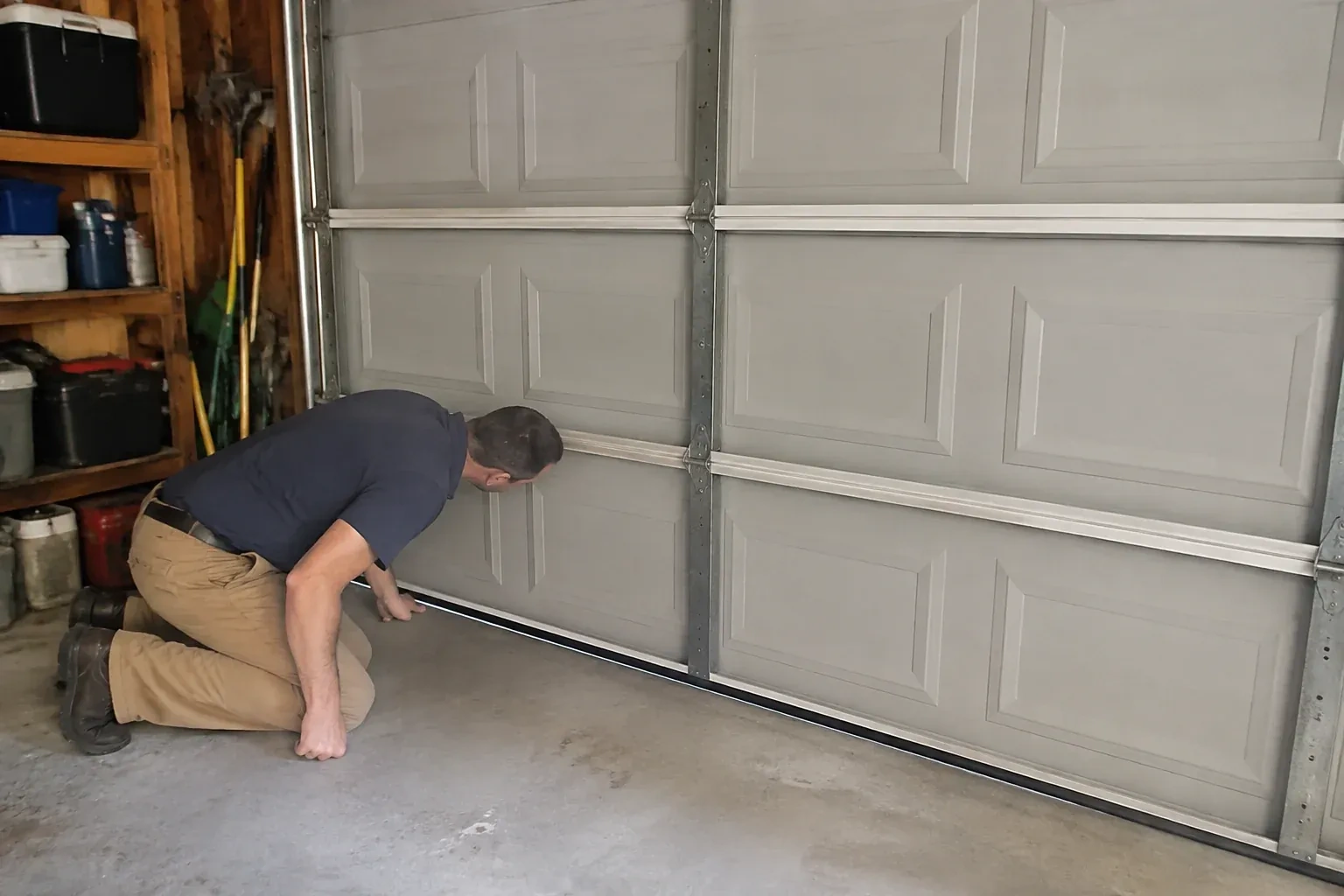
Once all three lengths are on, the door is run through several full cycles by hand and then with the opener, while the technician watches each fin for catching, folding or rubbing and listens for a squeal. The daylight test is repeated from inside with the lights off. Any joint between the new stop and the trim or brickmould where water could get behind is caulked with an exterior sealant, and the fin is wiped with a silicone spray to cut the odds of ice bonding it to the door. The old material is bagged and removed, and the household is walked round the finished opening.
Before the freezing rain
In late autumn, wipe the fin with a silicone spray or a silicone-based lubricant on a cloth. It leaves a film that cuts the odds of meltwater bonding the fin to the cold door face during an ice storm, though a hard freeze can still catch it. Oil-based products are avoided because they swell and soften vinyl over time. The same wipe once or twice through the winter keeps the fin supple. If the door does freeze to the seal, a little warm water along the edge from inside, or simply waiting for the sun, frees it without pulling; dry the thawed spot afterwards so it does not simply refreeze.
Garage Door Perimeter Weatherstrip
In the van
Vinyl stop moulding with integral seal
Silicone spray lubricant
Exterior caulking and gun
Jamb repair lumber or PVC trim
Galvanized or stainless trim nails
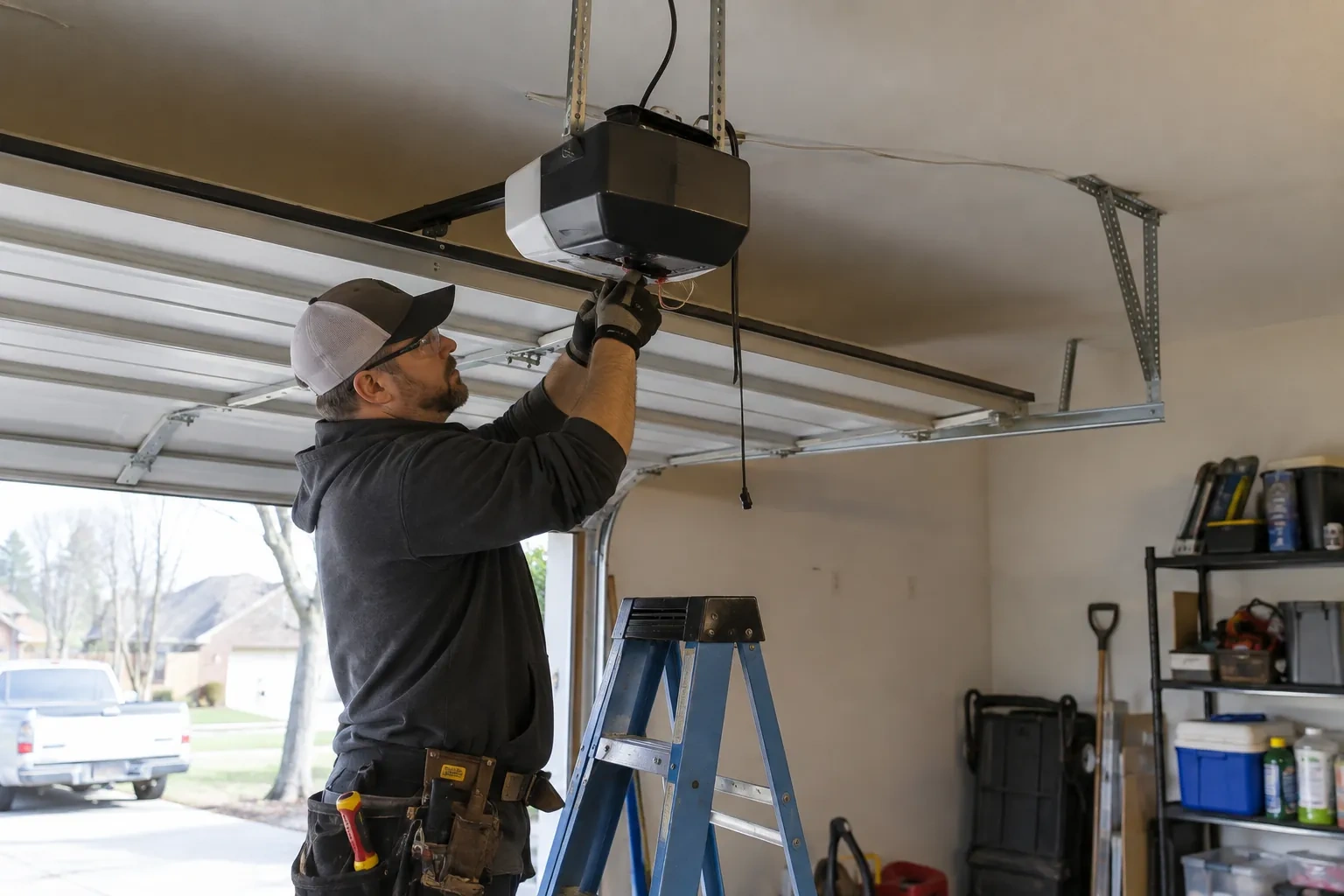
Garage Door Perimeter Weatherstrip
What affects the quote
Trim, brickmould and caulking
Re-caulking the joint between stop and trim, or dressing capping that channels water down the jamb, is small work done while the surface is bare and is listed on its own line.
Partial replacement
Replacing one damaged length rather than all three is a smaller job, provided the remaining pieces are still soft and the profile can be matched.
Colour and profile
Standard colours and fin widths are carried on the truck. A less common colour, an extra-wide fin or a commercial retainer with insert may be a special order, with the difference noted.
What to have ready
- Is the bottom seal on the door also worn?
- Is it a single or double door, and roughly how wide and tall?
- Is your garage attached to the house, and is it heated?
Garage Door Perimeter Weatherstrip: questions
QuestionsCan I paint the new seal to match my trim?
Paint the rigid parts only. A wood stop can be painted before the fin is fitted or with the fin masked, and a vinyl stop needs no paint at all. The flexible fin is left bare, because paint fills it and stiffens it, and a stiff fin cracks well before its time once cold weather sets in. Seals come in a range of colours so the fin can match the trim without a brush.
Should I choose a fin on the wood stop or a one-piece vinyl stop?
If the wood stop is sound, straight and not buried in paint, a new fin nailed to its face is the simpler choice and keeps the look of the trim. If the stop is cracked, soft or has been painted many times, a one-piece vinyl stop replaces it entirely, needs no paint and cannot rot. The technician checks the stop and recommends one or the other on site.
Do you adjust the door as part of the seal work?
Small corrections, yes. If a track bracket needs re-setting or the door needs to come plumb so the fin can meet it evenly, that is done so the new seal is fitted to a door that sits properly. Larger work, such as replacing rollers or a bowed section, is explained and offered as its own job so you can decide on it separately.