New Doors · Kawartha Lakes
Commercial Rolling Door Repair in Kawartha Lakes
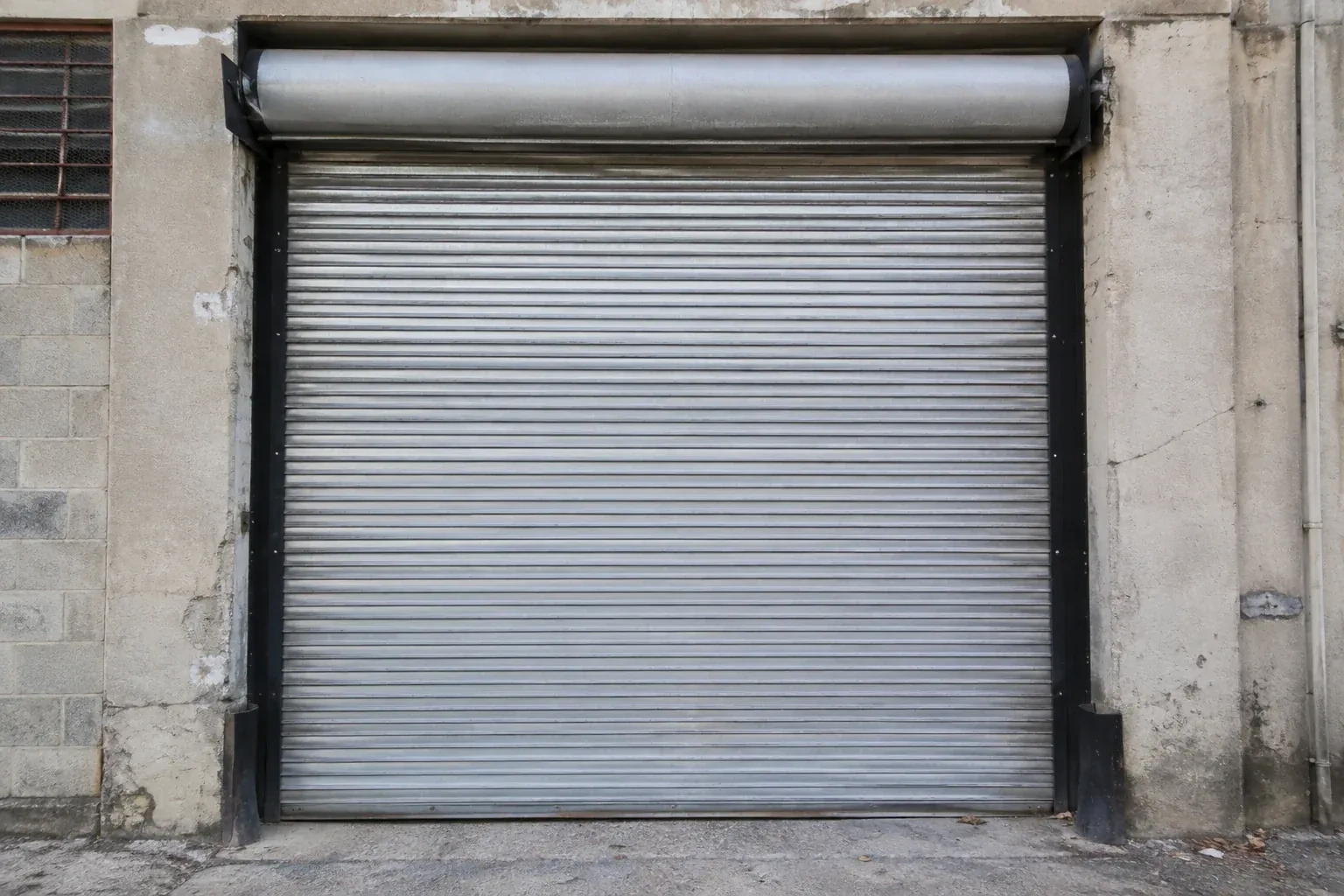
A metallic clatter now comes from inside the hood whenever the curtain coils.
In plain words
Powered rolling doors add controls and protective devices to the mechanical assembly. A closing complaint may begin at the control station, interlock, sensing edge or photoelectric sensor rather than inside the operator. The visit checks the curtain's free movement first, then follows control response, brake action, limit settings, manual disconnect or hoist and external protection suited to that system. Compatible repairs are completed with the operating instructions in hand. Testing covers normal commands, stopping points, manual operation and protective-device response so staff understand how the restored door is intended to behave.
How the visit goesAt closing time, the bottom bar reaches the floor on one end while daylight remains under the other. The slide bolts miss their keepers, leaving staff unable to secure the business opening in its usual way.
Commercial Rolling Door Repair
How the visit goes
Look for weather and impact patterns
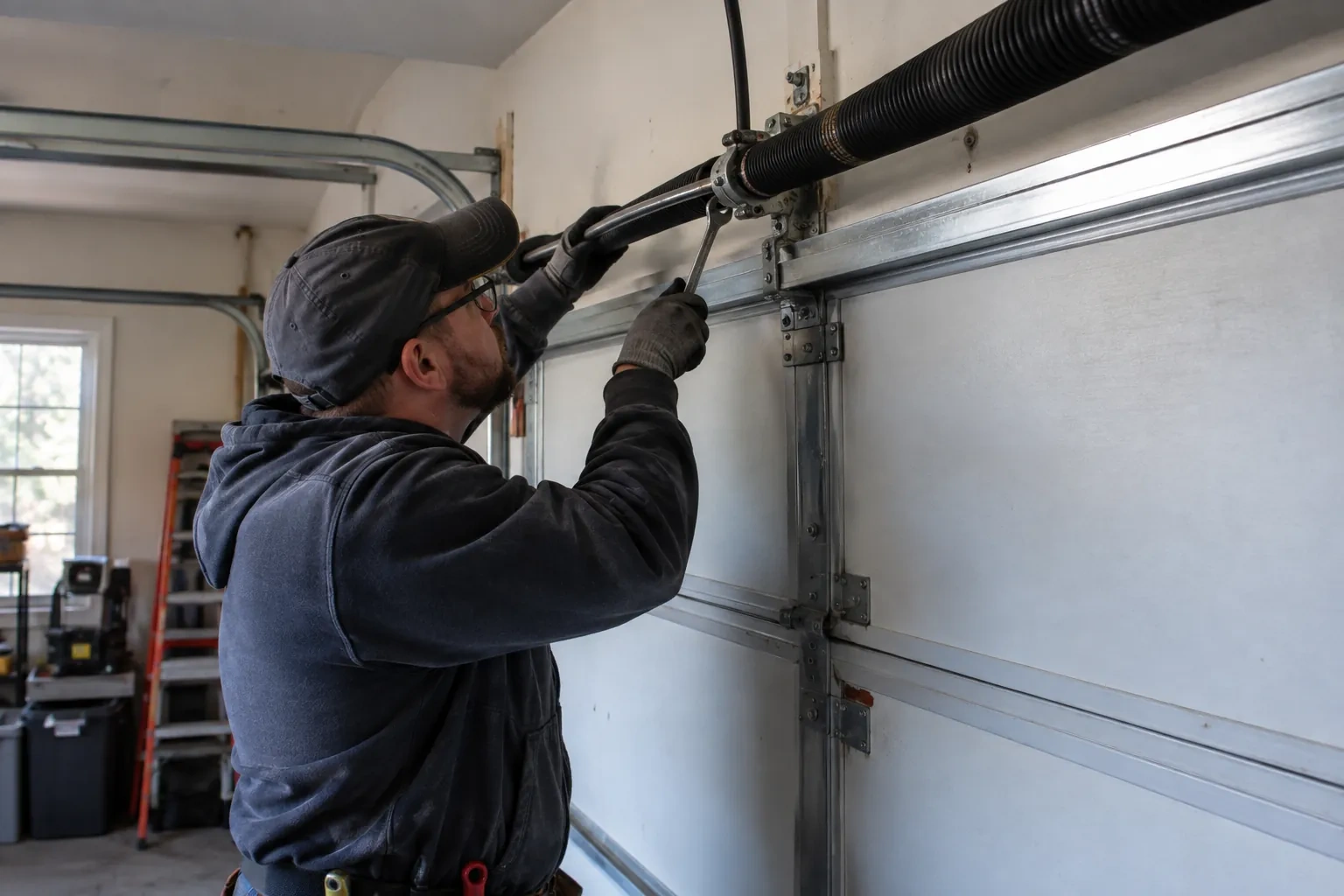
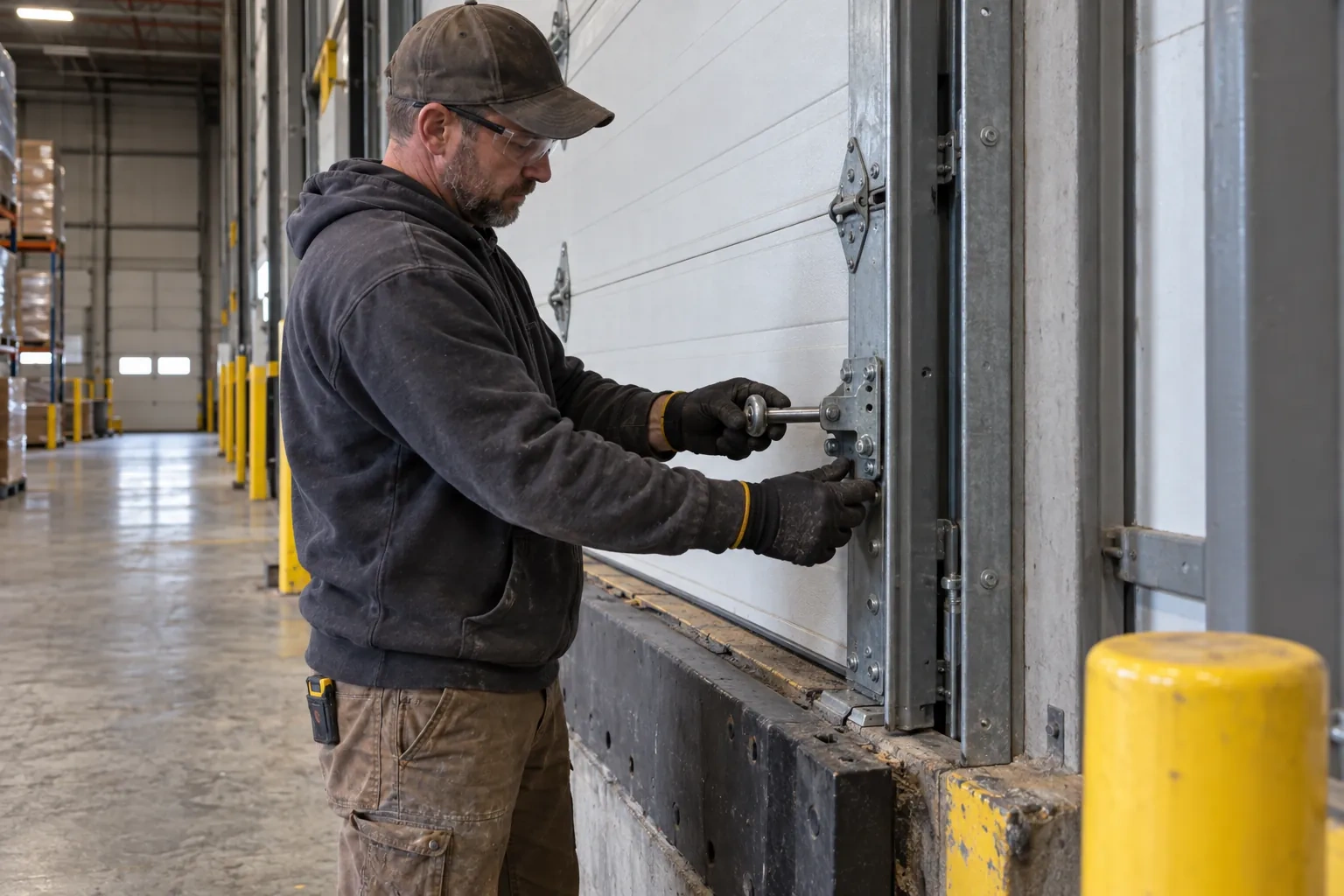
Exterior openings collect evidence from their surroundings. Salt staining at the lower guides, packed grit near the sill, torn astragal, rust below a hood seam and polished marks at forklift height each tell a different story. Ice may hold the bottom bar down, while wind can press a broad curtain against its guides and change operating effort during a storm. The technician notes drainage, exposure and recurring traffic contact alongside the mechanical findings. That context helps shape a durable repair and can support practical additions such as guide guards, clearer floor markings or better threshold housekeeping.
Cycle, observe and document the result
The repaired door is returned to service through a measured test sequence. Initial movement is slow and closely observed at the guides, coil, bottom bar, brackets and drive. Several full cycles follow, using the normal control and the manual method where applicable, while the technician listens for repeatable noise and checks stopping positions. Locks, interlocks and protective devices are tested at their proper stage. The handover record identifies parts changed, settings established, functional checks completed and any connected condition assigned to another scope, giving facility staff a practical baseline for future inspections.
Practical protection from another impact
A repaired impact area offers useful evidence for prevention. The technician can show where the vehicle contacted the guide, bottom bar or curtain and which travel lane placed it there. Facility managers can respond with visible floor markings, adjusted staging, guide guards or a revised stopping point where those choices suit the site. Operators should report even a light strike because a guide can move before damage looks dramatic. Checking bottom-bar level, guide clearance and fasteners after contact turns a small event into a manageable inspection instead of allowing repeated cycles to spread distortion through the curtain.
Commercial Rolling Door Repair
In the van
Barrel and headplate brackets
Bearings and tension wheel
Sensing edge and controls
Curtain slats and endlocks
Counterbalance spring assembly
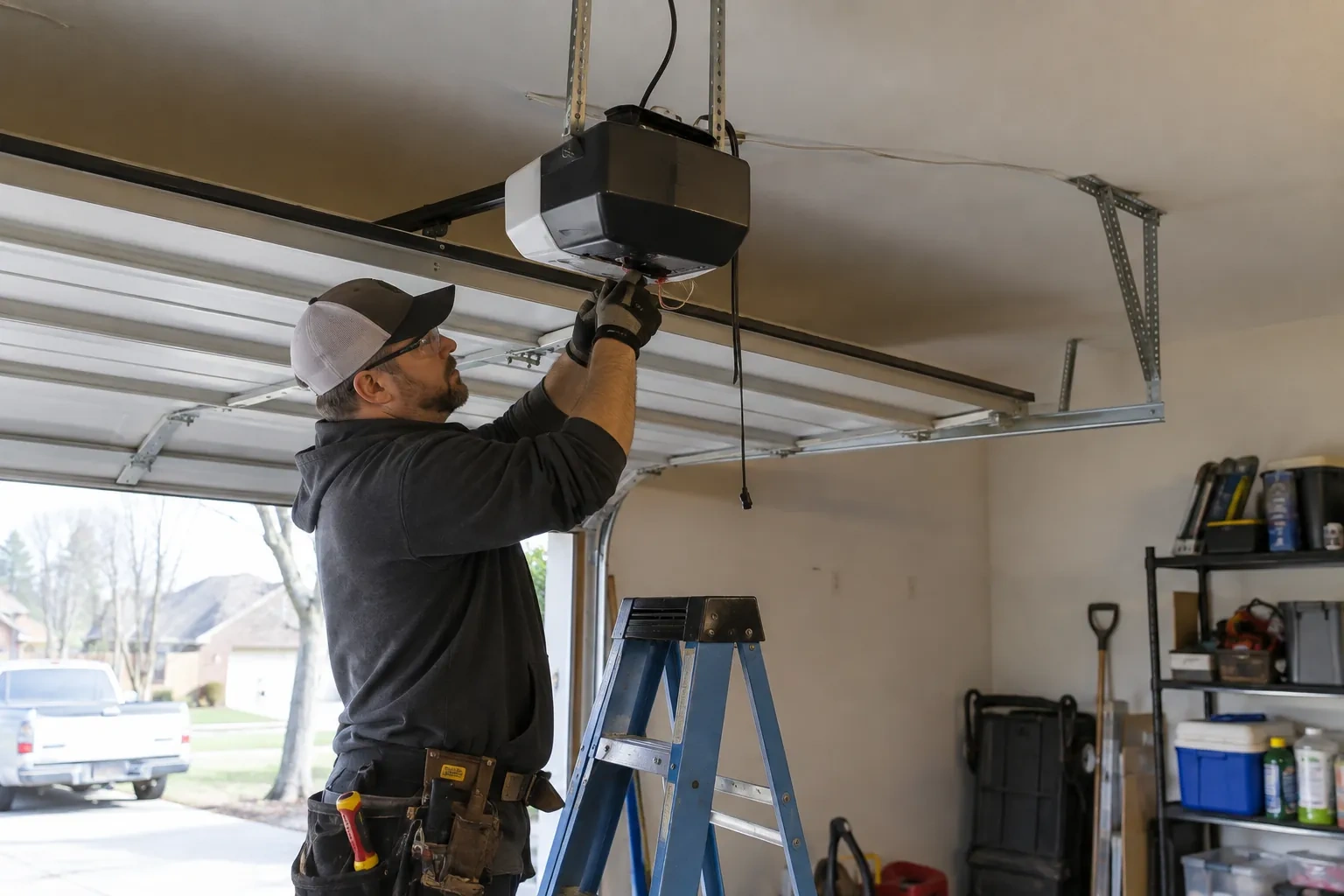
Commercial Rolling Door Repair
What affects the quote
Counterbalance condition
Spring adjustment, bearing service and replacement of worn barrel-related parts require different labour and controls. Door weight, spring arrangement and operating position shape the counterbalance plan.
Bottom bar and sealing needs
A twisted bottom bar, torn astragal, worn retainer, sensing edge and misaligned slide bolts are distinct items. Floor slope and threshold condition also influence the closure-line work.
Fire-protection label status
A labelled fire door needs assembly-specific component decisions, closing-path care and defined inspection or test records. Release-system and alarm-interface tasks remain visible as specialised line items.
What to have ready
- Is the door push-up, hand-chain or motor operated?
- Does winter moisture, ice or salt collect at the sill?
- What vehicles and pedestrians normally use this doorway?
Commercial Rolling Door Repair: questions
QuestionsWhy does the door stop and reverse while closing?
A photoelectric beam may be blocked, a sensing edge may be active, the curtain may meet resistance, or the operator may be responding to a monitored-device or limit condition. The inspection keeps these possibilities separate. Sensor placement, alignment and response are checked alongside free mechanical travel and the operator's documented control logic.
How should we prepare the loading area?
Move vehicles, pallets and loose packaging away from both faces of the opening, and identify an alternate route for staff and deliveries. Provide access to the control station, disconnect and any door records. A facility contact who understands normal operation and can authorise testing makes it easier to reproduce the complaint under controlled conditions.
When is operator replacement considered?
A broader operator plan may be considered when major drive or control parts are extensively worn, suitable components are no longer supported, the unit is mismatched to the door or duty, or the desired control arrangement requires a different system. The door's balance, size, cycle pattern, protection devices, power and manual operation all inform that decision.
Related services
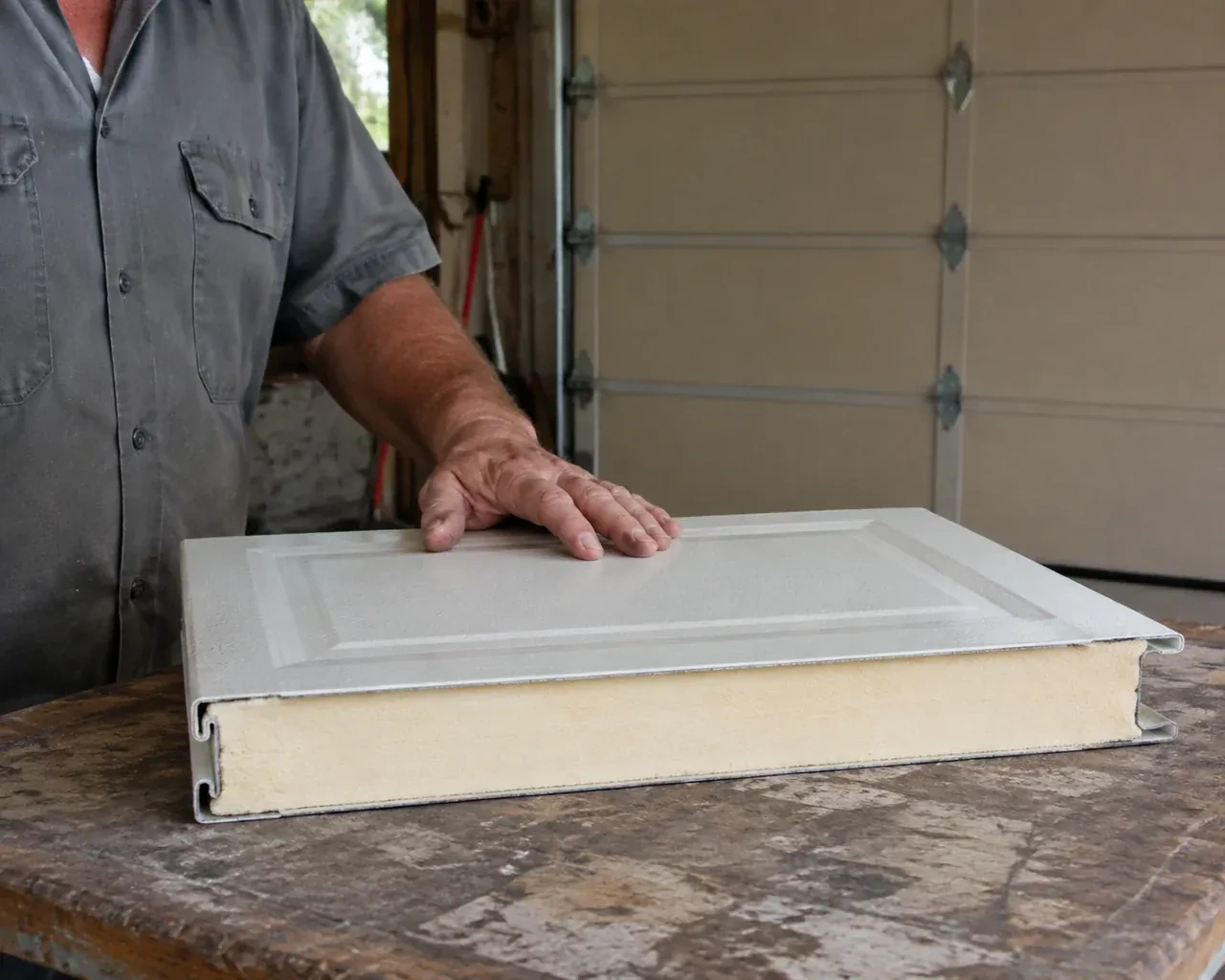
- Insulated Steel Garage Door InstallationYou want windows for natural light without turning the garage into a cold glass wall.
- Wind-Rated Garage Door ReplacementYour renovation drawings call for a garage door with a stated design pressure, yet the existing door has no readable label or installation record.
- Carriage-House Garage Door InstallationYou appreciate the grain and depth of traditional wood doors, though regular refinishing is not part of your plan.